
I still vividly remember the confusion that washed over me as the lights dimmed in early 2025. I had settled into my seat fully expecting to see Dakota Johnson, Chris Evans, and Pedro Pascal entangled in a slick modern love triangle. Instead, the screen showed two prehistoric figures, their faces smeared with earth, gently looping a fragile ring of flowers around each other's fingers. No dialogue, no context, just an unbearably tender moment that felt like stumbling onto a secret. That opening scene from Celine Song’s Materialists has clung to me ever since, and a year later, after many late-night discussions, it still shifts something in my chest every time I revisit it.
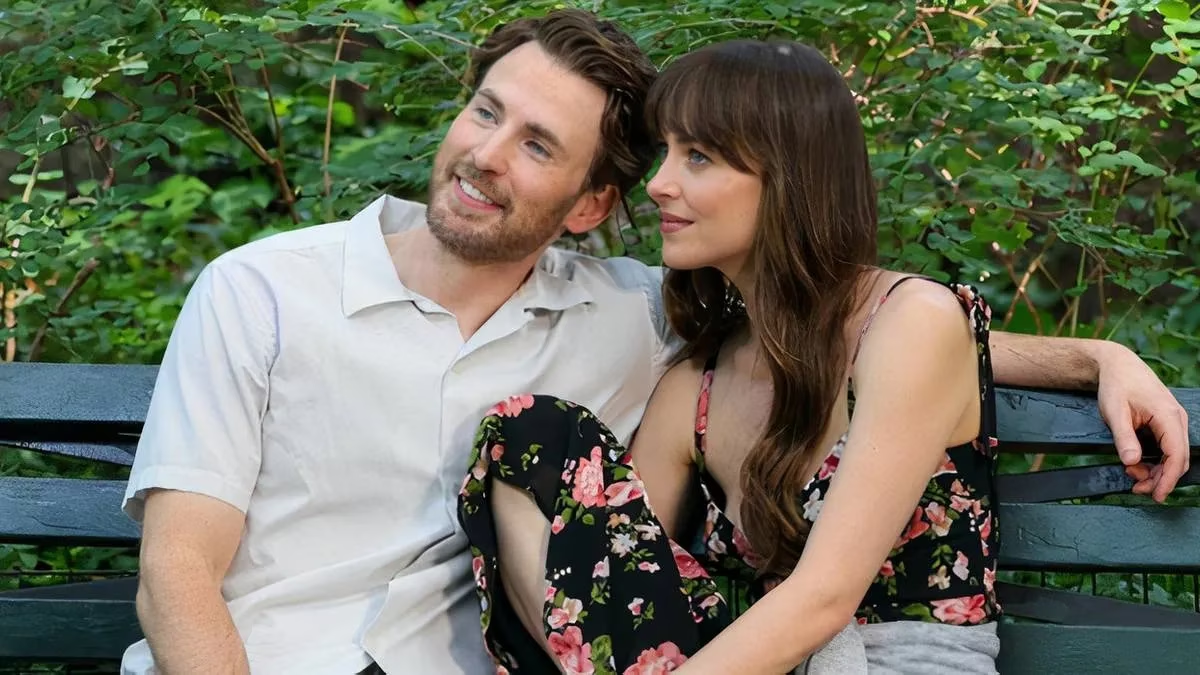
I needed to understand why Song made that choice, and her own words, shared around the film's release, only deepened my obsession. She spoke about wanting the audience to ask, “Why am I watching ancient people be in love?” That question is exactly what hit me. I had walked in craving a glossy romance, but I was instantly confronted with something far more primal. Song deliberately plays with expectation, pulling the rug out from under us so we would start the film in a state of raw curiosity. That curiosity, she later explained, is the heart of the whole movie.
What fascinates me most is the idea she kept circling: the chasm between what we can touch and what we can never prove. We have stone tools passed hand to hand across millennia. The material record is full of those. But what about the love? That flower ring is the perfect emblem. It's ephemeral, something that wilted hours later, never to be fossilized. Yet it represented a bond that might have felt as monumental as any diamond ring today. Song deliberately chose the word “marriage” to describe that gesture, labeling it one of the earliest known. But she also forces us to confront the void. Every marriage certificate in history gives us names, dates, signatures. Those ledgers are gold for historians. But do they tell me if the couple was deeply in love, if they stayed up all night laughing, if one person secretly wept on their wedding night? Not at all.
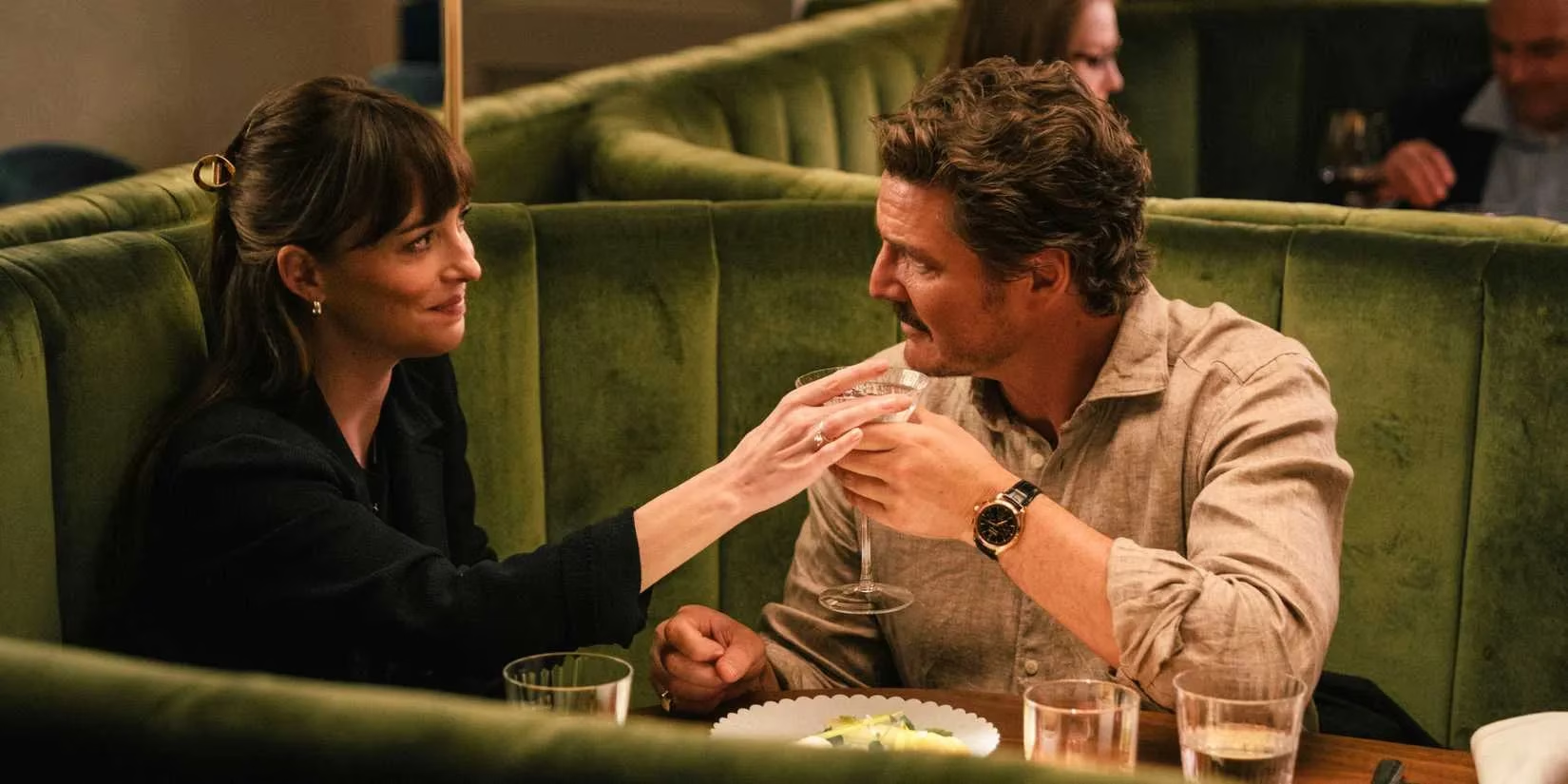
The final shot of the film, a lingering look at a sterile marriage bureau, made Song’s point unforgettable for me. Rows of neat folders. Proof of unions. But as I stared at that image, I realized I knew nothing about those lives. Maybe some were abusive, maybe some were the love story of the century. And then there is the deafening silence around queer love. Song mentioned that there is no record of queer love for hundreds of years, and that truth hit me like a punch. I personally know what it's like to love in ways that older generations couldn't document. The lack of a paper trail doesn't make that love any less substantial, any less life-altering. The flower ring dissolves, but so does every tangible record when it can’t capture the spirit of what was really felt.
Rewatching Materialists this spring in 2026, I find myself far more patient with its quieter rhythms. The movie isn't about flashy dating app swipes; it's about Lucy choosing John, a genuine connection, over Harry's luxury and surface shine. That choice mirrors the prehistoric couple, stripping away money, pretense, and the exhausting demands of modern romance. The love between those ancient figures might have looked like nothing more than a fragile circle of petals, but it had survived long enough to be imagined. And maybe that’s the real point. I cannot hold that flower ring in my hands. I cannot pull a wedding ledger for two men in the 1400s. But I can feel the weight of their love in my bones, passed through time in ways no archive can ever contain.
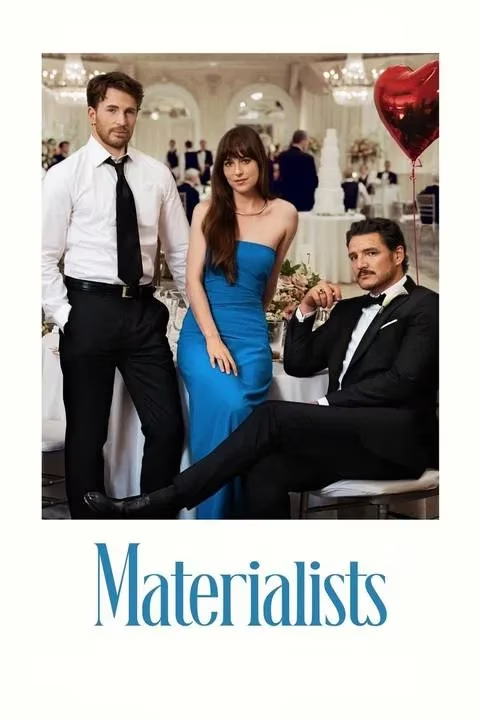
Celine Song proved with Past Lives that she is a filmmaker obsessed with what is left unsaid. With Materialists, she dared to open with a whisper instead of a shout. I’m still thinking about it. And I suspect I will be for years, every time I see something as simple as a flower.
Comments