
I still remember the first time I watched The Wind Rises and felt that unsettling familiarity in the protagonist's voice. It wasn't the smooth cadence of a professional voice actor; it was something rawer, almost uncomfortably honest. Only later did I discover the beautiful, mischievous secret behind it: Hayao Miyazaki had coaxed Hideaki Anno – the mastermind behind Neon Genesis Evangelion – into playing the lead role of Jiro Horikoshi. And he did it with the glee of a fox inviting a rabbit to dinner, then revealing a multi-course meal the rabbit must sing through. That discovery turned a solemn, bittersweet film into an inside joke I never wanted to stop sharing.
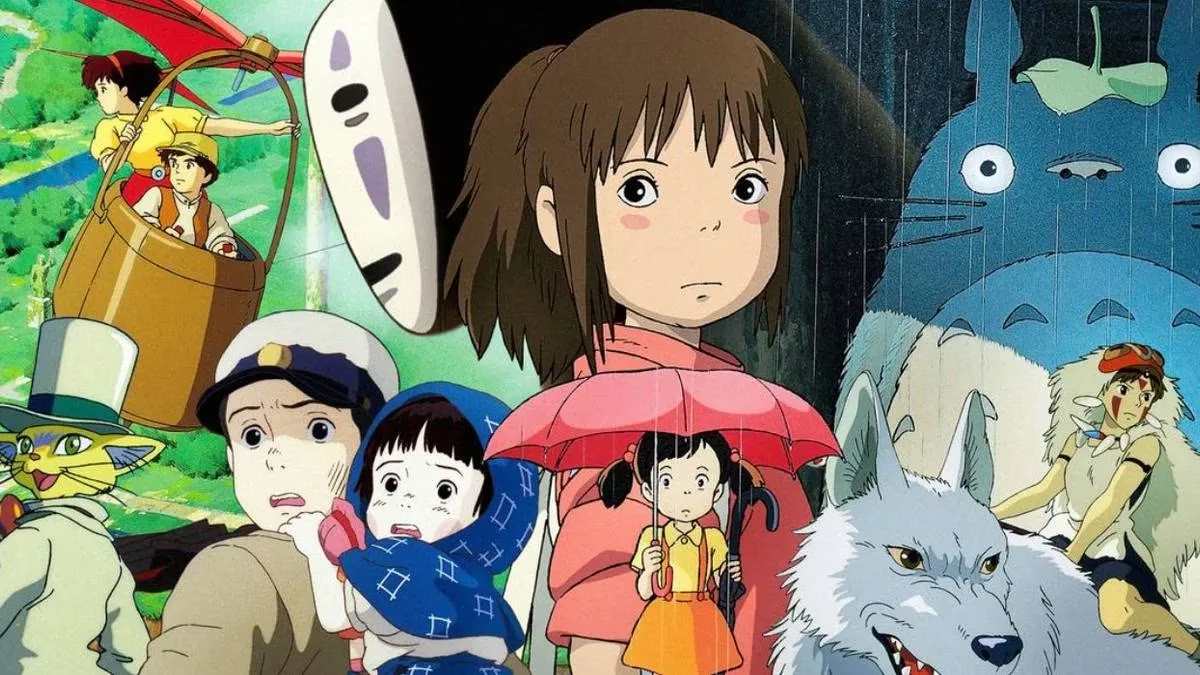
To understand the sheer audacity of this casting, you have to know that Anno and Miyazaki have always orbited each other like two planets with dangerously intersecting gravity. Anno worked on Nausicaä of the Valley of the Wind as a key animator, famously nailing the God Warrior sequence. But by the 2010s, he was already a titan of his own universe, a man whose psyche had poured into the existential dread of Evangelion. Miyazaki, the elder statesman of hand-drawn dreams, looked at this intense, visionary director and apparently thought: I'm going to make him pretend to be an aeronautical engineer – and he's going to sing about it.
Here's where the tale gets genuinely delicious. When Anno accepted the role, Miyazaki assured him that Jiro was a taciturn man with very few lines. That was the bait – a simple, undemanding task fit for a first-time lead voice actor who only had a minor FLCL cameo under his belt. Anno stepped into the recording booth expecting a quiet stroll, only to face a script crammed with dialogue, a lyrical sequence that demanded singing, and – as a cherry on top – entire passages in French and German. Anno himself later confessed he felt "completely tricked." The whole situation resembles a meticulously engineered clockwork trap: every gear looks harmless on its own, but once you wind it up, you're caught in a cascade of unexpected chimes.
But why would Miyazaki do this? I think it's because he understood that Anno's own struggles – his agonizing relationship with creation, his questioning of art's value during wartime – are the emotional subsonic hum beneath The Wind Rises. Jiro designs beautiful planes knowing they will become weapons, just as Anno crafts deeply personal anime that can feel like monuments to pain. By putting his friend's voice into that conflict, Miyazaki added a layer of meta-texture that professional voice actors could never replicate. The result is a performance that feels less like acting and more like a confession accidentally broadcast over a public address system.
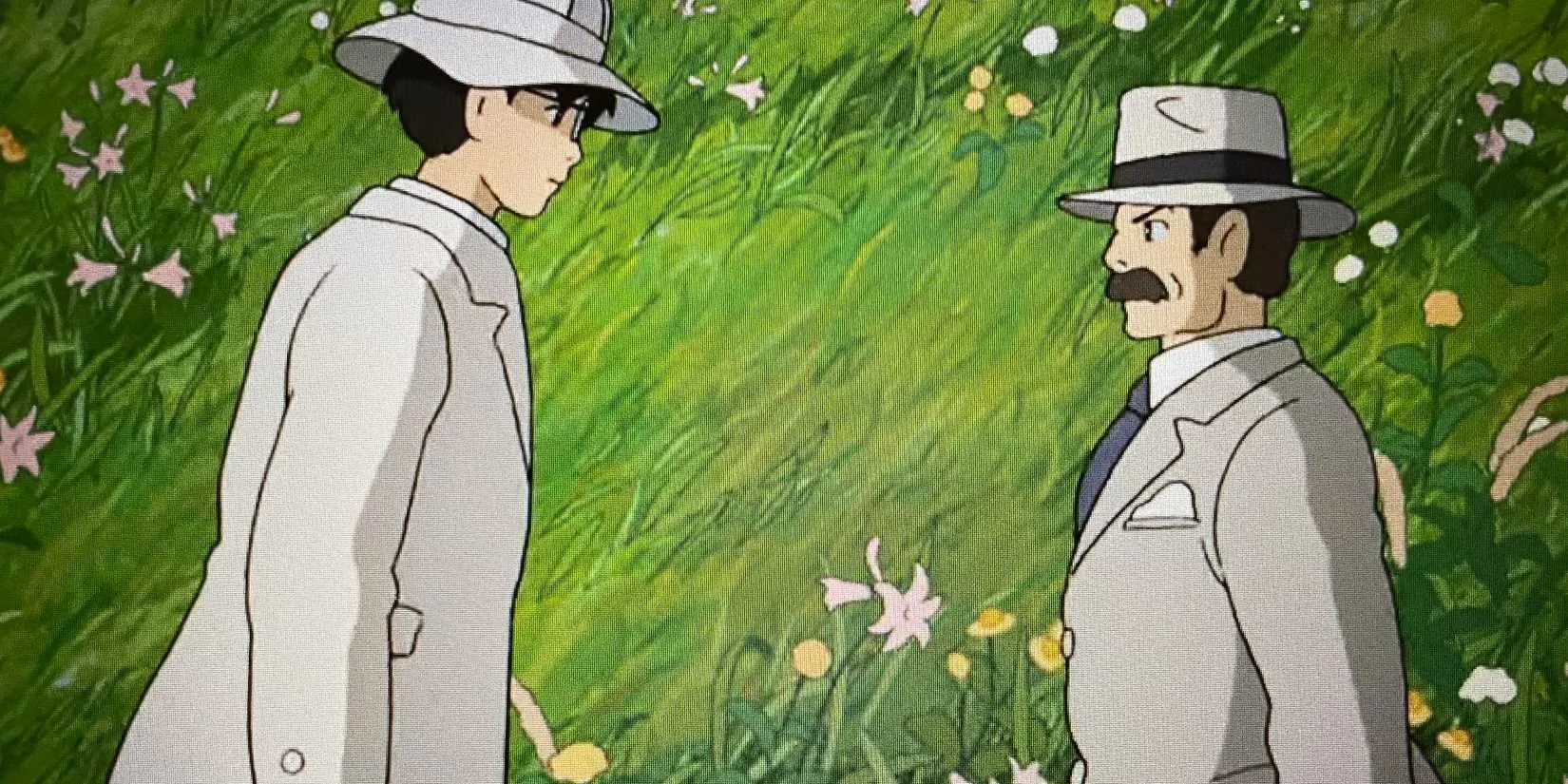
Speaking of layers, the film itself operates like a canvas of smoke – dense, drifting, and impossible to hold onto entirely. It's a historical fiction tracing the real Jiro Horikoshi, whose Mitsubishi A6M Zero fighter dominated Pacific skies. That backdrop ignited controversies: was Miyazaki glorifying war machines? But watching it in 2026, re-watching it after all these years, I see something far more fragile. The Wind Rises is a paper airplane built from love letters and farewell notes. It soars on thermals of romance and grief, carrying the weight of dreams that crash hard. The voice of Anno is the ballast – his untrained, earnest delivery reminding us that creation and destruction often share the same scaffolding.
I've often thought of the movie as a feather caught in the slipstream of history – light enough to drift over battlefields, yet strong enough to bear the entire sorrow of its characters. That feather belongs to Anno's Jiro, hesitating between schematics and the memory of his ailing wife. It's a role that should have been a disaster, yet it becomes the very heart of the film. Fans, of course, spent years spinning theories: was Jiro a stand-in for Anno? For Miyazaki? The truth is less poetic and more mischievous – Miyazaki simply wanted his friend to squirm a little, and in doing so, he captured a once-in-a-lifetime authenticity.
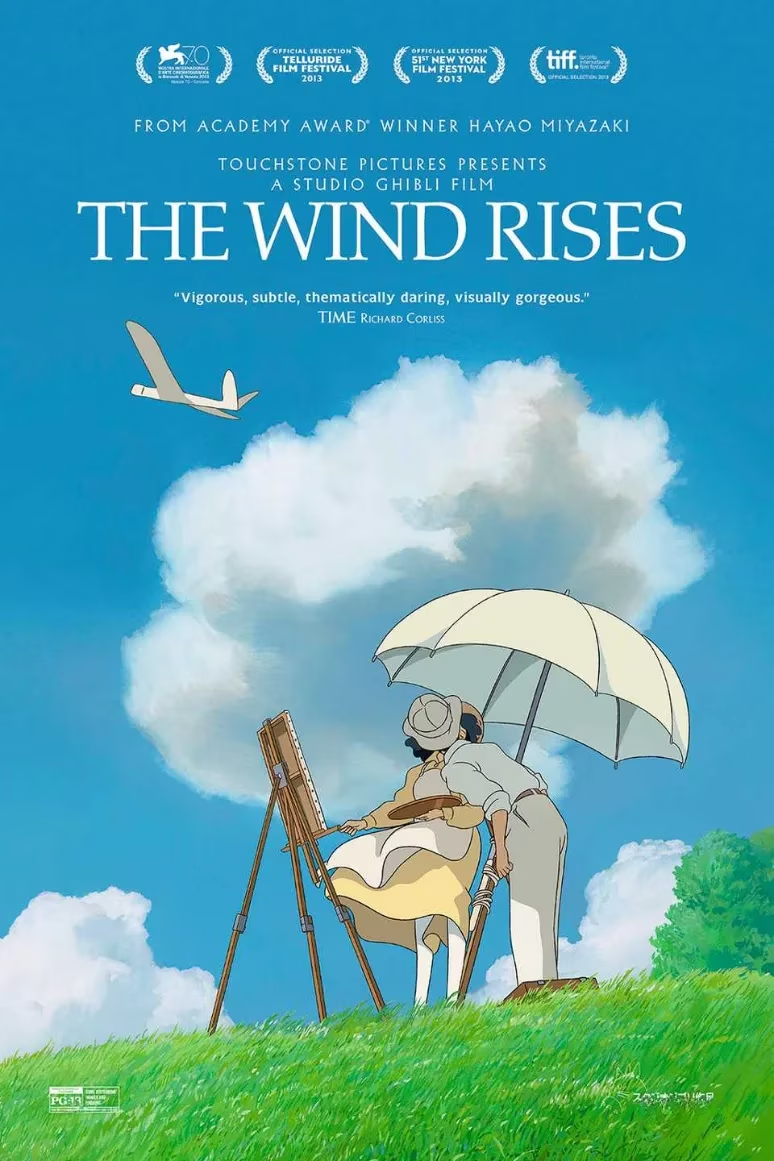
Even now, in 2026, with Miyazaki's supposed final film behind us and Anno still redefining what anime can mean, this peculiar collaboration endures as one of Studio Ghibli's quietest marvels. It's a reminder that the best tricks aren't cruel – they're invitations to find parts of yourself you never knew were mic'd up. The next time you rewatch The Wind Rises, listen closely to the voice of a man who thought he was getting a silent walk-on part, and ended up carrying a whole symphony of longing on his shoulders. That's the sound of genius playing a prank on genius, and the rest of us are just lucky enough to eavesdrop.
Comments