
I’ve spent years dissecting horror games—the slow-burn dread of Silent Hill, the psychological decay of Anatomy, the relentless survival tension of Amnesia. So when I walked out of the theater after watching Zach Cregger’s Weapons, my brain immediately began cataloguing it like a masterclass in interactive horror storytelling. This film doesn’t just scare you; it latches onto you, much like the parasitic force lurking at its core. Trust me, if Weapons were a game, players would be digging through environmental clues for weeks to piece together the twisted subtext about family dysfunction and generational trauma.
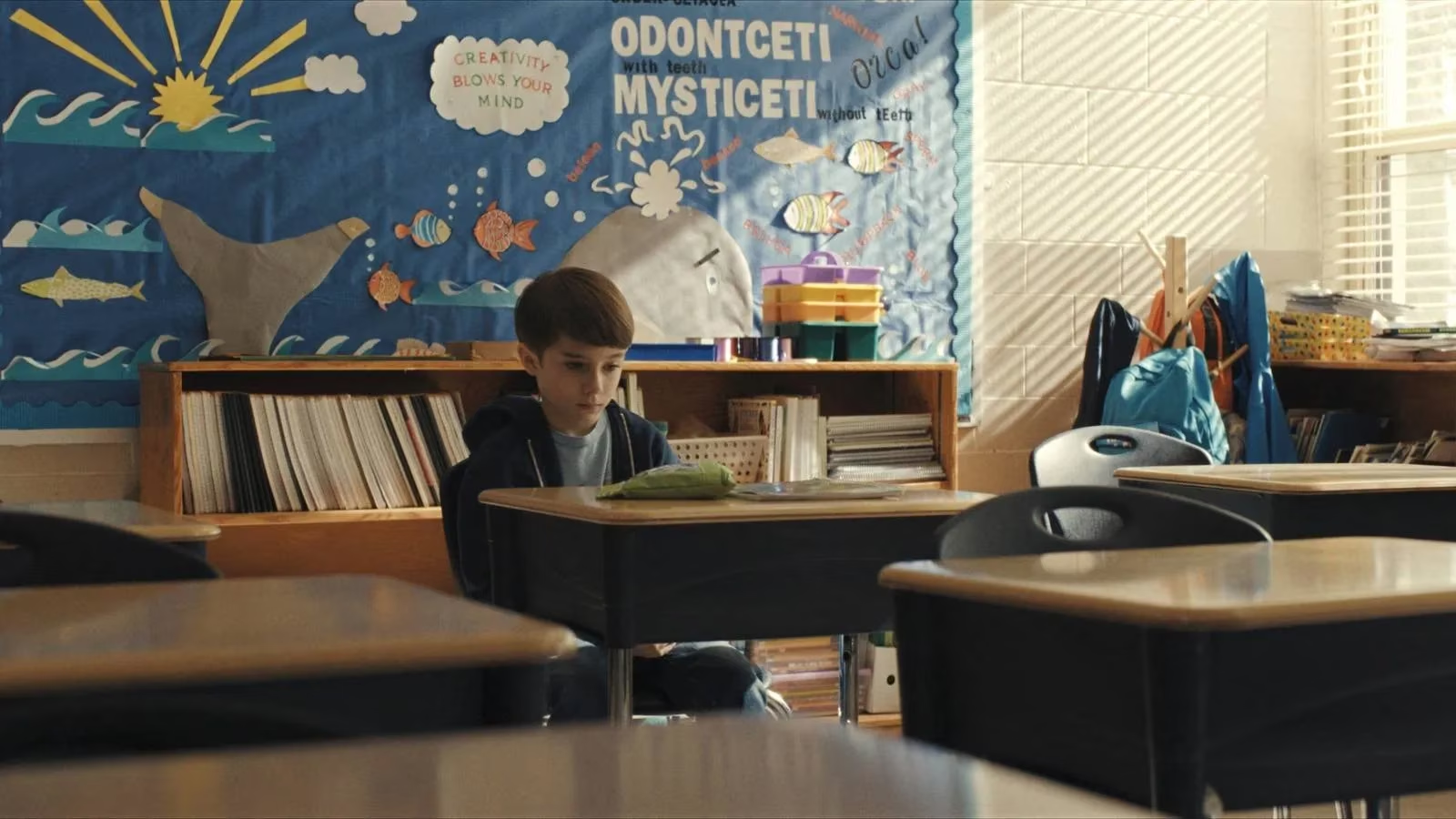
Most horror fans by now have seen the eerie trailers or heard the buzz about Gladys, that unnerving aunt who worms her way into Maybrook’s vulnerable families. On the surface, Weapons seems to be a witchcraft-possession tale, but Cregger pulls off something extraordinarily rare: he withholds the central mystery without ever making the audience feel cheated. The missing children, that floating assault rifle, and Gladys’s bizarre rituals are all pieces of a larger allegorical puzzle—one that only fully clicks on a second viewing. And as a gamer trained to search every corner for lore, I found the film’s dense foreshadowing deeply rewarding.
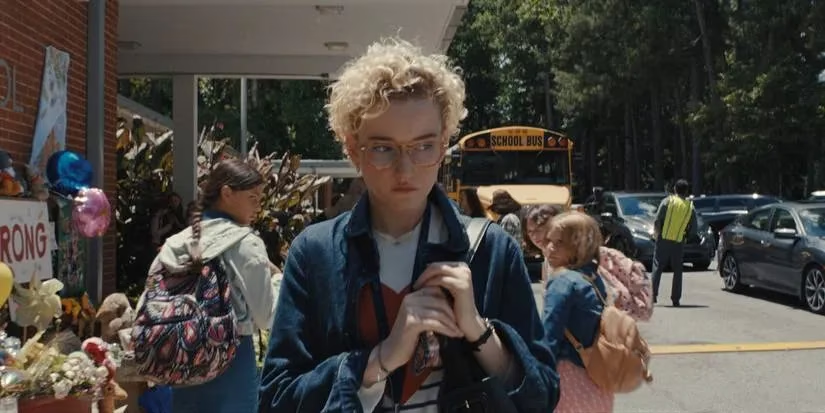
Let me take you into the classroom scene, which initially feels like background noise. Justine Gandy asks her students about parasitic creatures while the word “parasite” sits conspicuously on the chalkboard. At first glance, it’s just a teacher doing her job. But Cregger doesn’t do throwaway details—this is the first breadcrumb leading us to understand Gladys not as a witch, but as a metaphorical parasite. She feeds on the life force of the children she lures into her basement. Even after her explosive demise, the stolen kids remain altered, drained of something essential. It’s a subtle clue that Gladys was siphoning vitality all along, a walking embodiment of parasitic dependency.
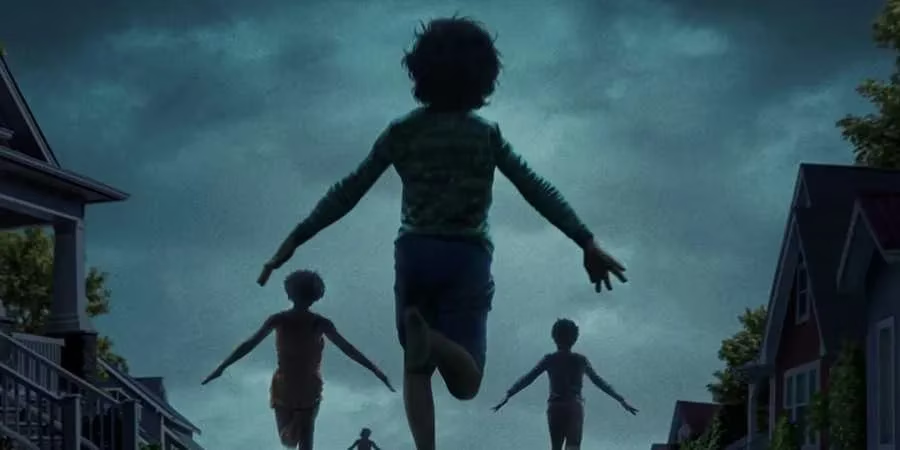
Another seemingly innocuous moment occurs when Marcus and his husband watch a nature documentary about cordyceps, the fungal parasite that hijacks insect hosts. The scene happens right before Gladys darkens their doorstep. That’s not coincidence—it’s Cregger framing her as a leeching entity that corrupts from within. It’s the kind of environmental storytelling I adore in games like The Last of Us, where cordyceps literally transforms humans into hollow shells, mirroring how Gladys hollows out families.
But here’s where Weapons transcends typical creature-feature horror: Gladys isn’t biologically a parasite. She’s a manifestation of dysfunctional family dynamics. Rewatch the film, and you’ll notice that every relationship in Maybrook is fractured. Justine and Paul’s marriage hangs by a thread. Sheriff Archer Graff’s own home is crumbling, his inability to connect with his son palpable in every tense silence. Little Alex is isolated from his peers, an outcast in his own community. The town is a breeding ground for emotional rot, and Gladys simply steps into that pre-existing decay like a pathogen finding a weakened host.
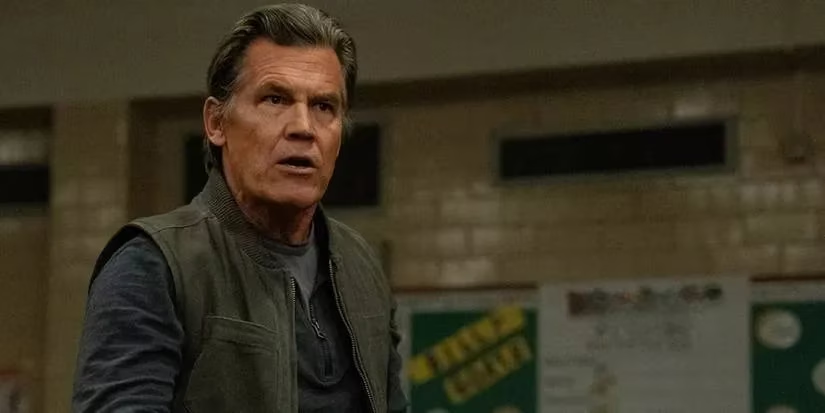
The only genuinely healthy relationships we witness—Alex’s parents, and Marcus with his husband—are precisely the ones Gladys targets. She disrupts them with vicious precision, as if harmony itself offends her parasitic nature. This reading transforms Amy Madigan’s delightfully melodramatic performance into something far more insidious: she’s an exaggerated caricature of the real evil that creeps through wounded families, the bitterness and manipulation passed down like a curse.
It’s no wonder I couldn’t shake the film for weeks. Cregger is doing what the best survival horror games do—using the supernatural as a lens to examine genuine human pain. The floating gun, the strange running motions of the missing children, the basement lair—all become symbolic weapons in an arsenal of generational trauma. When I saw Alex’s isolation mirroring Archer’s emotional numbness, I thought of Silent Hill 2’s James Sunderland drowning in his own guilt. The horror isn’t just outside; it’s festering inside the home.
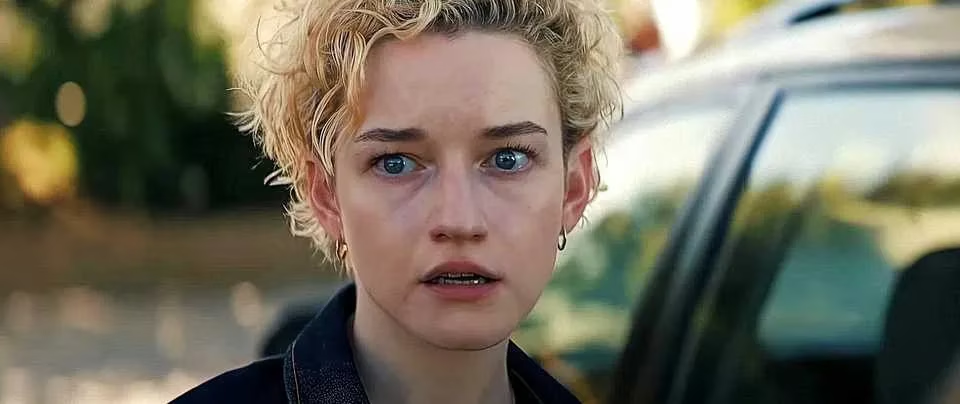
Let’s look at how the film structures its dread. Unlike many 2025 horror releases that rely on jump scares, Weapons builds its tension through information starvation and misdirection—a technique straight out of immersive sim design. You’re constantly second-guessing whether Gladys is literally a demon or a traumatized elder projecting her damage onto innocents. Even after her death, the children don’t magically recover; the scars remain. That lingering ambiguity makes the allegory hit harder.
From a gamer’s perspective, Weapons offers a masterclass in how to seed narrative through visual motifs. The chalkboard parasite, the cordyceps broadcast, the drained expressions of the rescued kids—these are all collectible fragments that form a coherent, devastating picture. If this were an interactive experience, I’d be screenshotting every background detail and compiling them into a theory thread. The film demands active participation, which is why the discourse two weeks after release hasn’t died down.
Ultimately, Weapons isn’t really about witchcraft. It’s about what happens when families become sealed ecosystems of pain, with each generation feeding off the last. Gladys is the walking, talking embodiment of that unchecked darkness, and when I recognized her as such, the movie transformed from a chilling mystery into a profound tragedy. Zach Cregger has crafted a horror story that plays by the rules of the best narrative-driven games: show, don’t tell; scatter clues; respect the audience’s intelligence. I walked in expecting a summer screamfest—I walked out with a new benchmark for symbolic horror. No weapon is sharper than the trauma we inherit.
Comments