
Just caught Tron: Ares recently, and honestly, it hit me right in the nostalgia feels. As someone who grew up with the franchise, watching this new installment was like finding a perfectly preserved time capsule from the '80s, only to discover it's been upgraded with 2026 tech. The film is packed with so many references and Easter eggs that it's basically a love letter to us long-time fans. It's a standalone story, sure, but the ghost of the Grid's past is everywhere, lingering like the hum of a CRT monitor long after you've shut it off. And before you ask—yes, a certain digital guru does make an appearance, but more on that later. Let's dive into the neon-drenched details!
The Orange: A Digital Seed from the Past 🌐
One of the earliest and coolest callbacks is the humble orange. In the original Tron, Flynn used an orange to test digitizing organic matter. Fast forward to Ares, and Eve is basically doing the reverse—trying to stabilize digital beings in the real world. She uses an orange tree as her proof of concept, which is a genius way to mirror Flynn's old experiments. The successful creation of a real orange is a quiet, powerful moment that ties the entire franchise together. It’s like watching a digital seed from the 80s finally bear fruit in our world. The visual of that orange forming is both simple and deeply symbolic.
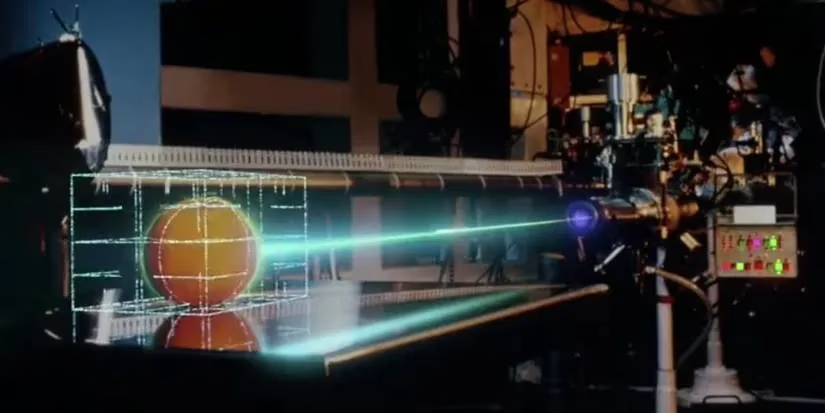
Stepping into Flynn's Retro Server: A Blast from the Past 🕹️
The key to the whole "permanence" mystery? Flynn's private server. When Ares gets digitized into it, the film does something wild—the sleek, modern CGI of the current Grid melts away, replaced by the gloriously retro, vector-graphic aesthetic of the original 1982 TRON. It's a visual gut-punch of nostalgia. This server is like a digital museum, preserved in amber. The Grid has evolved so much since Legacy, with multiple versions and corporate servers popping up, but Flynn's corner of the cyberspace remains a sacred, pixelated time capsule. This purposeful shift in style isn't just a gimmick; it highlights the foundational history of the Grid without needing a lengthy exposition dump.
The Return of Bit: A Loyal, Boxy Companion 🔷
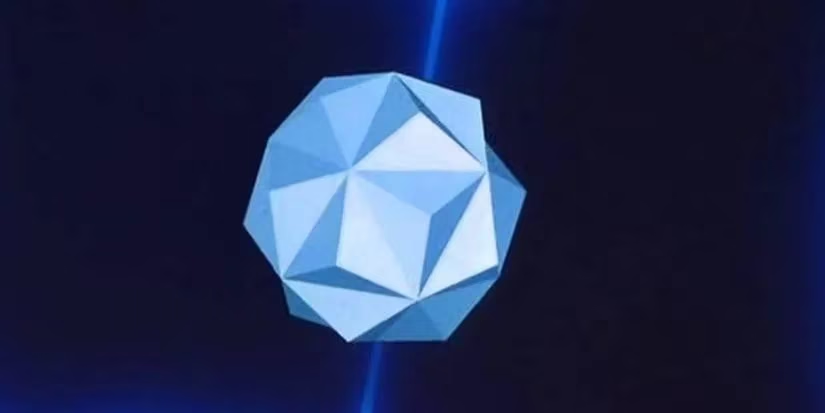
And who greets Ares in this retro realm? None other than Bit! The little digital dodecahedron that can only say "Yes" or "No" makes a sweet, surprise return. After landing in Flynn's server, Ares is confused, and Bit shows up like a helpful, geometric tour guide, handing him a classic Lightcycle and pointing the way. Bit's role in Ares is small but significant—it’s a fun, emotional callback for fans who wondered what happened to the little guy after the first film. Seeing him is like running into an old, silent friend from a childhood game.
The Flynn Copy: Guru Vibes in the Grid 🧘
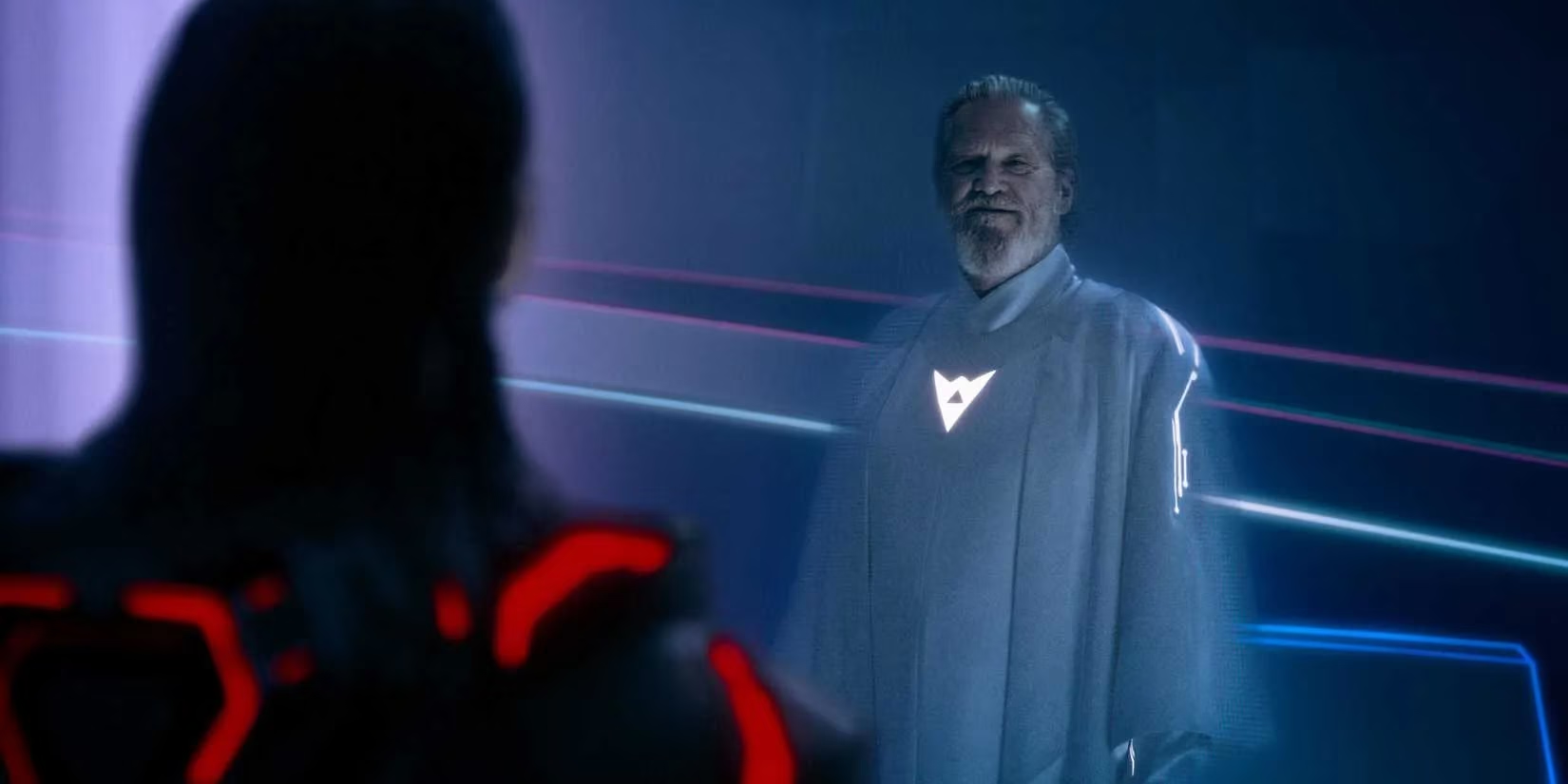
Then we meet him—a digital copy of Kevin Flynn. Jeff Bridges is back, sort of! This copy, found in the private server, has all the laid-back, slang-heavy charm of the original Flynn from the first movie. He's got that guru aesthetic from Legacy, which honestly made me do a double-take at first. Is it the same guy? Not exactly, but the essence is there. This version serves as a guide, connecting the new story to the old philosophy. His dialogue feels ripped right from an '80s hacker manual, and it’s a delightful nod to the character's roots.
Dumont's Dumpster: A Nod to Legacy's World 🗑️
Here's a blink-and-you'll-miss-it detail I loved. After a crazy Lightcycle chase, Eve crash-lands into a dumpster. On it? A "Dumont" company logo. This is a deep-cut reference to Tron: Legacy, where Sam Flynn was living in a refashioned Dumont shipping container. It shows that this company is still a corporate giant in the background of this world, over a decade later. It also ties back to the original Tron character Dumont, played by Barnard Hughes. These little background details make the world feel lived-in and connected, like finding a secret room in a game you thought you knew everything about.
ENCOM's Gaming Renaissance & The Tron Cosplayer 🎮
ENCOM in 2026 is a fascinating beast. They're split between cutting-edge tech and mass-market video games. At a corporate panel Eve misses, check out the crowd—there's a fan cosplaying as Tron! This is a brilliant meta-commentary. In this universe, most people think Tron is just a cool video game character. They have no idea about the real digital wars and Users. It's a clever way to show how the truth of the Grid has been buried under layers of corporate branding and pop culture. ENCOM's revival as a gaming powerhouse is a major plot point, and seeing a Tron cosplayer is a wink that the in-universe games Flynn inspired are now mainstream hits.
Flynn's Arcade & The Iconic Poster 🕶️
The nostalgia train doesn't stop! Flynn's Arcade, the iconic location from the first two films, makes a comeback. It's where Ares returns to the real world after getting the permanence code. Inside, the walls aren't bare—there's a poster for the Tron arcade game that's a direct replica of the original 1982 movie poster. This isn't just set dressing; it cements the idea that within the Tron universe, Flynn's creation is a celebrated piece of gaming history. The arcade itself feels like a forgotten temple, its neon signs flickering with memories of a digital past.
Sam Flynn's Office Plaque & Hidden Influence 📜
Sam Flynn might not be in the movie physically, but his presence is felt. When Eve and Ares visit the ENCOM offices, they find a perfect replica of Kevin Flynn's original home office. Among the Pac-Man references and old tech, there's a plaque stating it was donated by Sam Flynn. This small detail hit hard. It tells us that Sam, the hero of Legacy, has been working behind the scenes, preserving his father's legacy. He's using his influence to keep the memory alive, even if he's off-grid himself. It's a touching tribute that adds emotional weight to the corporate halls of ENCOM.
MCP-Style Communication & The Villain Dynamic 🖥️
Ares does a slick job of updating classic visuals. When the human villain, Julian Dillinger, talks to Ares within the Grid, he doesn't just appear as himself. He manifests as a giant, featureless, floating head—a direct visual callback to the Master Control Program (MCP) from the original Tron. It's a fantastic way to show the power dynamic. Initially, Julian and Ares mirror the MCP/Sark relationship from the first film, with Julian as the distant, controlling User and Ares as his digital enforcer. Of course, Ares eventually rebels, but that initial setup is a delicious piece of visual storytelling that honors the past while pushing the story forward.
The Mid-Credits Tease: Sark's Legacy Lives On ⚡
Stick around after the credits, folks! The mid-credits scene is a double whammy. It teases the potential return of Quorra and Sam Flynn (yes, please!). But the other part is all about Julian Dillinger. Stranded in the wreckage of his own Grid, he reclaims his Identity Disc and undergoes a digital transformation. The armor that forms around him? Its shape and ominous color scheme are a dead ringer for Sark, the primary henchman from the original Tron. Considering Sark was played by David Warner (who also played Ed Dillinger, Julian's grandfather), this is the perfect full-circle moment. Julian isn't just following in his grandfather's footsteps; he's becoming his digital heir, setting himself up as a major threat for the future. It’s a cliffhanger that feels both new and deeply rooted in franchise lore.
Final Thoughts: A Love Letter Wrapped in Neon Code 💾
Watching Tron: Ares felt like someone handed me a perfectly compiled archive of everything I loved about this universe. The references aren't just cheap fanservice; they're woven into the DNA of the new story. From the orange that started it all to the retro server that acts as the franchise's beating heart, every callback has purpose. The film respects its history while boldly asking, "What's next?" For a fan in 2026, it’s incredibly satisfying. It proves that some programs—and some stories—are built to endure. Now, if you'll excuse me, I need to go dig out my old light-up disc. The Grid is waiting, and it's more alive than ever.
Comments