
In the ever-expanding digital landscape of animated series, creators often weave subtle threads of pop culture history into their new tapestries. The 2025 debut of Transformers: Cyberworld on YouTube, a collaborative venture between Omens Studios and Hasbro Entertainment, did more than just transport classic Autobots and Decepticons like Optimus Prime and Megatron into a vibrant, game-like universe. For the observant viewer, it offered a fleeting, brilliant connection to anime's storied past—a blink-and-you'll-miss-it homage that speaks volumes about the enduring, cross-cultural legacy of iconic moments. This series, designed with a younger audience in mind yet packed with all-ages appeal, secretly harbored a visual joke plucked directly from one of animation's most famous and tragicomic scenes.
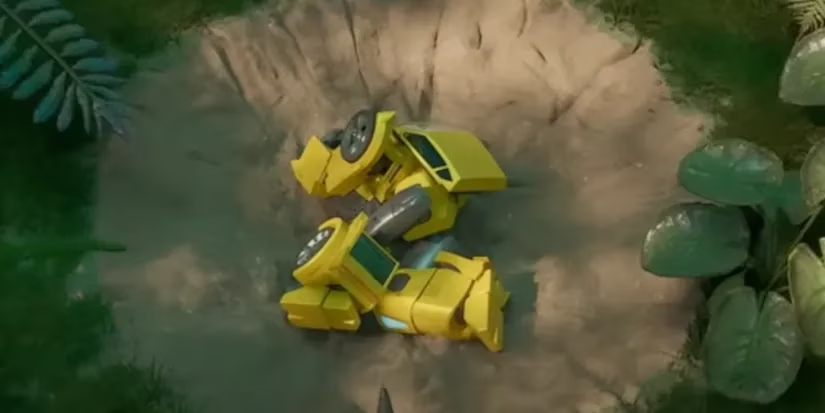
Tucked within the pilot episode's rapid sequences is a frame-perfect recreation of a moment that transcended its original, somber context to become a global phenomenon. The scene in question mirrors the infamous fate of Yamcha from Dragon Ball Z's Saiyan Saga. In that pivotal arc, the once-prominent martial artist met a humiliating end, left lifeless in a crater after a Saibaman's self-destruction. Despite its grim nature, the specific imagery—Yamcha's body curled inward, defeated—was seared into collective memory, evolving from a narrative beat into one of the internet's most circulated and parodied anime memes.
Transformers: Cyberworld pays direct tribute to this legacy. When the beloved Bumblebee is first introduced in this new digital realm, he is briefly depicted in an identical state: motionless within a depression in the ground, limbs drawn in, mirroring Yamcha's exact posture and placement. This is no accidental similarity; it is a deliberate, witty nod crafted by animators who are clearly well-versed in anime history. The gag, lasting mere frames, serves as a secret handshake to seasoned fans, acknowledging the shared language of pop culture references that now spans genres and mediums.
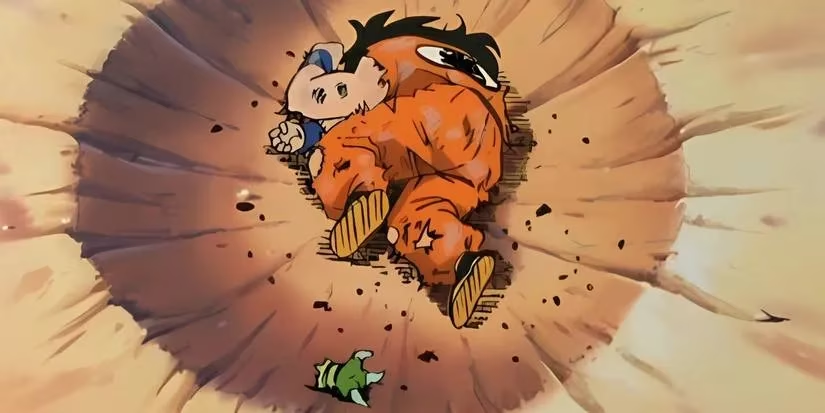
The original event marked a significant shift for Dragon Ball Z, escalating stakes and signaling the dawn of galactic-scale conflicts. Yet, for Yamcha, it signaled a different kind of turning point. From a skilled fighter in the original Dragon Ball, his character became synonymous with untimely defeats and unfortunate luck, with the Saibaman incident serving as the cornerstone for countless jokes. 😅 Ironically, this very meme has been instrumental in maintaining his cultural relevance, leading to self-aware parodies even within the Dragon Ball Super series decades later.
The inclusion of this Easter Egg in a major 2026 franchise like Transformers is a powerful testament to several key trends in contemporary media:
-
The Pervasiveness of Anime Culture: Anime's influence has shattered its niche boundaries, becoming a fundamental reference point across global entertainment, from Western animation to video games.
-
The Language of Memes as Shared History: Iconic visual gags like Yamcha's pose have become a universal shorthand, a piece of shared digital folklore that creators can invoke to connect with audiences.
-
Nostalgia with a Wink: Modern series frequently use such references not just for homage, but as a form of sophisticated, intertextual humor that rewards dedicated fans.
This small act of visual quotation does more than elicit a chuckle; it highlights how deeply ingrained these animated legacies have become. As anime's popularity continues its meteoric rise globally, such cross-pollination is likely to become even more commonplace. The crater that once defined a character's downfall has, through endless replication and parody, become a monument to his unexpected, meme-fueled immortality. For fans who spotted Bumblebee's brief predicament, it was a delightful reminder that in the vast, interconnected Cyberworld of stories, even our heroes can take a moment to lie down in a famously familiar pose.
Comments