
The genre landscape in 2026 has become a sprawling cemetery packed with fanged aristocrats, but the world has rarely seen a stake driven through the heart of fatherhood quite like it is in Abraham's Boys: A Dracula Story. While recent years gifted audiences with Robert Eggers' plague-ridden shadow-play and Ryan Coogler’s sweaty Southern gothic, Natasha Kermani’s follow-up carves a niche into the scorched soil of 1915 California. It is not a story about the Count, but rather the hangover left by his destruction. This is a household where the monstrous mythology of the past acts like a slow-acting venom, paralyzing logic while sharpening the paranoia of a deeply traumatized patriarch.
Kermani, fresh off crafting chills for the upcoming gothic piece The Dreadful, finds herself delicately threading a needle between the old world and the modern one. Adapting Joe Hill’s short story, she builds a dry, dusty cage for the Van Helsing family. Abraham, played with the sort of hardened stillness that suggests a mountain refusing to crumble, drags his wife Mina and two sons to the American West. Yet isolation acts as a poor disinfectant. The psychological bacteria of Transylvania have stowed away in their luggage. The set itself becomes a visual metaphor for a stalled exorcism; the railroad stretching toward the homestead doesn't signify progress to Abraham, but an artery through which vampiric pestilence might pump faster. He views modernity like a sealed tomb being cracked open by naive treasure hunters.
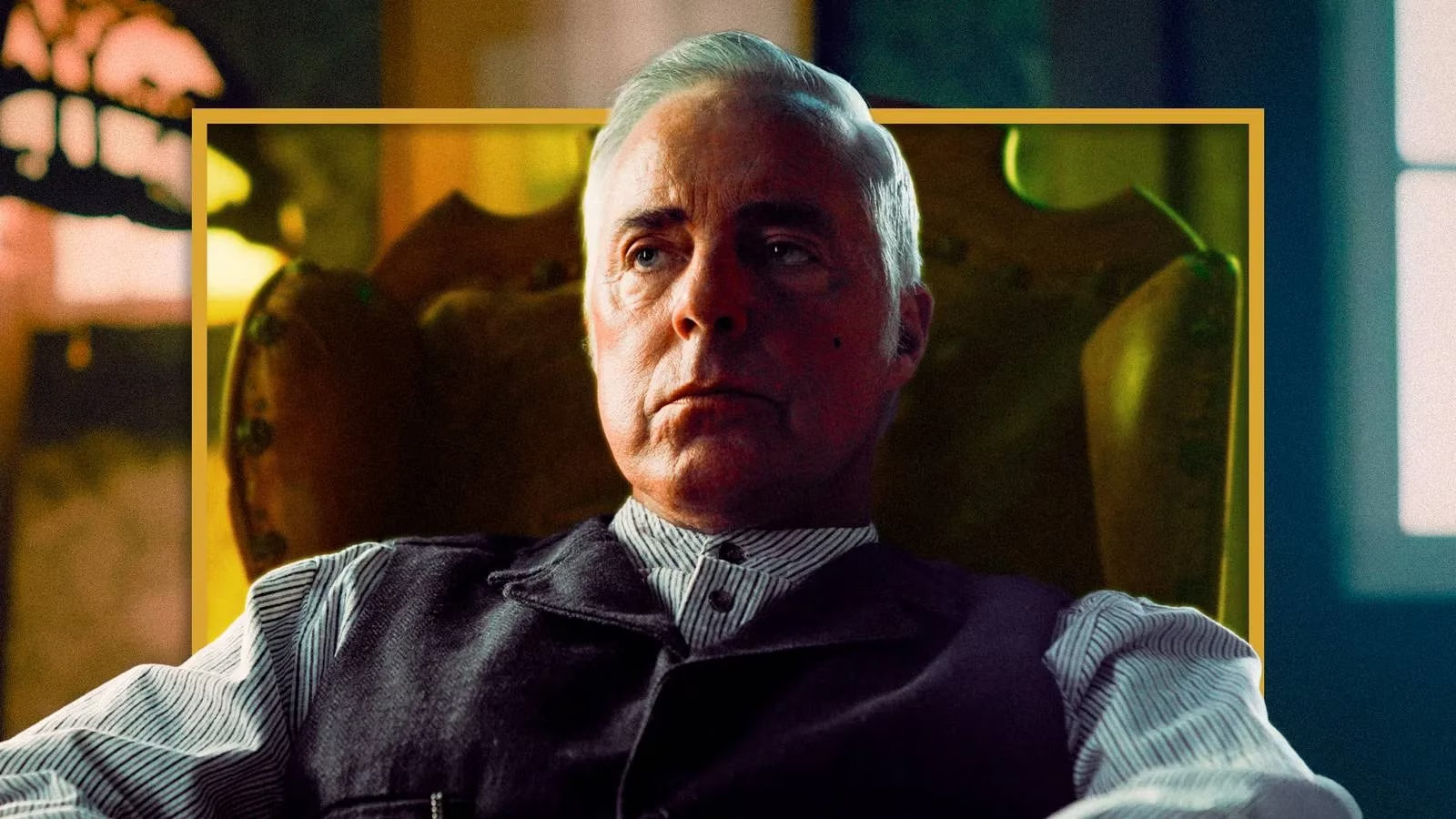
Titus Welliver, carving out a drastically different Van Helsing than the acrobatic professors of cinema past, abandons the iconic leather bag of stakes and crucifixes. His weapon is internalized dread. He maneuvers through the frame as a man who smothers his children not with warmth, but with rigorous survival protocols. The relationship festering between Abraham and his eldest son Max mirrors a shifting tectonic plate; quiet, invisible, but catastrophic in motion. Brady Hepner, capturing Max’s awakening, plays the role as a kid realizing his father’s holy word is just a script written by trauma. Watching the boy shift from blind obedience to independent suspicion is like witnessing a cult member slowly noticing the cracks in the leader’s divine narrative.
Adding a ghostly texture to the crumbling domesticity is Mina, portrayed with a fragile, translucent edge by Jocelin Donahue. Kermani doesn’t treat her as a mere housewife with a bite scar. She is a dial tuned permanently to a dark frequency, a woman who shared a telepathic cocktail with evil and now suffers a chronic psychic hangover. The film frames her trauma not as a dramatic frenzy, but as a slow, terminal dissolution of self. She drifts through the California light like a photograph being bleached by the sun, present but vanishing.
The fragile hermit kingdom shatters with the arrival of Arthur Holmwood. Jonathan Howard’s take on the original novel’s grieving aristocrat is a study in displaced guilt. Showing up decades after plunging a stake into his undead fiancée on Van Helsing’s advice, Holmwood acts as a mirror reflecting Abraham’s manipulative past. The confrontation feels less like a reunion and more like the snapping of a psychological suspension bridge. Howard vibrates with the unease of a man who finally realized his mentor was less a savior and more a charismatic plague doctor prescribing death.
In the eyes of young Rudy, played by Judah Mackey, there is still a flicker of untouched starlight before the narrative’s gravity inevitably swallows him. Mackey navigates the role of the younger brother as a vessel of innocence, yet the actor teases a curious nature that leads him into the gristle and rot his father couldn't hide. The dynamic between the two brothers is a brilliant contrast: Max is the steel being forged in a dark furnace, whereas Rudy is the kindling hope inadvertently set too close to the flame.
What makes this particular distortion of the Dracula legend so compelling in 2026 is its refusal to rely on supernatural spectacle. It weaponizes the mundane. Abraham’s toolbox contains no silver bullets; it holds the corrosive power of a father’s disappointment and the terror of a changing world. The script treats Abraham not as a hero, but as a zealot whose greatest battle was won long ago, leaving him a soldier adrift in peacetime. He is a mythological figure robbed of his monster, projecting demons onto the desert shadows.
Kermani’s vision, expanded beautifully from Hill’s darker prose, floats an uncomfortable question: what if Van Helsing was the real contagion? The film suggests that saving a soul by driving a stake through a heart offers no catharsis, only blood on trembling hands. As Abraham’s grip on reality loosens, the movie dares the audience to feel sympathy for a dictator of a household who loves his boys so fiercely that he poisons the very air they breathe.
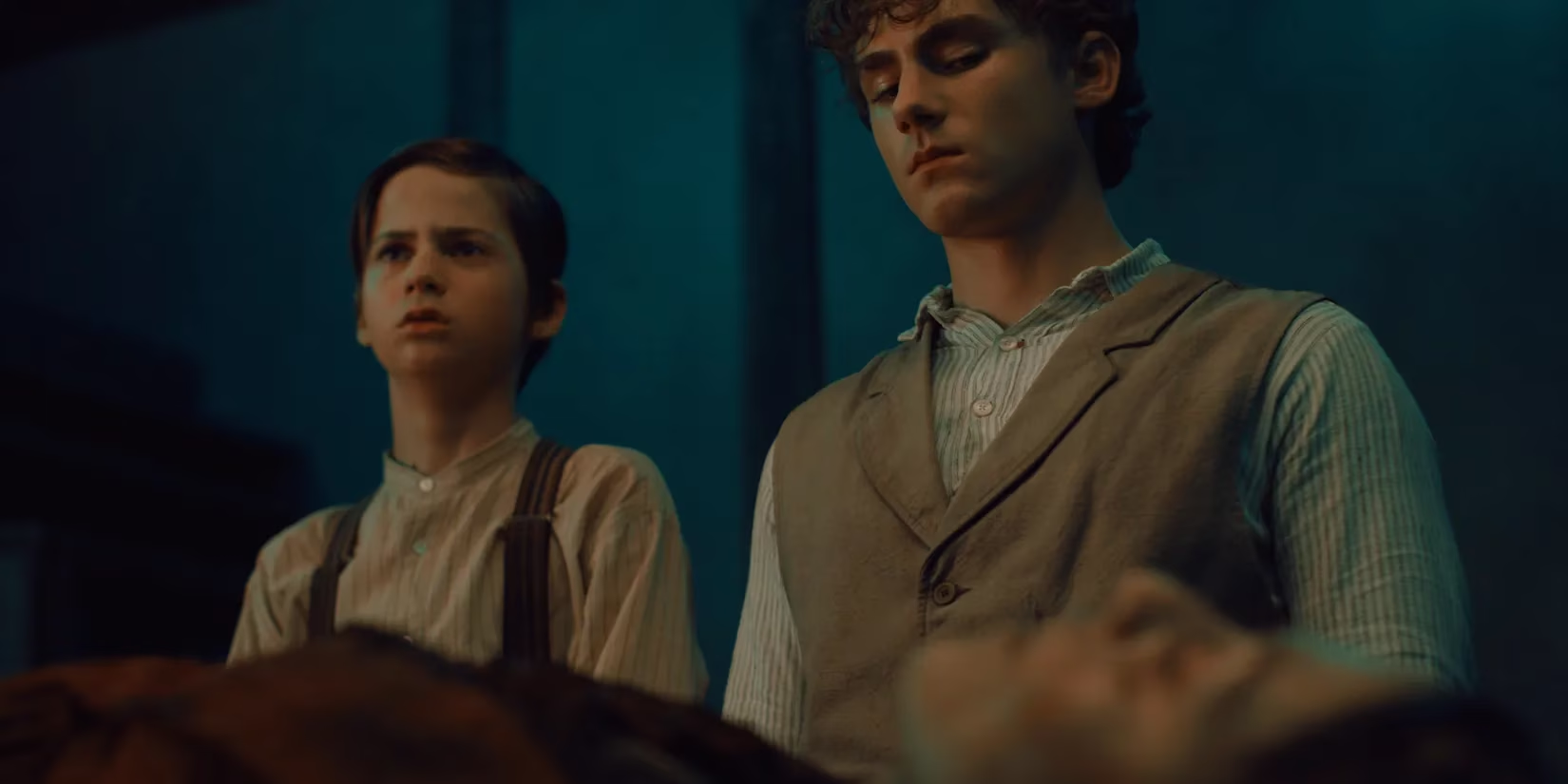
Ultimately, Abraham’s Boys operates not as a creature feature, but as a dusty, parched tragedy. It maps the geography of generational trauma using the cartography of a Gothic novel. The acting anchors the fantastical roots in grim realism, allowing the aroma of decay to rise from the screen. By the time the final act tightens its grip, the audience realizes they aren't watching a hunt for monsters, but the autopsy of a family that mistook fear for love. It’s a hazy, sun-scorched nightmare proving that the most dangerous vampires aren't those who drink blood, but those who drain the future to sustain a decaying legend.
Comments