
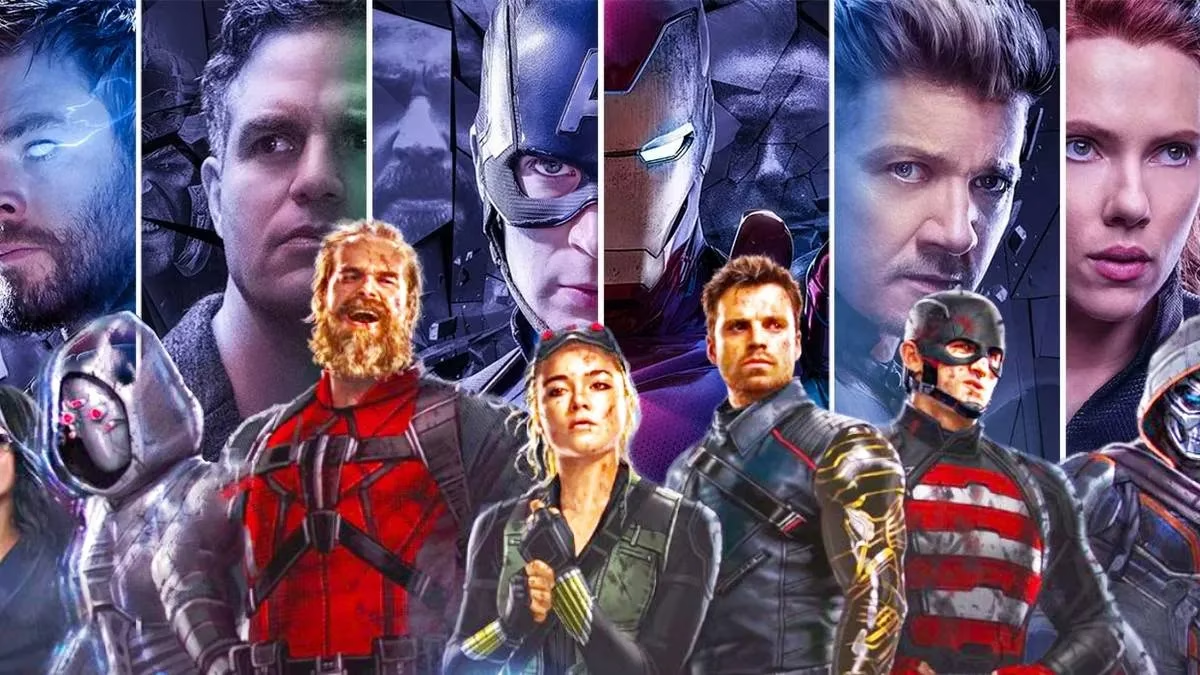
By 2026, Thunderbolts* stands as one of the Marvel Cinematic Universe’s more deliberate experiments in tone and scale. Released on May 2, 2025, roughly 17 years after the franchise began, the film centers on a volatile collection of former villains and antiheroes rather than polished saviors. Sebastian Stan’s Bucky Barnes, Florence Pugh’s Yelena Belova, David Harbour’s Alexei Shostakov, and their uneasy allies give the project a chaotic, morally grey identity. That casting choice alone separates it from the usual MCU template, but the deeper difference lies in how director Jake Schreier treats the familiar superhero formula: he acknowledges it, bends it, and then redirects it toward something smaller, stranger, and more character-driven.
A Different Brief from the Start
Schreier has explained that the brief from Kevin Feige was direct: make it different. The director’s background and references, including Being John Malkovich and Michel Gondry, were welcomed, yet Schreier still argued for a large street sequence. That sequence functions as a wink at traditional superhero storytelling, especially the ground-level idea of saving civilians. Joanna Calo’s writing smartly ties that idea to Alexei, who dreams of such heroics early in the film. Feige questioned whether another falling-crane set piece was necessary, but Schreier insisted. The crane was not there merely for spectacle; it was a statement of scope. By proving that the film could operate at that level, Schreier made the later turns into smaller, internal, practical sets feel like intentional choices rather than compromises. The whole sequence, in his account, exists for a single moment of surprise and a twist that pushes the story in a very different direction.
The Anti-Avengers at the Center
The team is not a traditional heroic ensemble. Its members are misfits, and most are drawn from past antagonistic roles. Even those who are not outright villains do not fit the Steve Rogers mold. This is why Schreier’s approach suits the material. Thunderbolts* works as a dark echo of The Avengers, but with a sharper character focus and a less stable moral center. Bucky is a particularly clear example. As one of the longest-running MCU characters, he needs a fresh arc rather than a repeat of old patterns. Schreier described the challenge as finding a new path for Bucky: watching him try to fit uncomfortably into a role, embrace a new direction, and wonder whether there is a way to help the world after everything he has done. Because Stan has been in so many of these films, the arc also carries a meta angle. The audience knows Bucky’s history, and the film can play on that knowledge.
| Key Detail | Information |
|---|---|
| Film | Thunderbolts* |
| Release date | May 2, 2025 |
| Director | Jake Schreier |
| Writers | Eric Pearson and Joanna Calo |
| Runtime | 127 minutes |
| Rating | PG-13 |
| Core cast | Florence Pugh, Sebastian Stan, David Harbour, and ensemble |
| Genres | Action, science fiction, adventure |
Familiar Tropes, Twisted Expectations
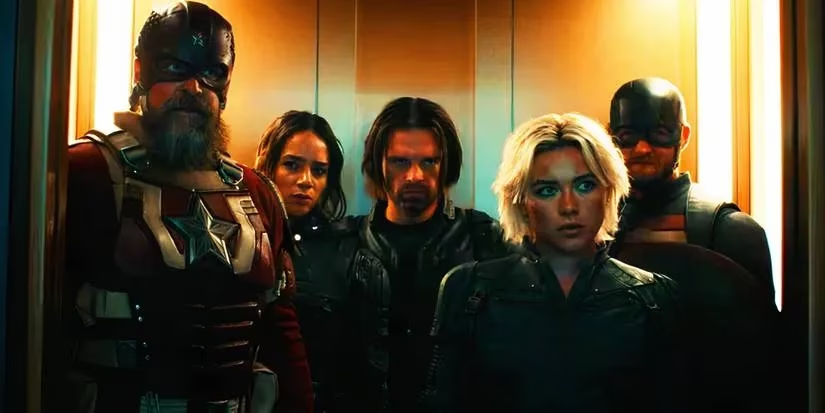
Schreier’s strategy is not to reject the MCU outright. Instead, Thunderbolts* pays homage to earlier superhero films while very much doing its own thing. That balance matters. A franchise that has existed for a long time has already experimented with many styles and genres, so simply being different is not enough. The film has to make its differences meaningful. Here, the familiar assembly moment, the street-level rescue, and the large-scale action are all present, but they are filtered through a twisted Thunderbolts sensibility. The elevator scene and the team’s cramped, uneasy dynamic reinforce the point: this is not a confident gathering of heroes. It is a group of damaged people trying to overcome something bigger than themselves without ever becoming a conventional team.
Why the Approach Works
By 2026, the MCU’s long history makes novelty harder to achieve, but Thunderbolts* finds novelty through subversion rather than reinvention. The film takes recognizable tropes and turns them slightly, so the audience’s expectations become part of the experience. Schreier’s choice to embrace and eschew the typical MCU style fits a project that is not a traditional superhero team-up. It is a dark echo of The Avengers with a character-first focus. The result is a film that uses the scale of the franchise to earn its quieter, more internal passages, and uses its morally grey cast to question what a hero actually looks like.
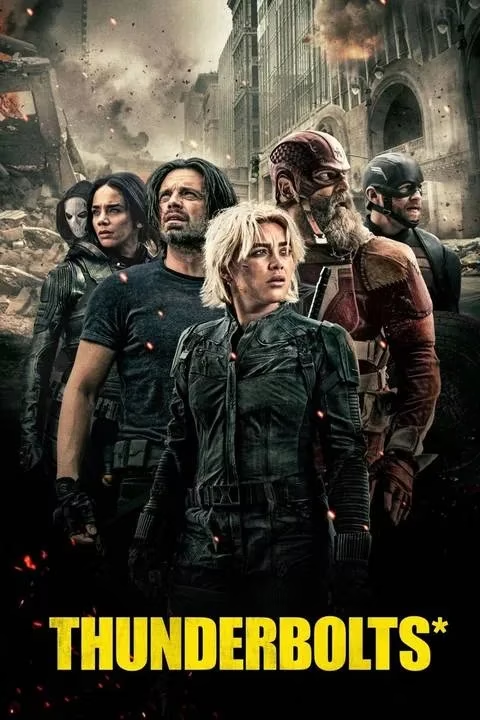
In the end, Thunderbolts* does not simply imitate the Avengers. It studies the shape of an Avengers film, then fills that shape with misfits, discomfort, and surprise. That is why its familiar pieces feel different, and why its antiheroes leave a stronger impression than a standard lineup of saviors. 🎬
Comments