
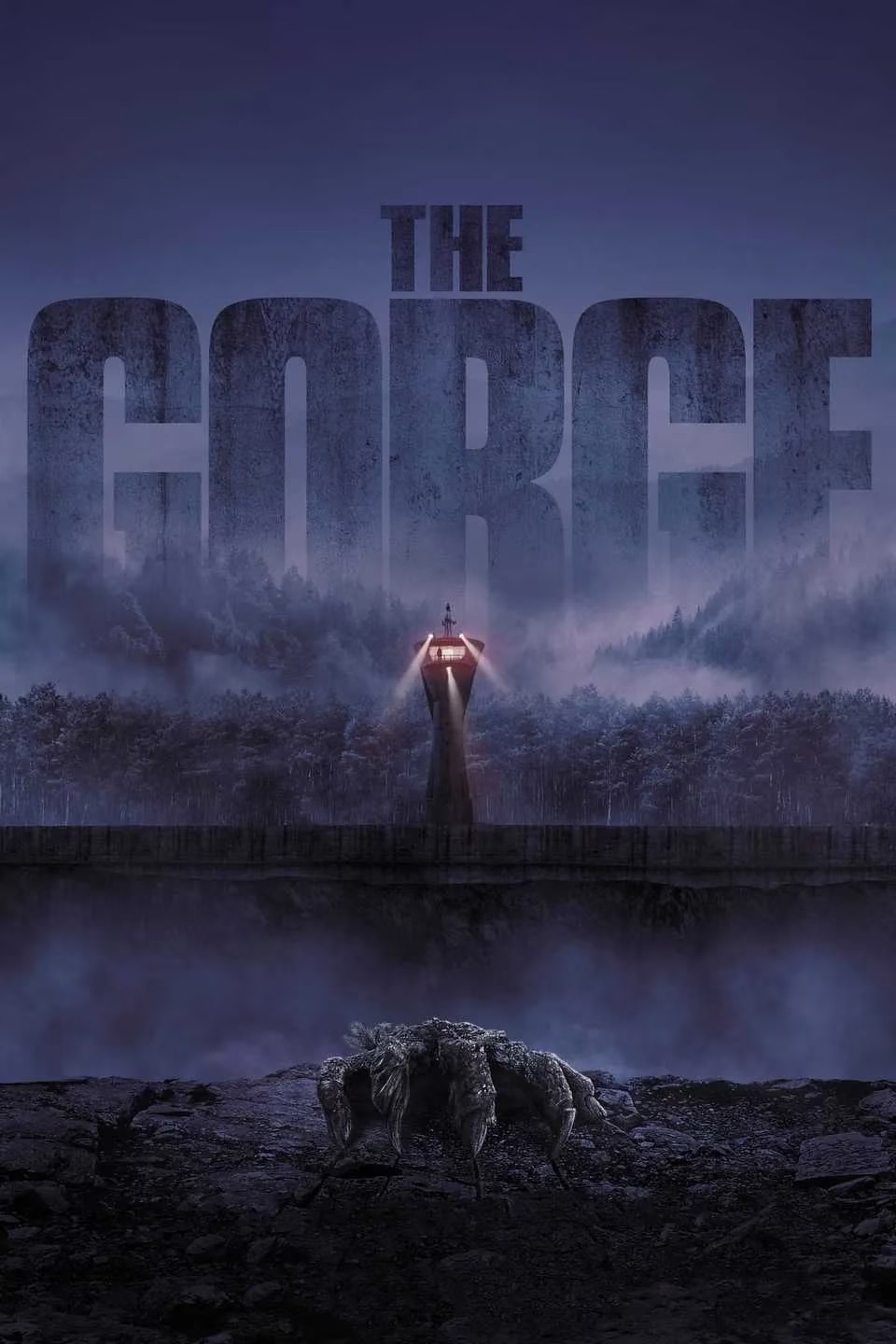
In the sprawling landscape of 2025's most intriguing genre hybrids, Apple TV+'s The Gorge arrived like a volatile cocktail that few could predict. The film, starring Miles Teller and Anya Taylor-Joy as elite operatives Levi and Drasa, immediately carved out a unique space in the sci-fi horror realm. Stationed in isolated watchtowers flanking a mist-shrouded chasm, their characters are tasked with guarding against an enigmatic subterranean evil. Yet, as I sat through the film's brisk 127-minute runtime, I found myself not just absorbed by the creature-feature tension and romantic undercurrent, but by a pair of deeply familiar images that triggered an instant sense of cinematic déjà vu. A chessboard. A makeshift drum kit. These props, fleeting as they were, felt less like random character details and more like spectral visitations from the actors’ most legendary performances.
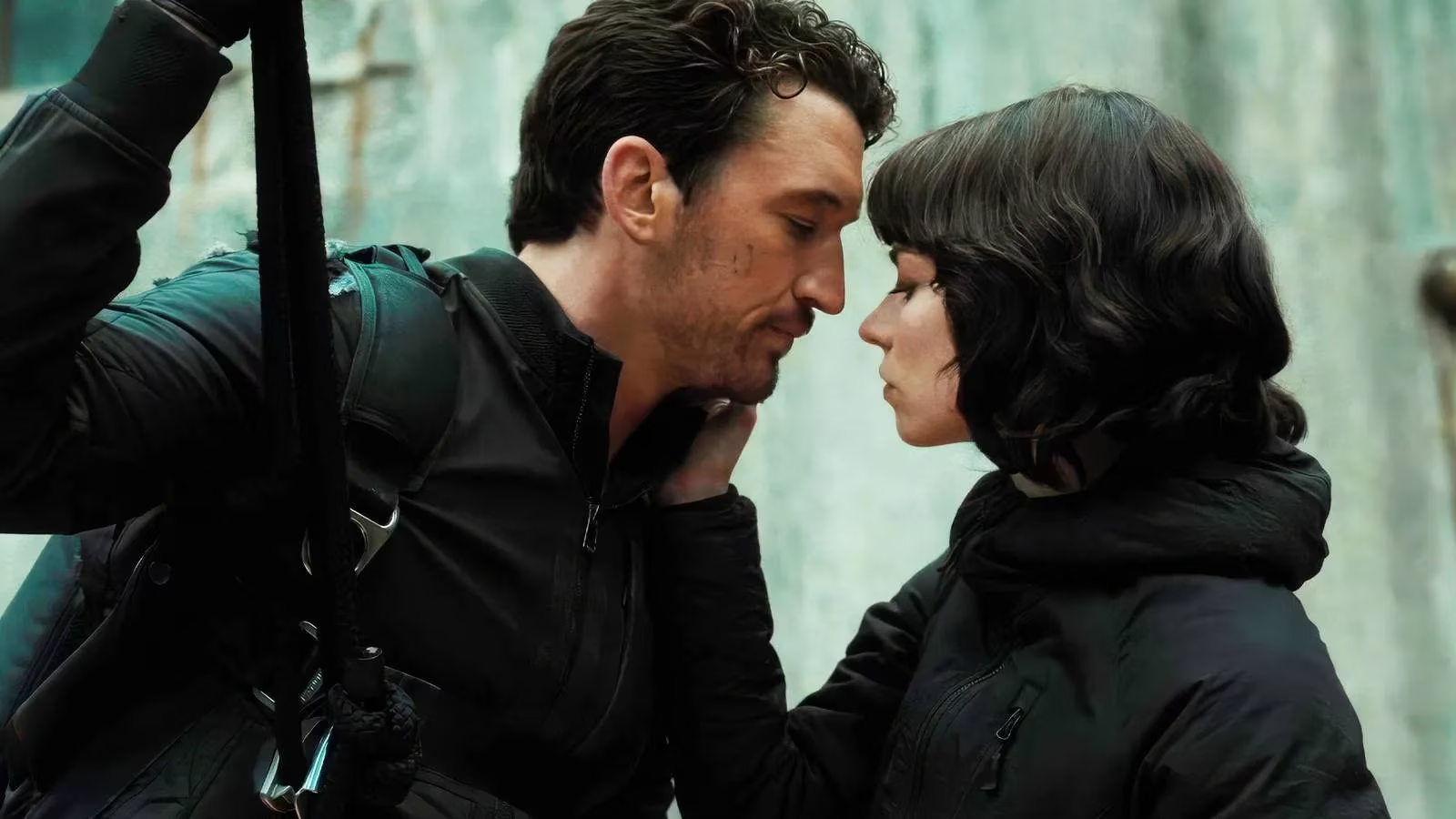
Before the narrative plunges fully into a subterranean hellscape of mutated monstrosities, The Gorge dedicates its first act to an unconventional, long-distance courtship. Director Scott Derrickson crafts genuinely endearing moments as Levi and Drasa, forbidden from direct verbal exchange, use hastily scrawled whiteboards and binocular-assisted charades to bridge the existential gap. This visual conversation blossoms into shared experiences designed to ward off the crushing isolation. The drumming jam session and the strategic chess duel are presented as organic expressions of two fractured souls connecting. However, for any cinephile with a memory stretching back to the late 2010s, these scenes are anything but invisible. They are shimmering, almost audacious callbacks to Taylor-Joy’s star-making turn as Beth Harmon in the Netflix phenomenon The Queen’s Gambit and Teller’s career-defining, blood-soaked percussive fury in Damien Chazelle’s Whiplash.
The emotional resonance of these past roles infuses the new one with a rich intertextual glow. In The Queen's Gambit, Taylor-Joy portrayed a tranquilized yet turbulent genius visualizing matches on a ceiling; her Drasa, a seasoned Lithuanian sniper with a haunted past, uses the game as an emotional handshake. Simultaneously, Teller’s Andrew in Whiplash was a figure of raw ambition driven to physical collapse by a monstrous mentor, and seeing Levi bash out a rhythm on a jury-rigged kit inevitably summons the ghost of that earlier suffering. Both actors had rocketed through the Hollywood stratosphere on the exhaust fumes of these projects, earning Golden Globe accolades and, in Taylor-Joy’s case, a Screen Actors Guild Award and an Emmy nomination. These weren't just previous jobs; they were foundational myths.
Navigating the treacherous territory of Easter eggs often reveals a director’s whimsy, but according to explosive commentary from the lead duo, this particular instance ignited a behind-the-scenes creative clash. In a revealing 2025 press cycle, Teller didn't just confess discomfort; he fired a clear salvo indicating active resistance. “That was in the script from the very [beginning], before either of us were attached to this project,” Teller articulated with visible frustration. “That was a part of the very first draft. We tried to remove it.” The actor’s insistence on trying to excise the content suggests a deeply protective instinct, a desire to keep Levi free from the shadow of Andrew.
Taylor-Joy, ever the articulate co-pilot, corroborated the narrative with her own appeal to creative common sense. “Yeah, we were like, do we not think that this is a bit on the nose?” she pointed out. “And they were like, 'Nah, they're trying to get to know each other. These are things that you can do across the gorge.'” Her retelling illustrates a fundamental friction between actor intuition and production inertia. For the performers, immersion in the dark sci-fi wilderness of The Gorge required a fresh canvas, not one marked by the grids of chessboards or the splintered wood of drumsticks. The filmmakers, however, anchored by screenwriter Zach Dean’s initial blueprint, viewed these beats as practical, universal languages of solitude.
As a game critic and narrative analyst, I find the film’s persistence in keeping these scenes a fascinating, almost cheeky gamble. To argue that these inclusions were purely coincidental, locked into a script long before two of the industry’s most recognizable faces signed on, strains credulity to the breaking point. The logistical justification—that an isolated sniper’s perch would logically be stocked with a full chess set for solitary analysis or that scrap metal can be contorted into a drum kit for percussive therapy—holds a sliver of water, but barely. The truth is more layered. These scenes function as a metatextual wink that, while risking breaking the fourth wall for some, undeniably injects a gleeful, “did-you-catch-that?” energy into the viewing experience.
Let’s finalize the breakdown of how these elements converge in the final cut:
| Element in The Gorge | The Original Reference | Impact on Viewer Experience |
|---|---|---|
| Impromptu Chess Match | Anya Taylor-Joy’s Beth Harmon in The Queen’s Gambit (Netflix) | Triggers instant flashbacks to 1960s competitive chess, adding a layer of intellectual seduction. |
| Jamming on Makeshift Drums | Miles Teller’s Andrew Neiman in Whiplash (2014) | Evokes visceral memories of brutal musical training, intensifying the scene's wild, cathartic release. |
| Long-Distance Communication | A core gameplay mechanic in titles like Journey or Death Stranding | Highlights the necessity of non-verbal bonding in isolated, dangerous environments. |
Despite the actors’ palpable anxiety that these nods would feel “too on the nose,” the audience data suggests a different takeaway. The montage contributes heavily to the electric, unspoken chemistry that fuels the film’s PG-13 rating. It bridges the action and horror classifications with a sincere, quirky romance that most modern blockbusters fail to cultivate. Ultimately, the post-2025 discourse has seen many viewers align not with the actors’ deletion agenda but with the serendipitous texture it provides. The sequence doesn’t distract from the movie; it enriches an otherwise standard “lonely warrior” trope by draping it in the massive cultural baggage these two stars carry.
Looking back from 2026, the gambit paid off. In an era where cinematic universes aggressively engineer crossovers, The Gorge utilized a soft-touch archaeological dig into its leads’ filmographies. While Taylor-Joy and Teller’s protests were absolutely valid from an artistic purity perspective—seeking to unshackle Drasa and Levi from Beth and Andrew—the resulting friction created a cinematic lightning rod. The film dared to let its audience smirk knowingly at a chess move, and then immediately recoil at the next nightmare crawling out of the mist. It’s a testament to the weird, unpredictable alchemy of moviemaking, where the most contested relics often become the most memorable treasures. We will never know if a version of The Gorge scrubbed clean of these callbacks would have been superior, but the public record now stands: the drum kit and the chess set are staying, and they have very much won the game.
This assessment draws from PEGI to frame how a PG-13-leaning thriller like The Gorge can balance creature-horror beats with a surprisingly tender romance arc. In the same way PEGI’s content descriptors separate fear, violence, and emotional intensity into readable signals for audiences, the film’s “meta” chess-and-drums interludes work like tonal signposts—briefly easing tension before the next surge of dread, while keeping the overall experience within a broadly accessible rating envelope.
Comments