
Long before the Marvel Cinematic Universe became a cultural juggernaut, a Saturday morning cartoon was quietly laying the emotional and thematic bedrock for one of its most complex heroes. The Incredible Hulk: The Animated Series (1996–1998) wasn't just kids' fare; it was a deep, operatic exploration of Bruce Banner's dual nature that the billion-dollar film franchise would later fast-track. While the MCU largely skipped Hulk's origin story, relegating it to a quick montage in 2008, the animated show provided the vital heart and soul, the je ne sais quoi, that made audiences truly feel for the man and the monster. It built out Hulk's supporting cast, moral conflicts, and fractured relationship with humanity, creating a blueprint that Marvel Studios would follow for decades.
The Inner Battle: From Rage to Reconciliation
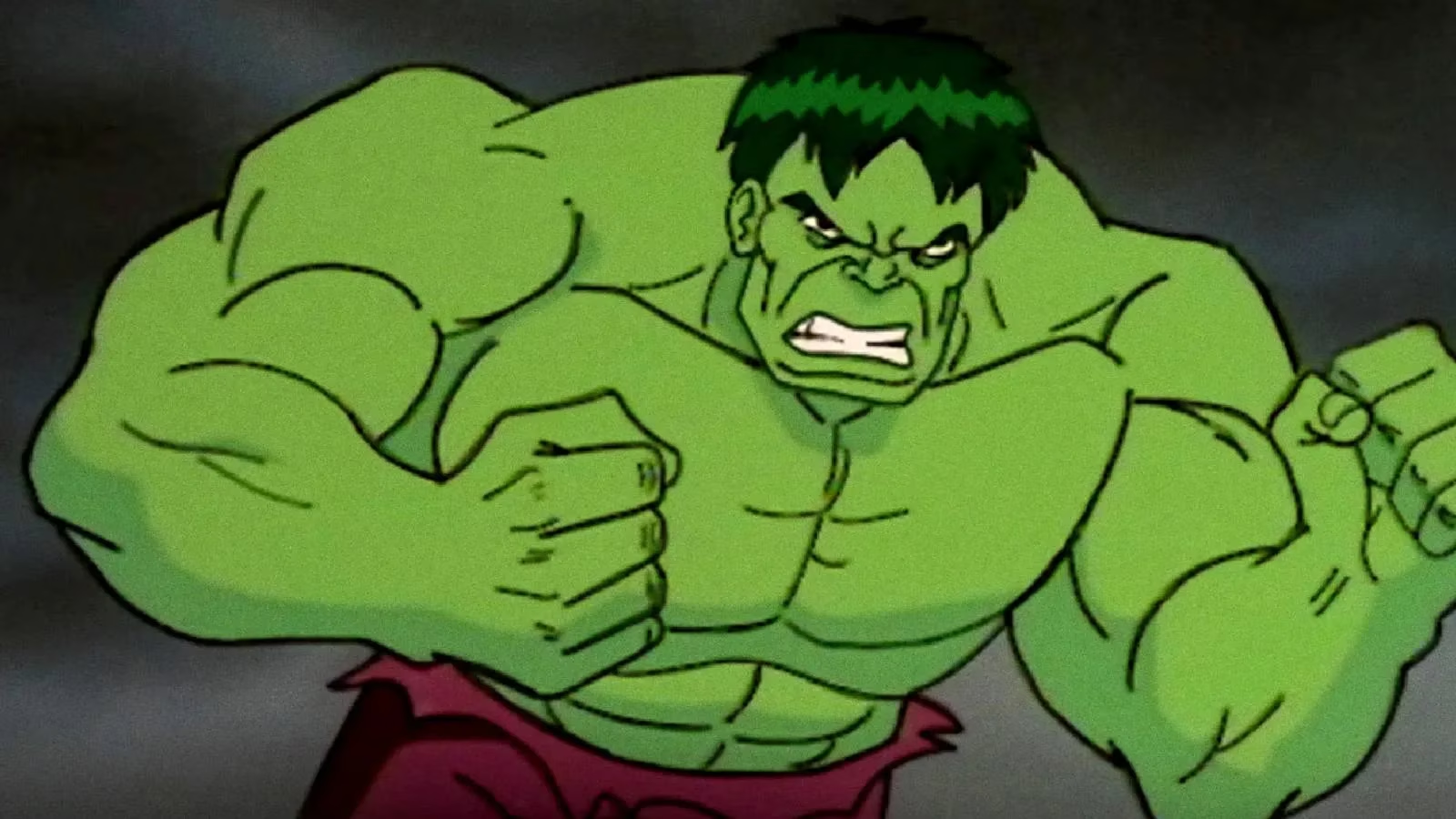
At its core, the series was a masterclass in portraying Bruce Banner's never-ending struggle with the beast within. Hulk was a literal manifestation of his rage, trauma, and guilt—a concept the show hammered home in nearly every episode. This wasn't just about a guy turning green and strong; it was a psychological thriller exploring the balance between intellect and instinct. The cartoon established the revolutionary idea that Hulk wasn't merely a monster to be controlled or suppressed, but an essential, fragmented part of Bruce's own psyche. This tragic, operatic inner conflict paved the way for the MCU's entire Banner arc, from the fugitive days in The Incredible Hulk to the eventual integration of Smart Hulk in Avengers: Endgame. The show made it clear: the real fight wasn't against villains, but for self-acceptance.
The Man Who Would Be King: General "Thunderbolt" Ross
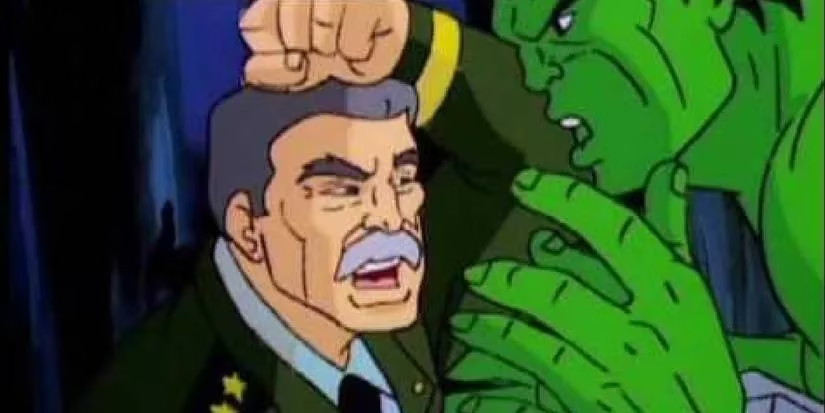
If Bruce's internal war was one front, his external one was defined by a single, relentless pursuer: General Thaddeus "Thunderbolt" Ross. The animated series cemented Ross and the U.S. military as Hulk's most persistent and personal enemies. Ross's obsession was painted in tragic shades—a vendetta that consumed him as much as Banner's condition consumed Bruce. The MCU picked up this thread perfectly, casting the late William Hurt to continue the pursuit from the 2008 film into later storylines like Captain America: Civil War. Even as Ross transitioned from general to Secretary of State, his core belief—that the Hulk was a dangerous mistake needing containment—remained stubbornly consistent. The cartoon helped audiences understand a crucial truth: sometimes, the real monster in Hulk's story is humanity's own fear and thirst for control, a theme that reached its chilling fruition when Ross himself became the Red Hulk in Captain America: Brave New World.
The Heart of the Matter: Betty Ross
Beyond the chase and the smash, the series gave emotional weight through Betty Ross. She wasn't just the love interest; she was Bruce's moral compass and emotional anchor. Her empathy humanized the Hulk, often being the only person who could calm the storm or remind Bruce of the man buried beneath. This dynamic carried softly into the MCU, with Liv Tyler's Betty providing that same grounding influence in the 2008 film. Though the MCU sidelined her for a time, her symbolic role as Bruce's lost stability lingered. Her brief return in Captain America: Brave New World, now facing her transformed father, reignited this fundamental dynamic. The cartoon proved that for the Hulk, love and understanding were greater sources of peace than any amount of brute strength.
The Gamma Expanded Universe: Villains and Variants
One of the show's most significant legacies was expanding the Gamma mythos far beyond Bruce Banner. It introduced a whole roster of Gamma-powered beings, proving Hulk's condition wasn't a one-off fluke but a gateway to a new ecosystem of heroes and monsters.
| Character | Role in Animated Series | Influence on MCU |
|---|---|---|
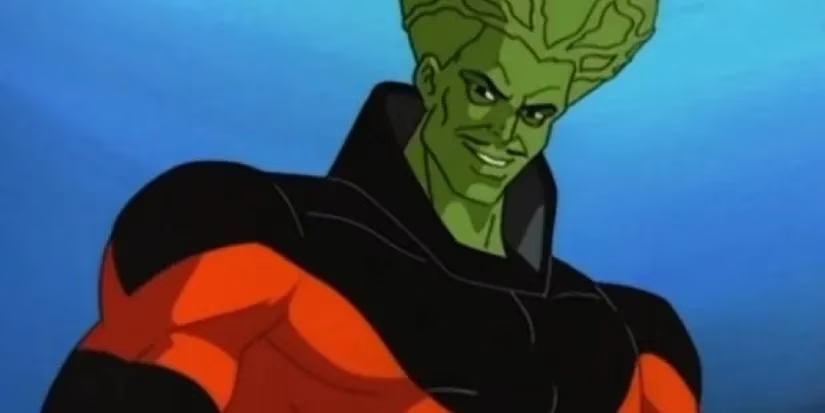
| The Leader | Scheming intellectual villain, a dark mirror to Hulk's brawn. | Teased in 2008, fully realized in Brave New World. |
| Abomination | Hulk's shadow self—a man who embraced his monstrous side. | Introduced in 2008, redeemed in She-Hulk. |
| She-Hulk | Bruce's confident cousin, showing Gamma power as empowerment. | Direct blueprint for She-Hulk: Attorney at Law. |
| Gargoyle | A tragic, intelligent Gamma mutation. | Established the variety of Gamma transformations. |
The series made the concept rich enough to sustain multiple storylines, which the MCU eagerly adopted. From Abomination's return and the creation of "HulkKing" in She-Hulk to the long-awaited rise of the Leader, the cartoon's world-building ensured Hulk's mythology could be a legacy, not just a personal torment.
The Misunderstood Monster: A Hero in Green
Perhaps the show's most enduring contribution was its unwavering portrayal of Hulk as a misunderstood monster, not a villain. He was hounded, hunted, and perpetually heartbroken. His destruction usually sprang from circumstance or provocation, not malice, making audiences sympathize with him even during his most epic rampages. This tragic framing—the idea of Hulk as a being punished for merely existing—gave the MCU instant audience empathy. It allowed films to skip lengthy backstory because the cartoon had already imprinted the core truth: Hulk is both the monster and the martyr. This essence defined his MCU journey, from the lonely fugitive to the Avenger reluctantly accepted, and finally, to the hero who found a way to make peace with himself.
The Ensemble Player: Crossover King
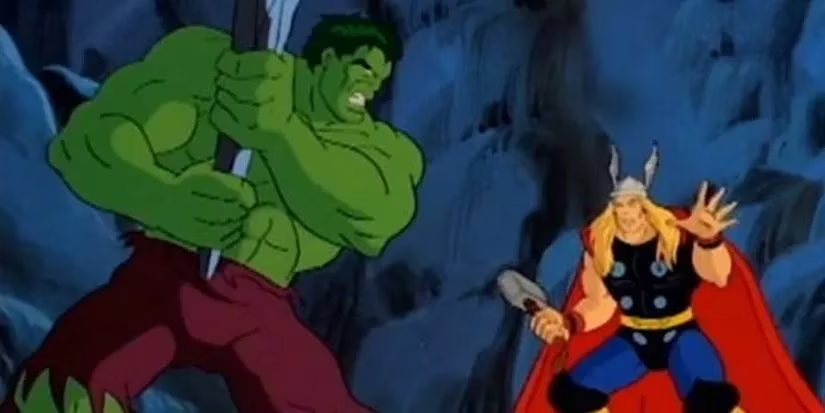
The Incredible Hulk animated series was remarkably forward-thinking in its frequent crossovers. Episodes featured Iron Man, Thor, the Fantastic Four, and even Ghost Rider, establishing a shared universe on TV years before the MCU made it mainstream. These interactions showed that Hulk thrived in a team context, whether he was clashing with Thor's godly bravado ("Hulk smash god!") or combining brains and brawn with Iron Man. This dynamic carried straight into the MCU, where Hulk's role as an ensemble character became central to his identity. The cartoon demonstrated that Bruce Banner's profound isolation could be balanced by camaraderie, humor, and shared heroism—a lesson Marvel Studios took to heart with The Avengers and beyond.
The Quest for a Cure: A Cycle of Hope and Despair
The emotional backbone of the series was Bruce Banner's relentless, heartbreaking pursuit of a cure. Each episode saw him moving from lab to lab, clinging to hope, only to be thwarted by circumstance or villainy. This cycle of hope and despair perfectly mirrored the early MCU portrayal, particularly in the 2008 film where Banner's journey is defined by that same desperate search. The animated series made this obsession tragically understandable—a man chasing freedom from his own shadow. Later MCU films could shift the focus toward coexistence and integration precisely because the cartoon had already told the definitive story of the cure, etching it deeply into pop culture memory. It was the original hero's journey, internalized.
In 2026, looking back at nearly three decades of Hulk on screen, it's clear the animated series wasn't just a precursor; it was the secret sauce, the foundational code. It provided the emotional grammar for Bruce Banner's struggle, defined his key relationships, built his rogues' gallery, and even prefigured the shared universe he would inhabit. The MCU didn't just borrow ideas; it inherited a fully realized tragic mythos. The heart of the Green Goliath that beats in today's blockbusters? It started pounding on Saturday mornings, proving that sometimes, the most powerful origins stories aren't told in a single movie, but over seasons of thoughtful, character-driven storytelling.
Comments