
As of 2026, the DC Universe continues to build its world in a way that feels genuinely lived-in, and a lot of that credit goes to the foundation laid by James Gunn's Superman. The film didn't just introduce us to a new Man of Steel; it sprinkled the landscape with Easter eggs and hints of a much larger, active world. The most tantalizing of these might just be the sprawling mural inside the Hall of Justice, a visual archive that teases a rich superhero history stretching back decades before Superman ever took flight. It's like the DCU walked in and said, 'Hey, we've been here the whole time, you just weren't looking.'
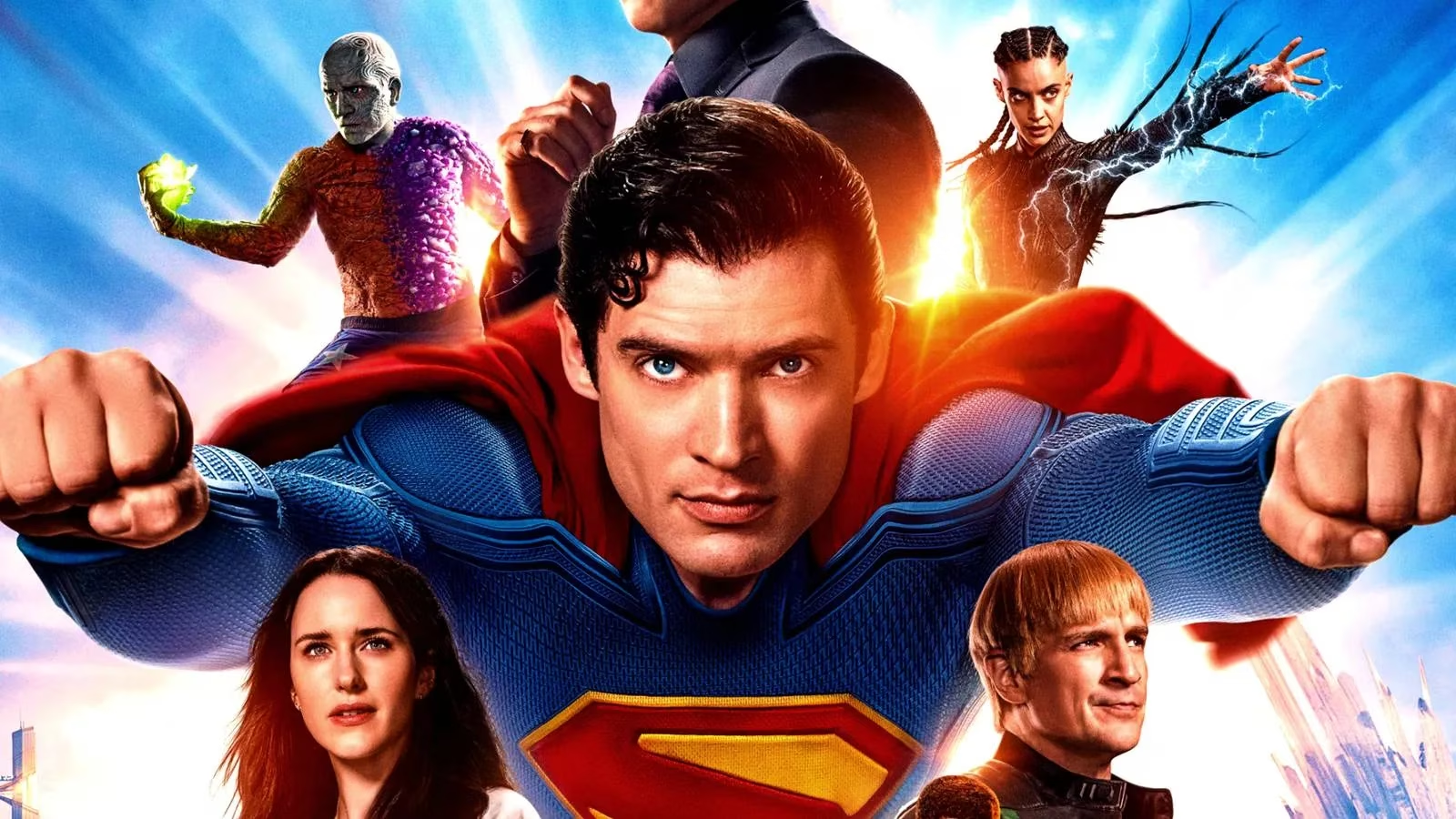
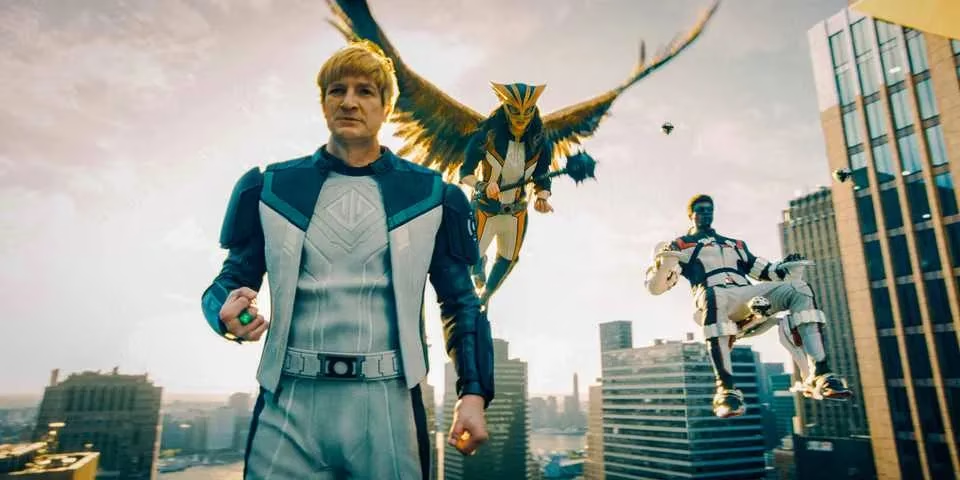
Director James Gunn, ever the fan-whisperer, took to social media to share a full, clear look at this mural, and wow, did it deliver. It wasn't just a pretty background detail; it was a legitimate roster, revealing a whopping 26 new characters officially confirmed to exist within the DCU's canon. This single piece of artwork does more heavy lifting for world-building than some entire movies. The Hall of Justice, of course, is the iconic future home of the Justice League. In Superman, it's occupied by Maxwell Lord's 'Justice Gang'—Guy Gardner, Mister Terrific, Hawkgirl, and Metamorpho—a clear stepping stone to that legendary team. But the mural suggests they weren't the first to try and organize heroics.
A closer inspection reveals that long before the Justice Gang, there was another, perhaps even more significant, team operating in the shadows of DCU history. How do we know? Because peering out from that painted history are multiple core members of the Justice Society of America (JSA). This is a big deal. It implies that the golden age of heroes wasn't just a comic book story in this universe; it was real. These veterans were out there, saving the day and inspiring generations, their legacy literally etched into the walls of the most important superhero building on the planet. Talk about leaving your mark.
So, who exactly is on this wall of fame? Let's break down some of the key players, from left to right:
-
The Justice Society Contingent: This group includes classics like Sandman, Wildcat, and Liberty Belle. Their presence is the strongest clue to a pre-existing superhero team.
-
The Freedom Fighters & All-Star Squadron: Characters like Uncle Sam (implied), Phantom Lady, and Black Pirate hint that other WWII-era teams were also active.
-
The Obscure & The Awesome: The mural is a deep cut fan's dream, featuring heroes like Amazing Man, Zatara (Zatanna's father!), Bulletman and Bulletgirl, Atomic Knight, and Freedom Beast. Some of these names are, let's be honest, pretty out there—'Chop-Chop' and 'Ghost of Flanders,' anyone? It's a fun mix that shows the DCU isn't afraid to acknowledge its entire history, warts and whimsy included.
-
The Modern Connector: Perhaps most intriguing is the inclusion of Maxwell Lord himself on the mural. Positioning the slick, corporate owner of the Justice Gang alongside these historic legends is a bold character statement. Is he trying to buy his way into the history books, or does he genuinely see himself as the natural evolution of heroism?
What does all this mean for the future? The possibilities are, frankly, endless. This mural isn't just a nod; it's a launchpad. It opens up entire new avenues for storytelling:
| Potential Storyline | What It Could Explore |
|---|---|
| The Lost History | What happened to the JSA? Did they retire, disappear, or meet a grim fate? A future project could be a period piece or a modern mystery uncovering their legacy. |
| Legacy Heroes | Characters like Liberty Belle or Zatara could have modern-day successors or children waiting in the wings. That Zatara cameo alone is a blinking neon sign pointing toward magic in the DCU. |
| Maxwell Lord's Agenda | His placement on the mural becomes even more sinister. Is he trying to co-opt heroic legacy for his own ends? The mural frames his entire Justice Gang operation in a new, potentially manipulative light. |
| Crisis-Level Events | The existence of so many past heroes suggests the DCU has already survived major threats. It also sets up potential for classic stories like a 'Black Reign' or an 'Injustice Society' return. |
For fans, the reveal was a gift. It transformed the DCU from a blank slate into a world with layers, with history, with secrets in its attic. We're not just watching a universe being born; we're watching one rediscover its own roots. The excitement isn't just about who will show up next, but about uncovering the stories already etched in stone (or, in this case, paint). What happened to these heroes? Where are they now? The mural asks all the right questions and trusts the audience to be patient for the answers.
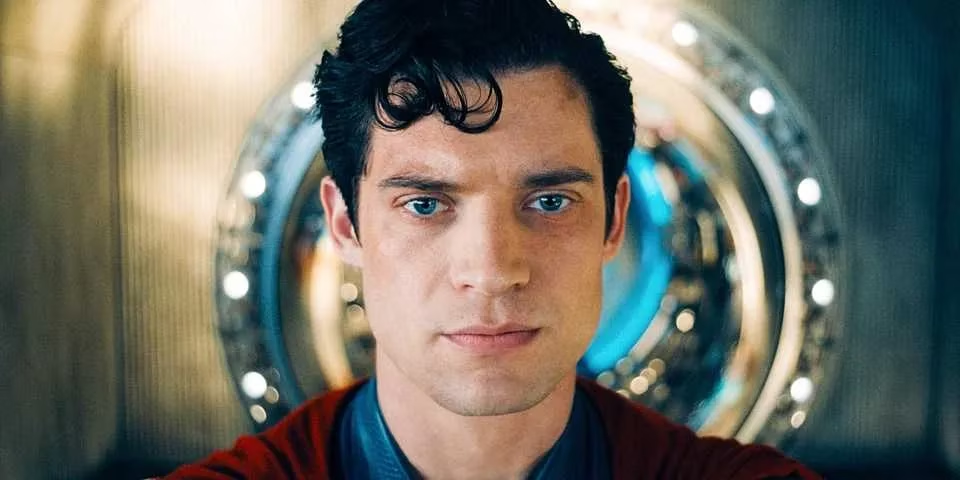
In the end, the Hall of Justice mural is a masterclass in cinematic universe building. It's dense, rewarding for dedicated fans, and intriguing for newcomers. It makes the world feel bigger than the frame of the movie. As the DCU moves forward with projects like The Authority and Supergirl: Woman of Tomorrow, this rich history provides a deep well of context and conflict. Superman may be the present and future of this world, but he now stands on the shoulders of giants—giants we've only just begun to see. The past is prologue, and in the DCU, that prologue is looking absolutely epic.
Comments