
Let’s be real for a second—Squid Game season 3 absolutely wrecked me. Not because of the violence (though that was unflinching), but because the final episode handed Gi-hun a moral grenade with the pin already pulled. Picture this: Sky Squid Game, a floating platform 80 stories above the ground, a baby in his arms, and a choice that would make even Solomon weep. That’s where we left our beloved Player 456—falling to his death so that Jun-hee’s infant could be the winner. I screamed at my screen. But after the credits rolled and I peeled myself off the floor, I realized something extraordinary: Gi-hun didn’t really die. His spirit latched onto the most unlikely of hosts, and now the American spinoff has a shadow protagonist waiting in the wings. Let’s unpack this masterpiece, because the Front Man’s final gesture isn’t just a loose thread—it’s a whole tapestry begging to be woven.
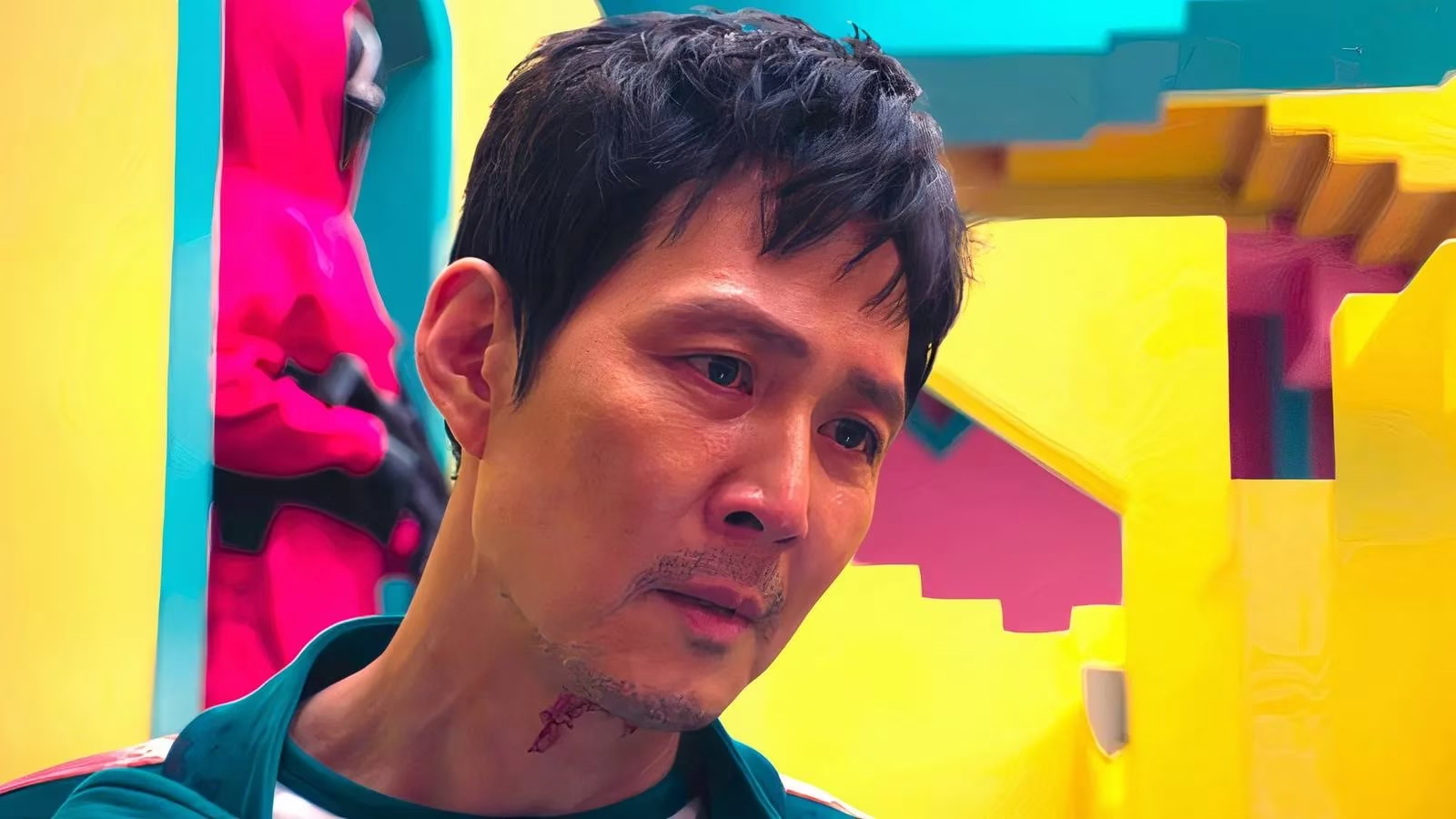
When Gi-hun plummeted off that platform, I thought the games had finally beaten him. But here’s the twist that feels like finding a ripe strawberry in a field of rot: his sacrifice flipped the entire ideological chessboard. Throughout seasons 2 and 3, the Front Man—In-ho—acted like a human black hole, sucking every ounce of hope from Gi-hun’s belief in humanity’s goodness. Yet, in those final moments, Gi-hun refused to kill the remaining contestants before Sky Squid Game, and then willingly gave his life for a baby he had no blood ties to. That’s not just selflessness; it’s a mirror held up to the Front Man’s own fractured soul. And for the first time, the mirror didn’t crack—it reflected something back.
The Front Man’s Quiet Earthquake
Here’s where the narrative folds in on itself like a Möbius strip of redemption. After Gi-hun’s death, the Front Man does something utterly dissonant with his character: he tracks down Gi-hun’s daughter and hands over the remainder of the ₩45.6 billion prize money. Not a wire transfer. Not a lawyer’s envelope. He appears in person, a phantom of guilt wrapped in a tailored suit. That gesture is the emotional equivalent of a dam finally bursting—decades of cynicism flooding out through one small crack of humanity. To me, this wasn’t just a payoff; it was a seed.
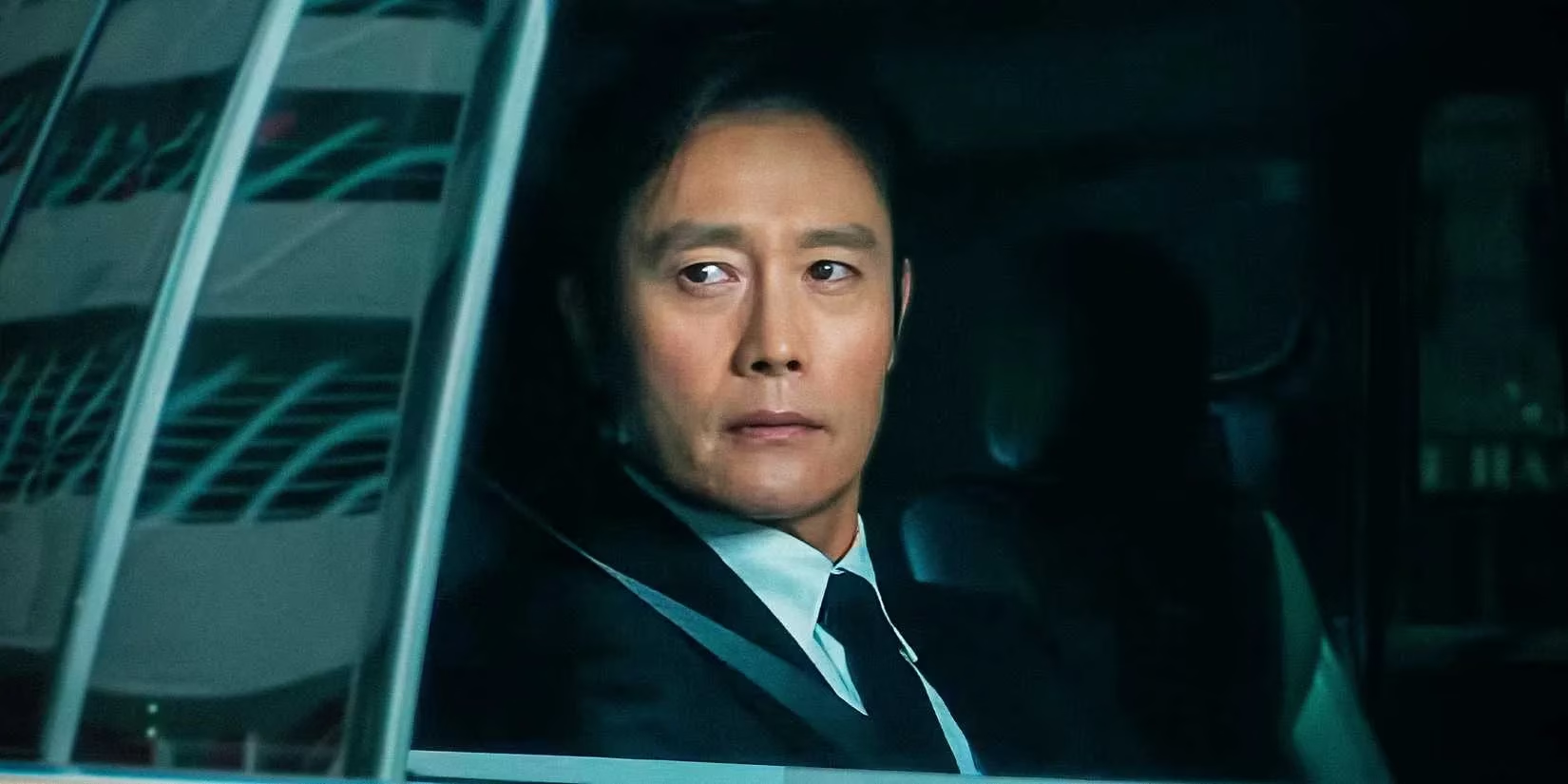
Think of the Front Man as a worn-down grandfather clock that suddenly starts ticking backward. His entire worldview was built on the idea that desperate people will always betray each other. Gi-hun proved him wrong with the stubborn tenacity of a dandelion growing through concrete. Now, In-ho is left with a cognitive dissonance so loud it probably keeps him up at night. Could he, the architect of so much suffering, actually dismantle the very system he once guarded? The finale sets the stage for this internal war, and it’s genius.
Why the American Spinoff Needs This Ghost
Fast-forward to 2026, and the buzz around the US-based Squid Game spinoff is deafening. Official plot details are locked tighter than a VIP’s mask, but we’ve seen the clues. The American Recruiter appears in Los Angeles, slotting his own smiling face into the Front Man’s rearview mirror. That split-second glance between them is a live wire. If In-ho is genuinely changed, this is where his redemption arc finds oxygen. He could insert himself into the American operation—not as a puppet master, but as a saboteur, continuing Gi-hun’s mission from within the corporate guts of the game.
Imagine him feeding intelligence to a new protagonist, or secretly undermining recruitment drives, all while wrestling with the ghost of Player 456 whispering in his ear. It’s a delicious moral tightrope. The American games might be even more brutal, reflecting a culture of hyper-individualism, and who better to navigate that viper pit than a man who’s already been baptized by fire and regret?
The Ideological Victory That Echoes Beyond Death
Let’s zoom out for a moment and appreciate the thematic architecture here. Gi-hun didn’t win by surviving; he won by transforming his captor. The Front Man giving away the money is the ultimate concession: the prize that Gi-hun once saw as tainted is now a lifeline to his daughter, purifying it. It’s as if Gi-hun’s final breath became the ink rewriting In-ho’s ledger. And if that doesn’t feel like a slow-motion revolution, I don’t know what does.
Some might argue that the ending is too open-ended, but I see it as a carefully placed tripwire for the franchise’s future. The American spinoff doesn’t need to resurrect Gi-hun—his ghost is already in the machine. Here’s a quick breakdown of how the emotional stakes have shifted:
| Element | Season 3 Finale Impact | Potential Spinoff Role |
|---|---|---|
| Gi-hun’s sacrifice | Front Man’s ideological wall cracks | The moral compass guiding In-ho’s sabotage |
| Jun-hee’s baby wins | Innocence triumphs despite the slaughter | A symbol of hope that could haunt the games |
| Front Man’s money gift | Redemption planted, but not yet harvested | First active step toward destroying the organization |
| US Recruiter sighting | Confirms global expansion of the games | Entry point for In-ho’s covert war |
The Recruiter as a Dark Mirror
Don’t underestimate the significance of the American Recruiter. In season 1, the Recruiter was a glib salesman of despair; here, his LA counterpart could be a slicker, more charismatic variation. The Front Man looking at him isn’t just a cameo—it’s a moment of uncomfortable recognition. In-ho once stood where that man stands, and now he sees the monster he might have become. That’s powerful stuff. It’s like an alcoholic staring at a bottle of whiskey and choosing to pour it down the drain. Whether he actually pours it remains to be seen, but the showrunner has handed us a grenade of possibility.
Final Thoughts: A Franchise Reborn
I’ll be the first to admit I was terrified that Squid Game season 3 would collapse under its own hype. Instead, it delivered a finale that felt both intimately tragic and cosmically hopeful. Gi-hun’s humanity outlived his body, and now it lives in the most unlikely of vessels. As we wait for the American chapter, I’m choosing to believe that the Front Man’s journey is just beginning—a slow, painful walk toward absolution, with a dead player’s daughter as his sole beneficiary and a whole new game board to dismantle.
All seasons of Squid Game are now streaming on Netflix, and trust me, you’ll want to rewatch every detail before the spinoff drops.
What do you think? Is the Front Man truly redeemable, or is he just buying time until the next round? I’m waving my green light of approval at this ending, but I’m ready to press the X button if the spinoff squanders this setup. Fingers crossed, players.
Comments