
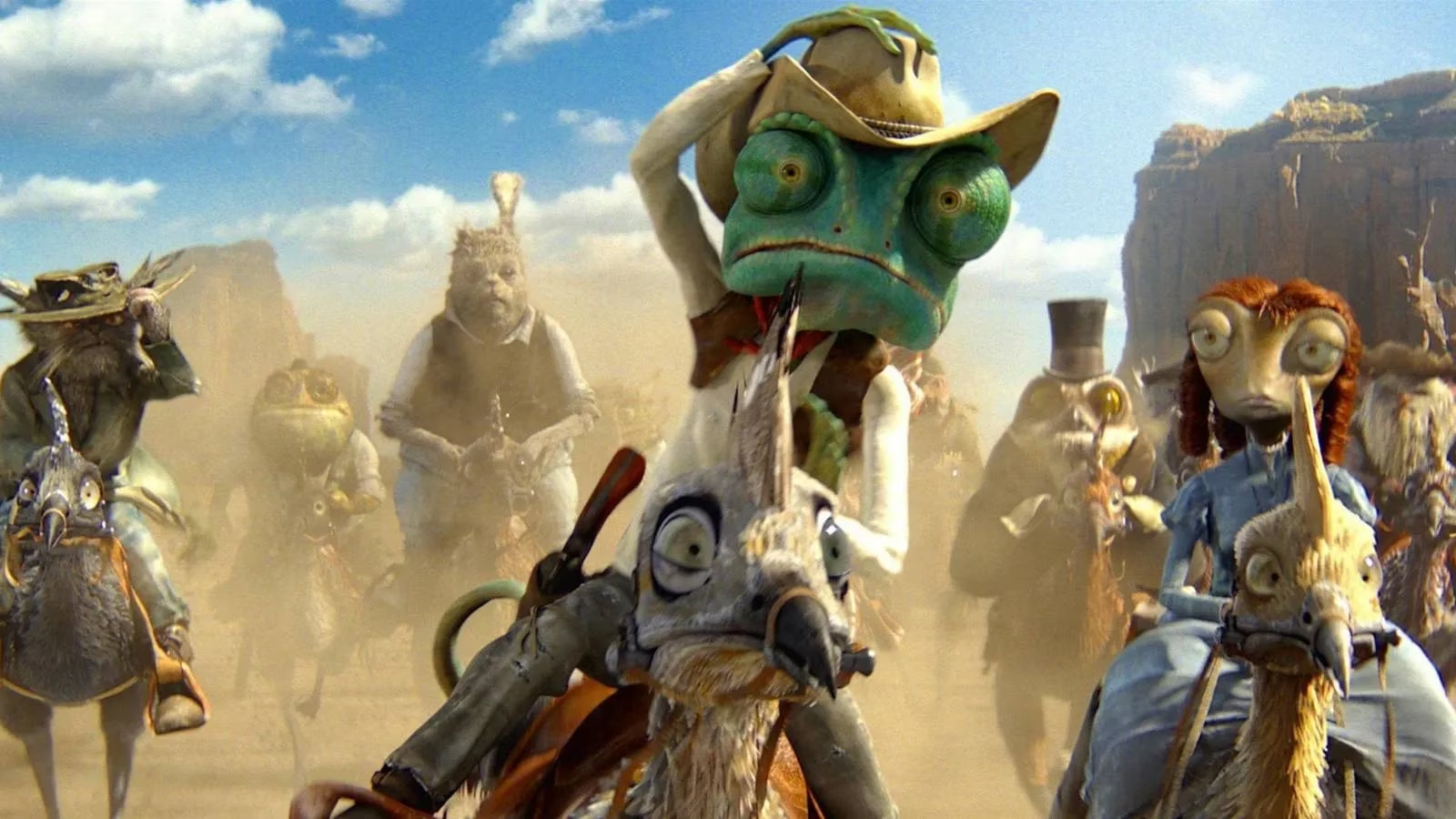
I’ll come right out and say it: I slept on Rango for way too long. I watched it as a kid, laughed at the weird chameleon, and never gave it another thought. But last weekend—after a dusty 2026 afternoon that practically screamed for a good Western—I threw it on again. And boy, did I have my mind blown. This isn’t just a cartoon. It’s a full-blown love letter to the Wild West, packed with so many cinematic nods that I’m still picking my jaw up off the floor. Let me walk you through all the genius references I caught… and trust me, once you see them, you’ll never look at this movie the same way.
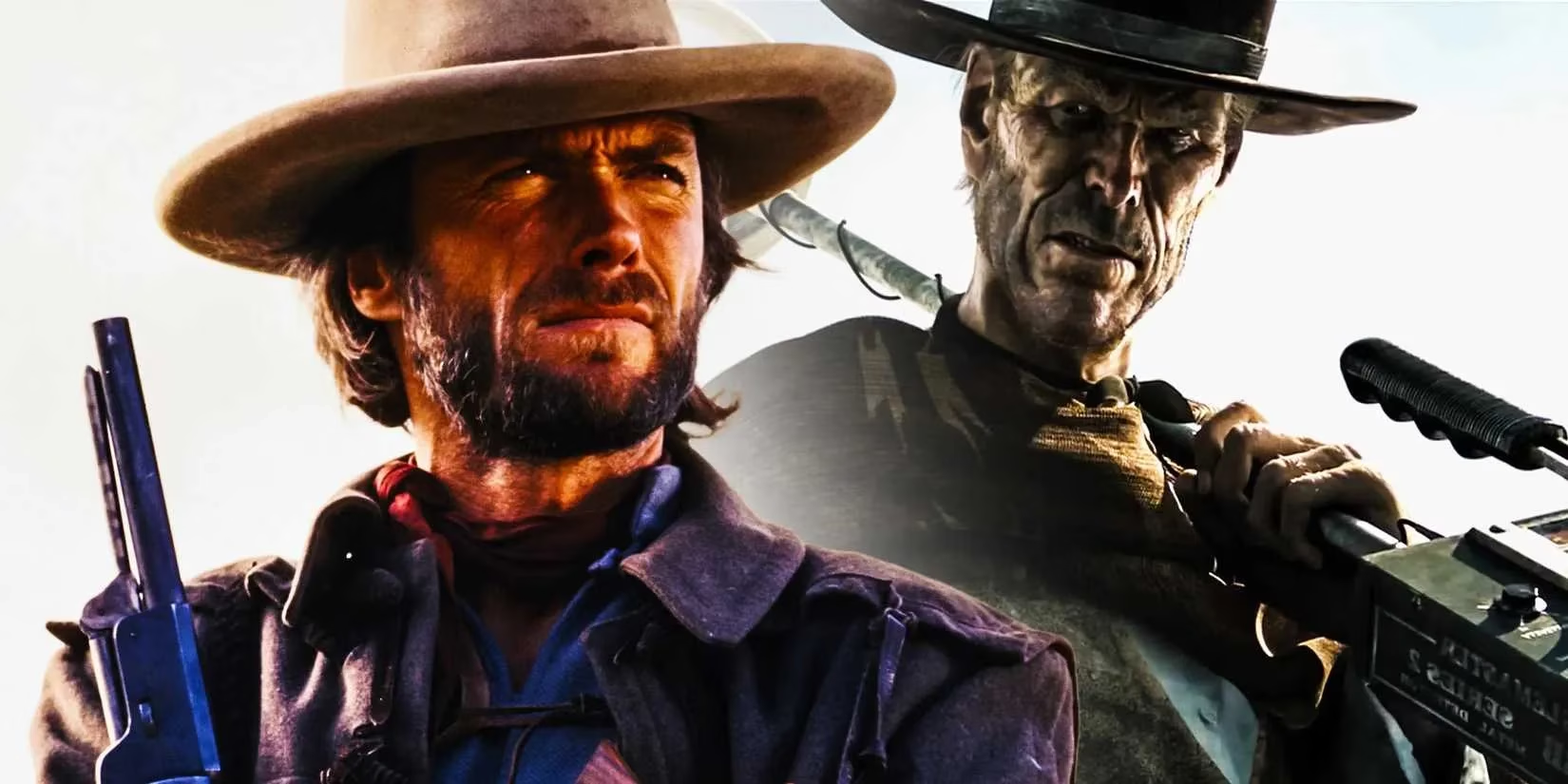
Right from the start, the biggest and most obvious homage hits you like a tumbleweed in a dust storm. The “Spirit of the West,” a mythical gunslinger who Rango meets out in the desert, is none other than Clint Eastwood himself. Well, kind of. Timothy Olyphant voices him (and that alone is a nod to Olyphant’s own Western cred from Deadwood), but the character is a shimmering mirage of the Man with No Name. Rango even says it: “People used to call him the Man with No Name.” That’s a direct tip of the hat to Sergio Leone’s Dollars Trilogy, where Eastwood’s characters never bothered with names—they just squinted, chewed on cigars, and let their guns do the talking. The Spirit rides an ivory golf cart (I mean, what else would a ghostly gunslinger drive?) and is flanked by five golden Oscars. Yep, those are Eastwood’s actual Academy Awards. It’s so ridiculously meta that I almost choked on my popcorn.
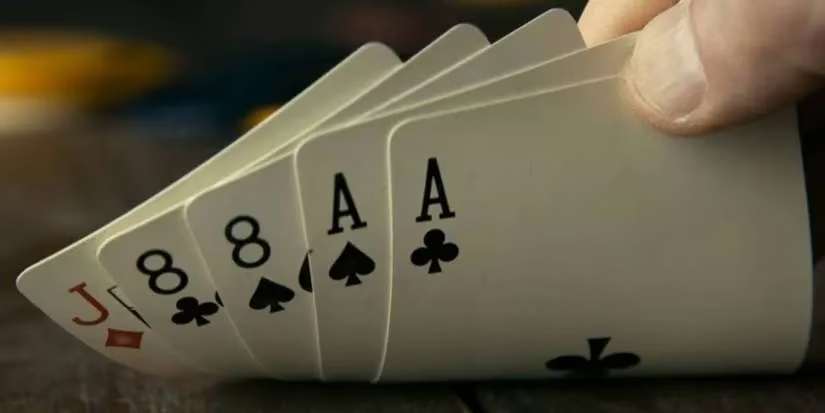
But the Clint Eastwood tribute is just the tip of the cactus. Let’s talk cards. When Rango first walks into the saloon in Dirt, an owl clutches a very specific poker hand: two black aces and two black eights. That, my friend, is the Dead Man’s Hand. Legend has it that Wild Bill Hickok was holding exactly that hand when he got shot dead back in 1876. In Western cinema, that hand spells doom—you see it in everything from The Ballad of Buster Scruggs to John Wick: Chapter 4. In Rango, the owl lives (barely), but the tension in that scene is so thick you could slice it with a rusty spur. It’s one of those blink-and-you-miss-it details that makes me appreciate Gore Verbinski’s devotion to the genre.
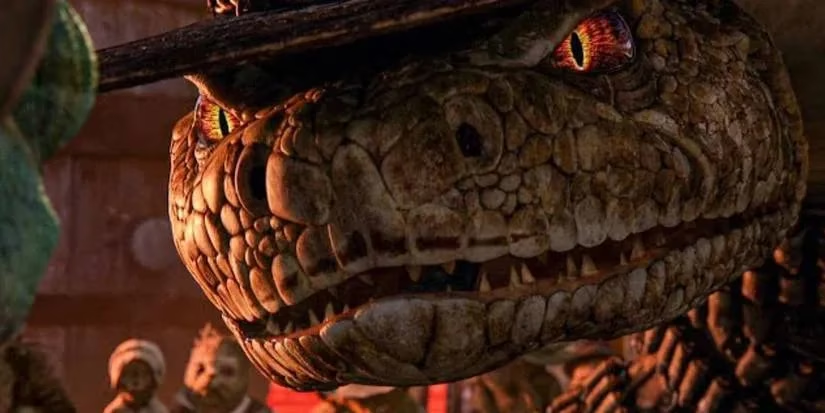
Now, no Western is complete without a rattlesnake villain, and Rango delivers in spades with Rattlesnake Jake. The moment he slithered onto screen, I leaned forward. That face, those cold eyes, the jet-black hat—he’s practically a reptilian reincarnation of Lee Van Cleef. Van Cleef was the ultimate Western heavy, most famously as Angel Eyes in The Good, the Bad and the Ugly. Jake’s facial scales even mimic Van Cleef’s pencil-thin mustache. And that voice? Bill Nighy drips venom with every syllable. He’s the kind of villain that makes you forget you’re watching a PG-rated movie. I mean, seriously, the guy has a multi-chambered gatling gun for a rattle. That’s just showing off.
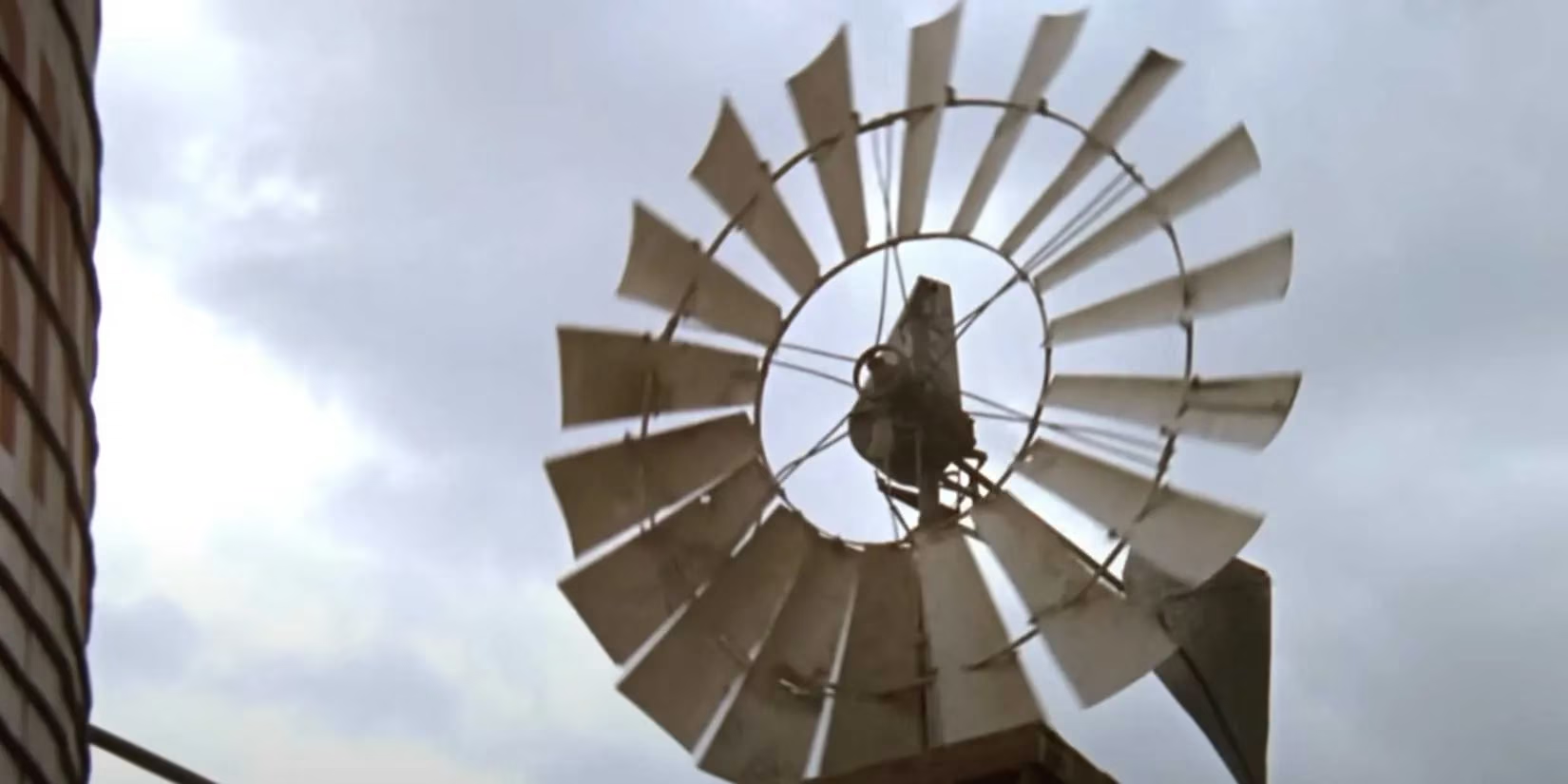
But Rango isn’t just about famous faces—it recreates entire moments. One of my favorite sequences is Rango’s first showdown with Bad Bill. High noon, dusty main street, everyone holding their breath. The only sound? The lazy creak of an old windmill. That creak sent a shiver down my spine because it’s a direct nod to the opening duel in Once Upon a Time in the West. That film uses a squeaking windmill to stretch tension to its absolute limit, and Rango captures that exact same feeling. It’s a noise so specific, so iconic, that you just know Verbinski is winking at all the spaghetti Western nerds out there.
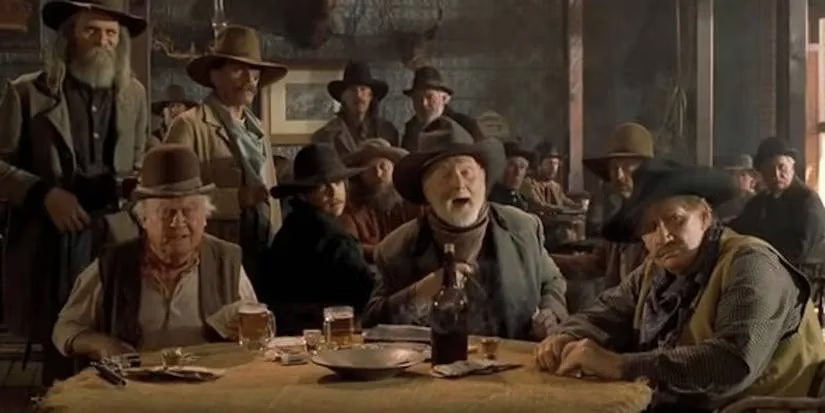
Then there’s the whole saloon introduction scene, which feels strangely familiar if you’ve seen Back to the Future Part III. Think about it: a stranger stumbles into a frontier town, tries to order water, gets something disgusting instead, and invents a fake name on the spot. That’s exactly what happens to Marty McFly when he lands in 1885. Even the old-timers at the bar cackle the same way. One of the desert critters even sounds like Pat Buttram’s character from the movie. It’s a deep cut that only makes sense when you realize Verbinski clearly has a soft spot for the most underrated Back to the Future installment.
Speaking of deep cuts, let’s talk Deadwood. HBO’s gritty Western series gets a subtle but unmistakable salute in Rango. Early on, we get a bird’s-eye view of Dirt from a balcony, and it’s strikingly identical to the iconic shot from Deadwood’s set—the view from Al Sweargen’s balcony. Dirt is just as lawless, just as dusty, and just as desperate. That one shot tells you everything about the kind of town Rango has wandered into, and it’s a beautiful nod for anyone who’s spent time in that HBO classic.
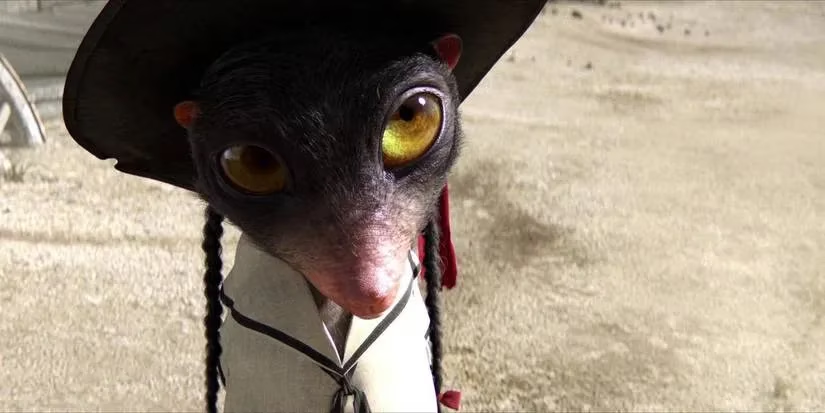
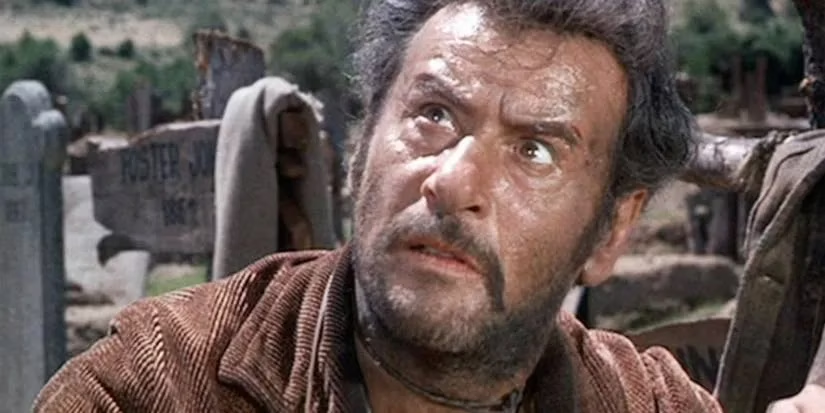
Of course, The Good, the Bad and the Ugly gets more than just a villain reference. If you listen closely, you’ll catch an ornery toad early in the desert whose voice sounds an awful lot like Tuco, “the Ugly.” The toad even shouts “You son of a—!” before a hawk cry cuts him off. That’s nearly identical to Tuco’s final censored curse in the film. It’s a split-second moment, but I practically jumped off the couch when I heard it.
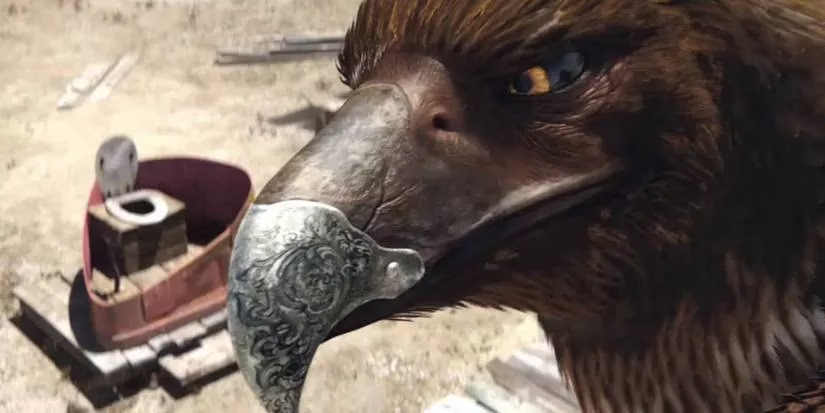
And that hawk! Not just any bird—it wears a shiny silver prosthetic beak, making it look like a steampunk nightmare. That’s a direct reference to Tim “Silvernose” Strawn, the villain from the comedic Western Cat Ballou. Strawn had a silver nose prosthetic after losing his own. In Rango, that metal beak makes the hawk even more terrifying, and even Rattlesnake Jake admits he’s afraid of it.
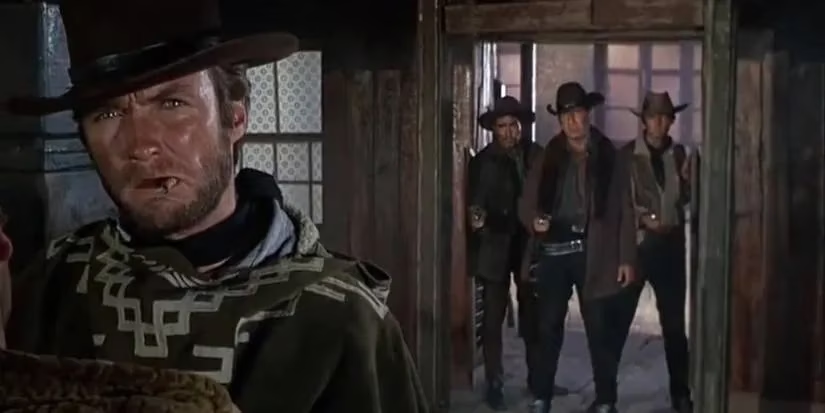
Bad Bill’s gang also hides a gem: one of his henchmen is a German-accented hunchbacked rabbit named Kinski. That’s a nod to Klaus Kinski, the notoriously intense actor who played villains in many Westerns, including a hunchback in For a Few Dollars More. The gang’s outfits even mirror the baddies from that same film.
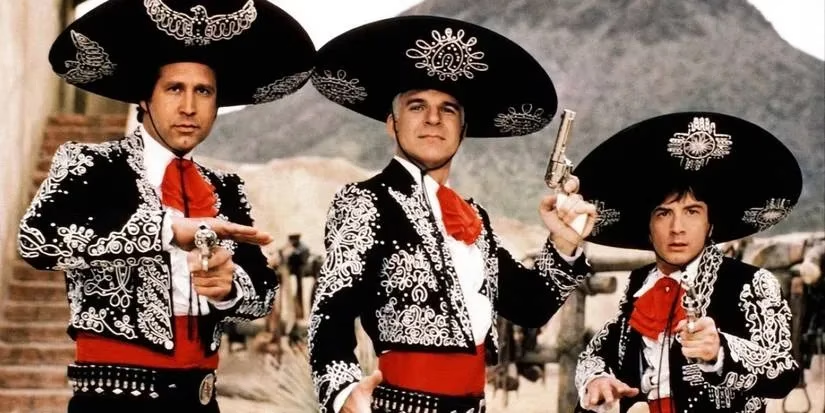
Finally, we can’t ignore Rango’s third-act outfit. He prances around in a black-and-red mariachi-style suit with a giant sombrero flaunting tiny red balls. If that doesn’t scream Three Amigos, I don’t know what does. And get this: Three Amigos is also about actors mistaken for real heroes by a small town. Sound familiar? The whole plot mirrors that movie in the most delightful way. I mean, come on, that’s just perfect.
So there you have it. Every time I watch Rango, I catch something new—a whisper of a classic Western, a shadow of a forgotten shootout, a wink at a legendary actor. It’s the kind of movie that rewards you for being a film nerd, and honestly, we don’t get enough of that anymore. If you haven’t revisited it lately, do yourself a favor. Pour a glass of something strong, dim the lights, and let the Spirit of the West guide you. You’ll thank me later.
Comments