
As I settled into my seat in the darkened theater, the familiar, chilling title sequence for The Conjuring: Last Rites began to roll. For over a decade, I’ve felt like a silent passenger in the backseat of the Warrens' station wagon, a witness to every shadowy corner and whispered prayer. This film, rumored to be the final chapter, promised a confrontation with a demon that had been a spectral thread woven through their entire career—a malevolent presence as persistent and personal as a recurring nightmare that remembers your name. It felt less like watching a movie and more like attending a farewell to old, terrifying friends.
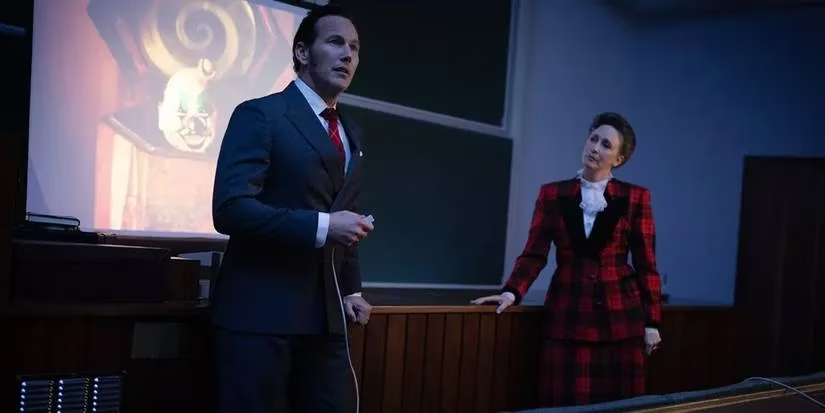
The film opens not with a jump-scare, but with a poignant echo: Ed and Lorraine Warren giving a lecture. Yet, the hall that once buzzed with curious onlookers in the first film is now hauntingly empty, the seats like rows of silent, judgmental ghosts. This stark visual—a lecture hall as barren as a forgotten tomb—served as a powerful metaphor for their legacy. Public fascination, once a roaring fire, had dwindled to embers. When a student flippantly calls them "Ghostbusters," Ed's weary frustration was palpable. It was a reminder that their life's work, a tapestry of faith and fear, was often seen by outsiders as mere campfire entertainment, their profound battles reduced to a punchline.
The personal stakes are immediately raised with the return of Annabelle. Seeing that porcelain-faced terror again was like spotting a venomous spider you thought you’d sealed in a jar years ago. Her presence is no mere cameo; she actively haunts Judy Warren, appearing on a childhood rocking chair and later, in a truly surreal and terrifying escalation, as a giant version chasing Judy down a hallway. This wasn't just a callback; it felt like the franchise itself asserting that some evils are fractal, repeating and growing in scale no matter how many times you think you've contained them. The doll, locked in a glass case in the Warrens' museum, remains a potent symbol of unresolved terror, its story a ghostly vine that continues to strangle the family's peace.
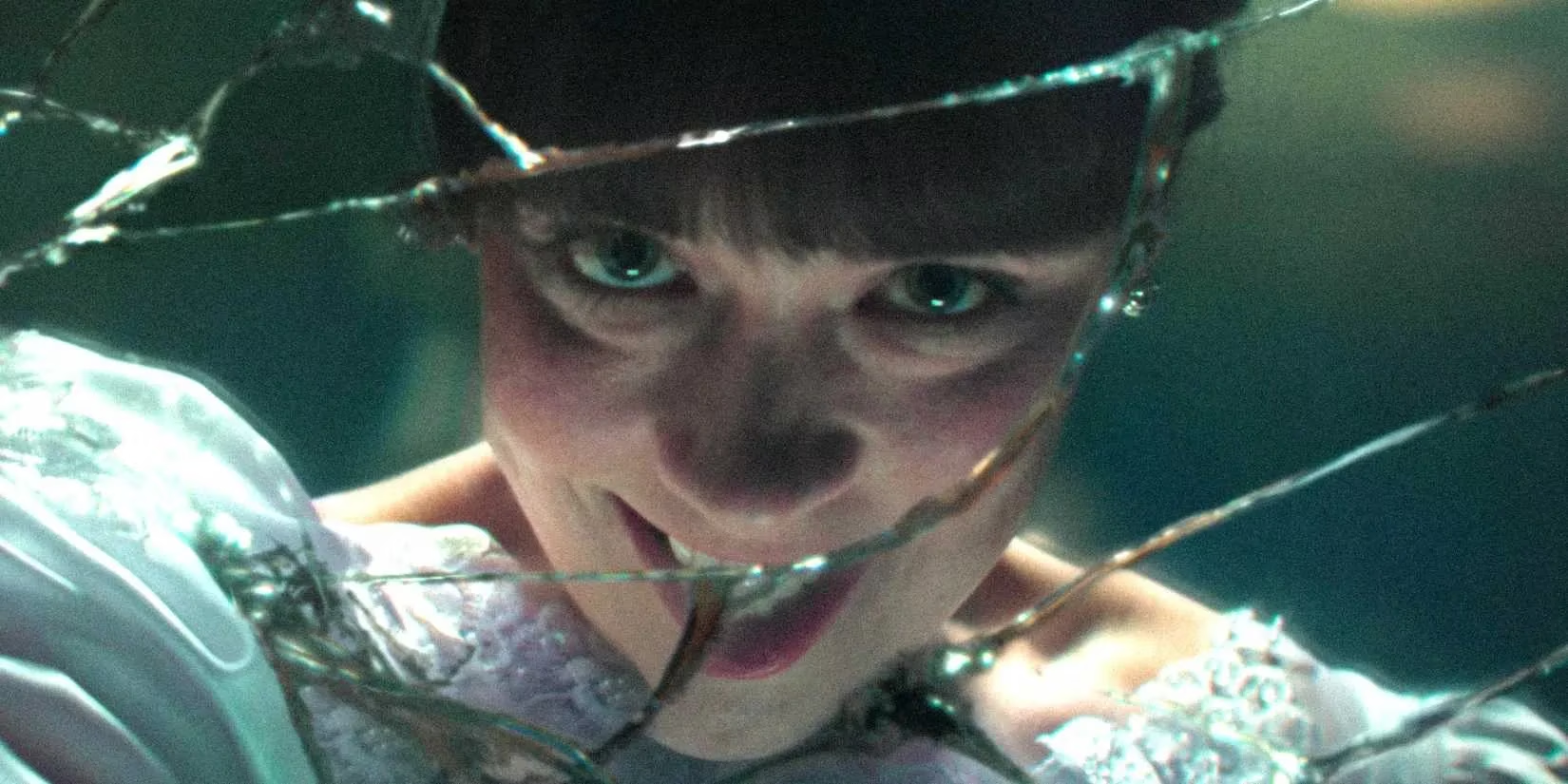
The core haunting, involving the vulnerable Smurl family, is where director Michael Chaves masterfully weaves his love letter to horror classics. The references are not shallow winks but deep, resonant echoes that enrich the terror. When young Jack Smurl becomes possessed and levitates above his bed, the shot composition was a direct, breathtaking homage to The Exorcist. The horror wasn't just in the act, but in the cinematic memory it invoked—it was terror squared. Later, young Heather Smurl watching a corrupted home video in the dark glow of a television set perfectly channeled the eerie, domestic dread of Poltergeist, making the familiar technology of a TV feel like a portal to pure malevolence.
One of the most visceral moments for me was the scene with the blood. Lorraine, washing dishes, finds her locket in the sink, only for the basin to suddenly fill and overflow with a torrent of crimson. It rushed across the kitchen floor with the relentless, inevitable force of a broken dam. This was a direct and stunning tribute to the iconic elevator blood-flood from The Shining. Watching Vera Farmiga's Lorraine back away, her horror reflected in the rising tide, was like seeing a sacred text of horror being reverently quoted in a new liturgy of fear.
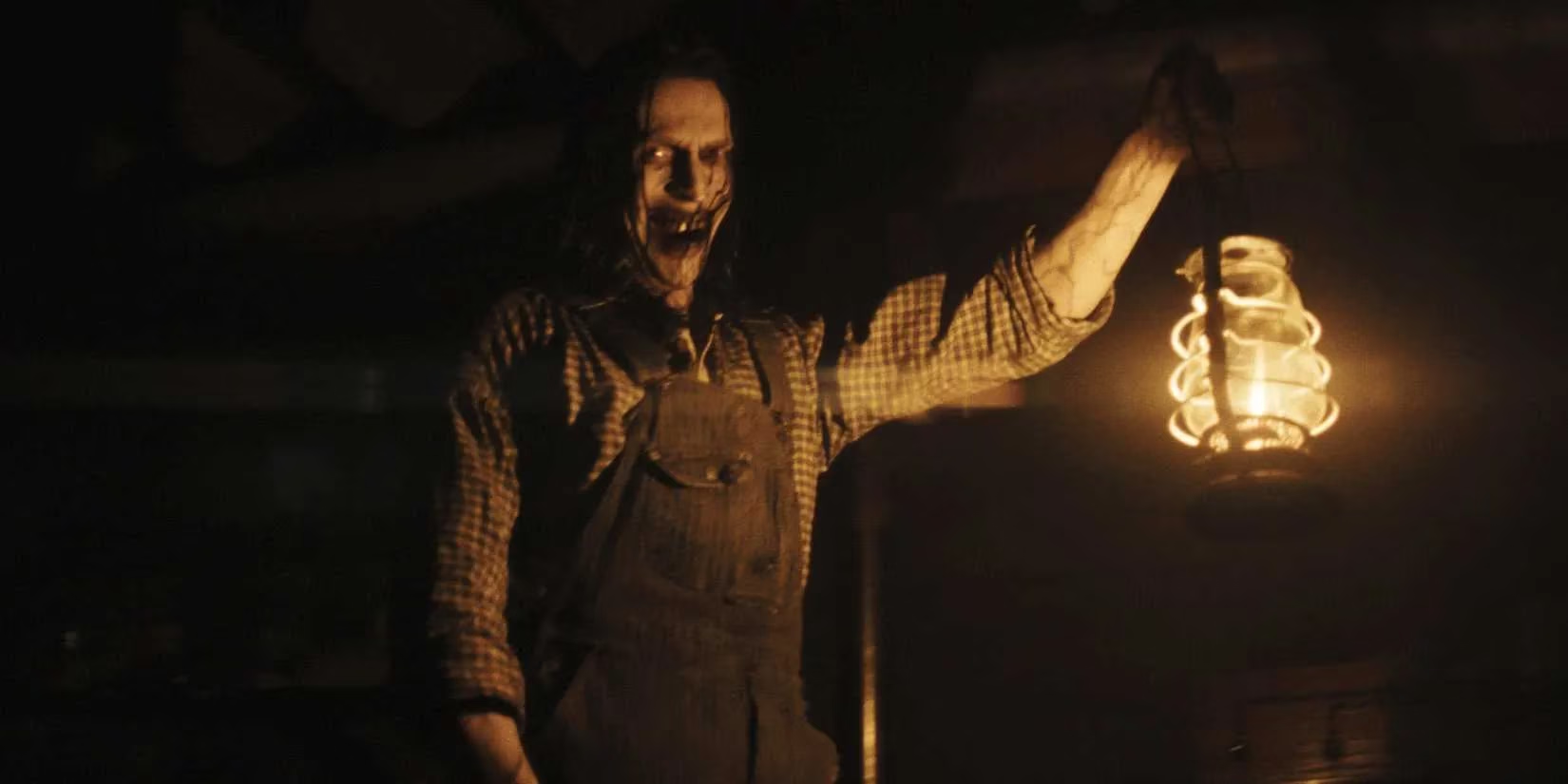
The homages even extended to the ghost's own backstory and weapon of choice. The axe-wielding spirit haunting the Smurl farm felt like a deliberate nod to Jack Torrance, a connection Chaves had flirted with in the previous film. It created a fascinating intertextual dread, where the fictional horror of one universe seemed to validate and inspire the "real" horrors of another. Even a clever, less frightening reference—Janet Smurl mistaking a John Wayne poster in her basement for a menacing intruder—served as a moment of brilliant misdirection, a reminder that fear often dresses in the mundane before revealing its true, monstrous face.
Amidst the supernatural onslaught, the film carved out space for touching human connections. Ed's birthday party was a warm, fragile oasis. Seeing Brad Hamilton, the cop from the very first Perron case, return with a cheek scar as a badge of that shared history, was a powerful link to the franchise's roots. It felt like the movie gathering its own extended family for one last reunion. Most moving were the cameos by the real Judy Warren and her husband Tony Spera. Spotting them in the crowd was like seeing a photograph briefly come to life—a silent, profound blessing from the very people whose legacy we've been consuming for years. It blurred the line between story and reality in a way that was deeply respectful and strangely haunting.
As the final act unfolded, with Ed and Lorraine fighting not just for the Smurls but for their own daughter Judy's future, the weight of their entire journey settled on my shoulders. The demon they faced was more than a monster; it was the accumulated shadow of their life's work, a final exam in a classroom of the damned. The resolution felt earned, a culmination of faith, love, and sheer stubborn courage.
Leaving the theater, I didn't just feel the adrenaline drop of a good scare. I felt a profound sense of closure. The Conjuring: Last Rites was more than a collection of scary moments and clever references. It was a eulogy for an era of horror, delivered with both reverence and a masterful command of fear. It honored the path the Warrens walked—a path lit by flickering candlelight and stalked by endless night—and it honored us, the audience, who walked it with them. The case files may be closed, but the echoes of their battles, and the chilling brilliance of this final chapter, will linger in the dark corners of my mind for a long, long time.
This discussion is informed by Polygon, a leading voice in gaming and pop-culture criticism, and it helps frame how a long-running horror saga like The Conjuring: Last Rites functions as both sequel and send-off—leaning on intertextual nods, legacy characters, and franchise mythology to deliver emotional closure while still escalating set-piece dread for audiences trained by years of shared genre language.
Comments