
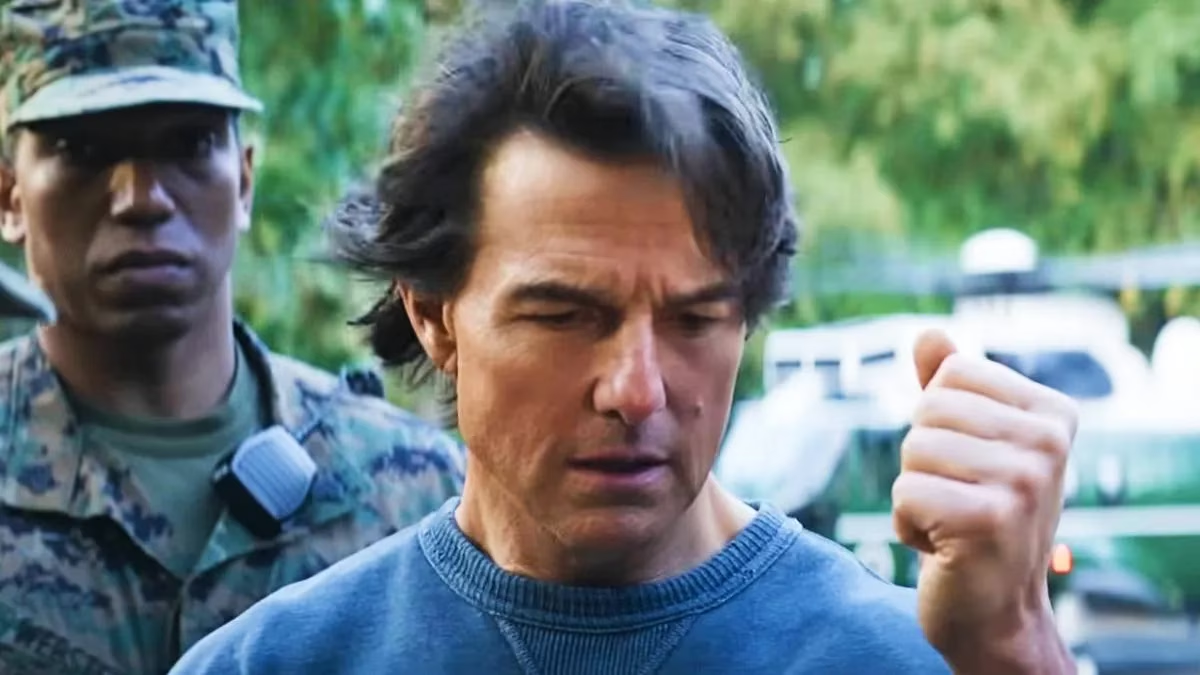
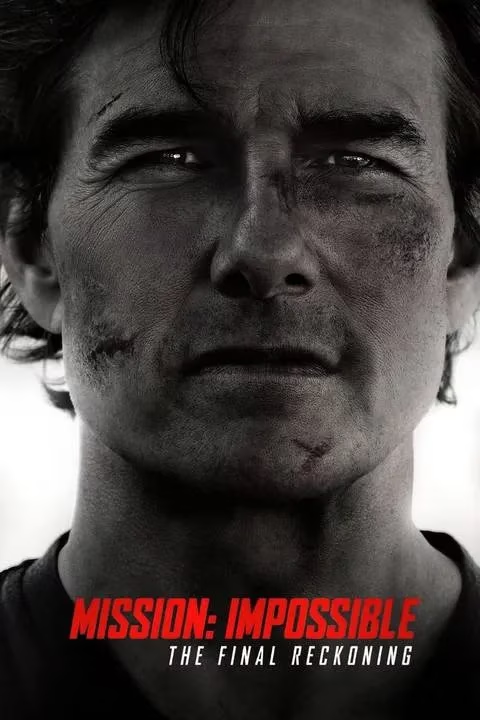
In 2025, Tom Cruise returned to theaters for what Paramount marketed as the final chapter of his IMF agent Ethan Hunt. By 2026, Mission: Impossible – The Final Reckoning has settled into an unusual place in the franchise: not the cleanest or most breathlessly beloved entry, but perhaps the most self-aware. Directed by Christopher McQuarrie and running 170 minutes, the film often feels less like a straightforward spy thriller than a story about the Mission: Impossible movies themselves — how they are made, why they endure, and what they mean in an era of Hollywood IP obsession. Spoilers follow for Mission: Impossible – The Final Reckoning.
🎬 A Franchise Looking Backward
The marketing insisted this was the end of Cruise's run as Ethan Hunt. Watching the movie, it often feels that way. The franchise has always kept continuity loose, revising backstory in opening minutes to suit the latest adventure. The Final Reckoning, by contrast, spends a remarkable amount of time looking backward. That choice is curious and potentially detrimental. Though still well received, it has more critical detractors than any McQuarrie-era installment, largely because the first third is heavy on expository dialogue. Words like bloated and drags have been attached to a series that once defined nimble momentum.
Cruise and McQuarrie, however, did something fascinating with their big franchise capstone. Together with the film's ex-part one, Dead Reckoning, they decided to make a Mission movie about Mission movies. It asks how they are made, why they work, and what it means to make them in the age of Hollywood's IP obsession. Seen through that lens, every bit of repetition starts to fall into place.
🧩 The Entity as Algorithmic Filmmaking
At the center of Dead Reckoning and The Final Reckoning is the Entity, a rogue artificial intelligence. In this reading, the Entity is algorithmic filmmaking at blockbuster scale. It can only predict using what came before. It demands story beats: one of these two characters must die now, it is written. In Dead Reckoning, almost everyone except Ethan wants to harness its power, a comment on where Hollywood was heading. In The Final Reckoning, the Entity has run amok. Truth erodes. Nuclear arsenals fall. People want to follow it. The idea that anyone can still use it looks like madness. This is the existential threat facing Hollywood, and the Entity wants its future to seem inevitable.
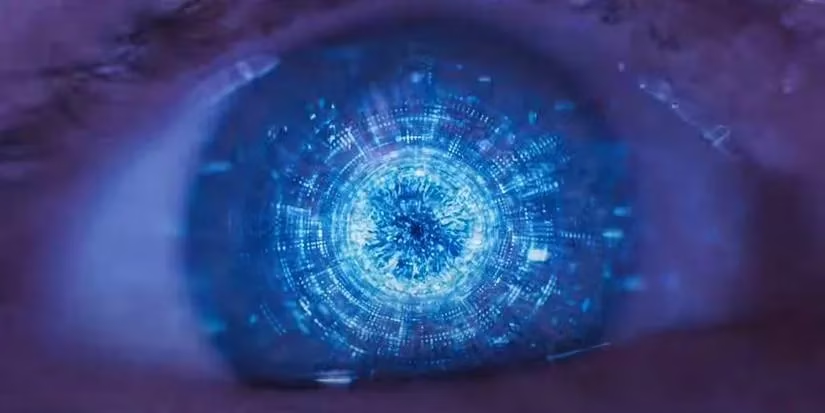
Gabriel, the villain, resembles a Frankenstein's monster built from pieces of previous Mission: Impossible antagonists. He is a former mentor with a religious alias, a mythical archrival, a personal threat, an apocalyptic fanatic, a deadly operative, and a ruthless servant of another mastermind. Gabriel taunts Ethan by calling him predictable. But if one outcome is guaranteed in these films, it is that Tom Cruise wins in the end. That is why Ethan becomes the one person the Entity truly fears.
🔁 The Past Repeats, Then Breaks
The Final Reckoning does not trust the legwork of Dead Reckoning. Instead, Cruise and McQuarrie do it all again. The first minutes are callback after callback. Ethan breaks Paris out of prison, echoing Ghost Protocol. He attends an ambassador's party, echoing Mission: Impossible, and flirts with a professional thief, echoing Mission: Impossible 2. He ends up chained in a basement, echoing Rogue Nation, and threatened with the torture of a loved one, echoing Mission: Impossible III. He chases Gabriel beneath London, echoing Fallout. Luther defuses a nuclear bomb, again echoing Fallout, and Ethan fails to save his dear friend, echoing Dead Reckoning.
| Moment in The Final Reckoning | Earlier Mission: Impossible Echo |
|---|---|
| Paris freed from prison | Ghost Protocol |
| Ambassador's party | Mission: Impossible |
| Flirtation with a thief | Mission: Impossible 2 |
| Chained in a basement | Rogue Nation |
| Torture threat against a loved one | Mission: Impossible III |
| London pursuit of Gabriel | Fallout |
| Nuclear bomb defusal | Fallout |
| Failure to save a friend | Dead Reckoning |
McQuarrie intercuts footage from previous films whenever one is referenced. The script creates many opportunities for this. The repetition is meant to be dwelt on, not merely noticed. Other Mission: Impossible movies might lend themselves to meta-readings, but not quite like this one. This movie is truly about making movies, or more specifically, franchise movies.
🕵️ Guilt, the Rabbit's Foot, and the First Mission
Dead Reckoning pushes the idea that Ethan, in his disregard for orders, is culpable for collateral damage. The Final Reckoning takes this further with its most surprising callbacks. The Rabbit's Foot, the MacGuffin of Mission: Impossible III, is no longer a mystery. Gabriel reveals that the Anti-God Ethan stole was actually the Entity's original program. Putting it in the hands of the US government set the current events in motion. Therefore, Ethan is to blame for the Entity.
In a franchise-movie reading, this is striking. The original Mission: Impossible, way back in 1996, was Tom Cruise's first movie as a producer. He leaned heavily into franchise blockbusters and allowed Paramount to chase Mission's success for decades. Does he feel responsible for what the industry has become? Did he, despite his intentions, help create the IP monster?
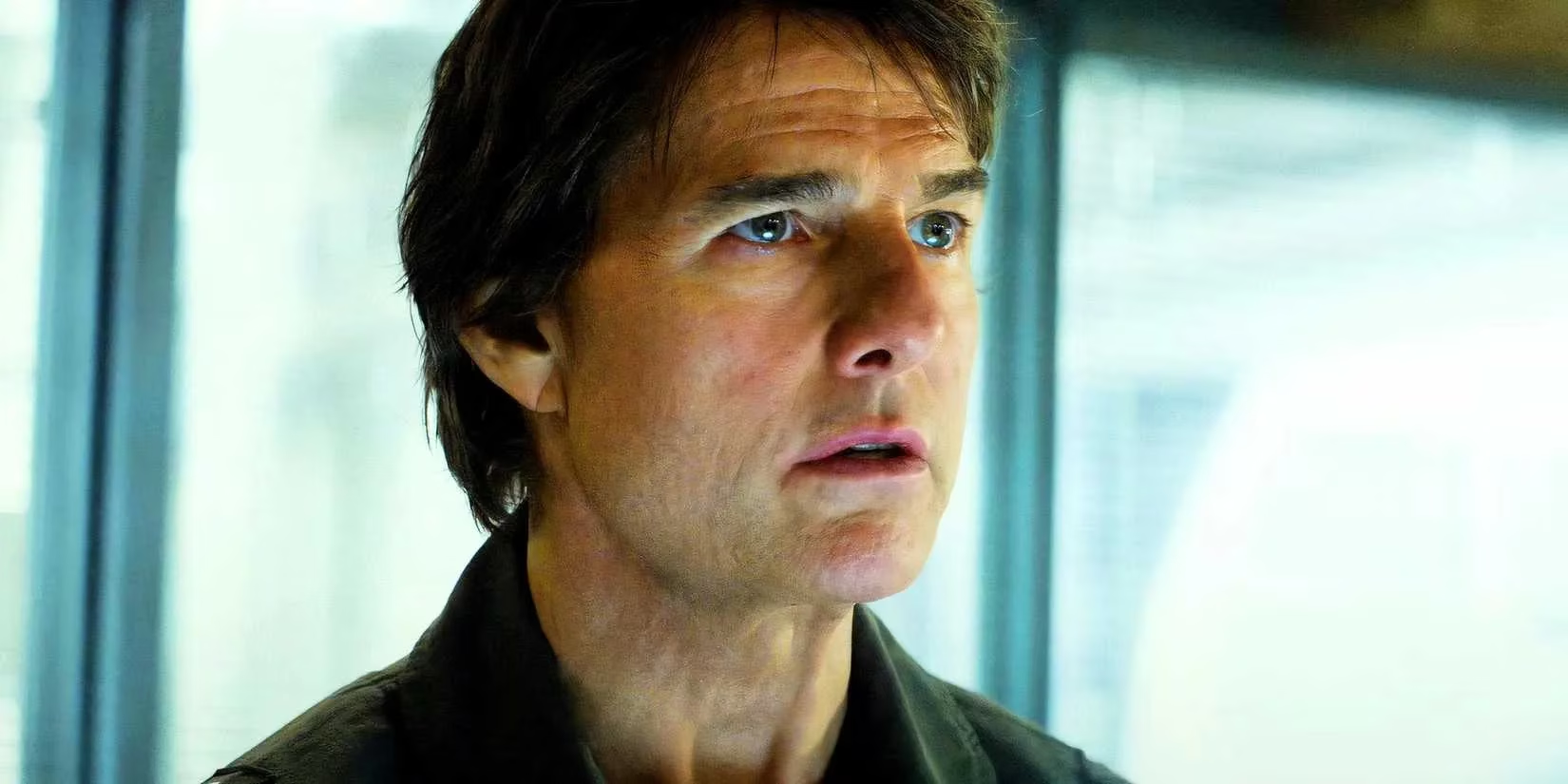
The film goes back to that first movie in two key ways. Briggs, Ethan's US government pursuer from Dead Reckoning, is revealed as Jim Phelps Jr., son of the traitorous agent Ethan kills in Mission: Impossible's climax. This man is a living consequence of Hunt's actions, however justified. Cruise plays the weight of that guilt in their scene together. The second callback brings back William Donloe, the CIA agent who suffered after Ethan's suspended Langley break-in. After the theft of the NOC List, Donloe was banished to an island station in the Bering Sea, where he remained for three decades. From one perspective, Ethan's rogue actions ruined his life.
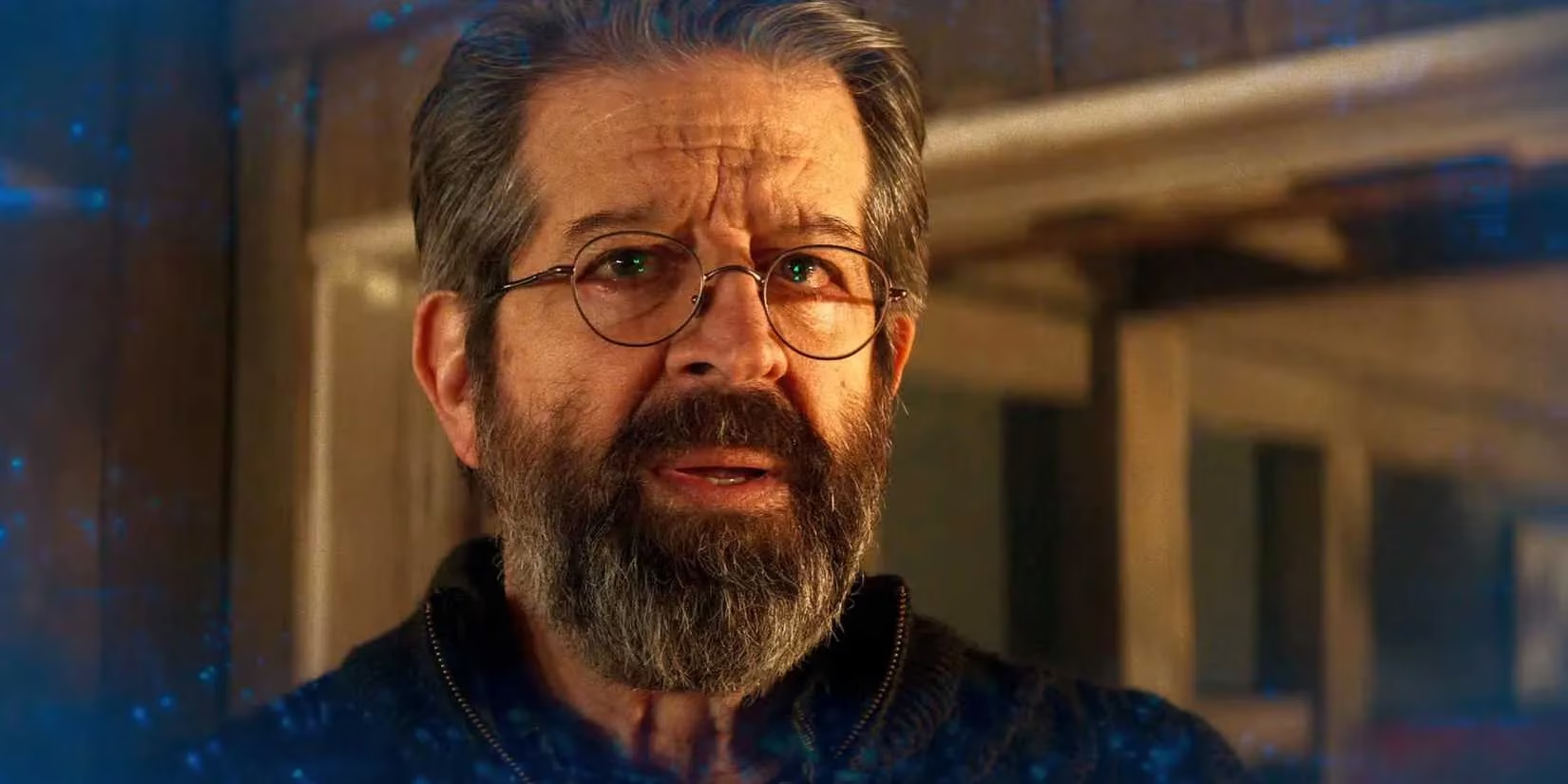
But when the two meet in the third act, Donloe corrects that narrative. Without being exiled from Langley, he never would have been truly happy at work. He never would have met his wife. If Ethan is responsible for what happened to him, then he deserves credit, not blame.
💥 Nothing Is Written
This is the film's ultimate conclusion, delivered through Luther's message from the grave. Ethan's relentless attempts to save the world frame Cruise's pursuit of the biggest big-screen entertainment as noble. He cannot control the consequences of his art, which can be good or bad, but all that is good inside us is measured by the good that we do for others. Choosing to accept the mission, and to accomplish it his way, remains the right thing to do.
In direct refutation of the Entity, Luther declares that nothing is written. It is a clever nod to how these movies are shot without a set script. McQuarrie explained this approach to GQ in a clarifying way: the team is not making it up as it goes along, but it constantly pushes to make each scene better, more immersive, more resonant, more engaging. It does not trust that just because lines appear on a page, audiences will feel them.
That is what The Final Reckoning is really about. Because of how it explores this idea, it may not be the best Mission: Impossible movie. But it captures what makes them so special. In 2026, as franchise filmmaking grows more algorithmic and more cautious, Ethan Hunt's final sprint through the shadows feels like both a warning and a defiant goodbye.
Comments