
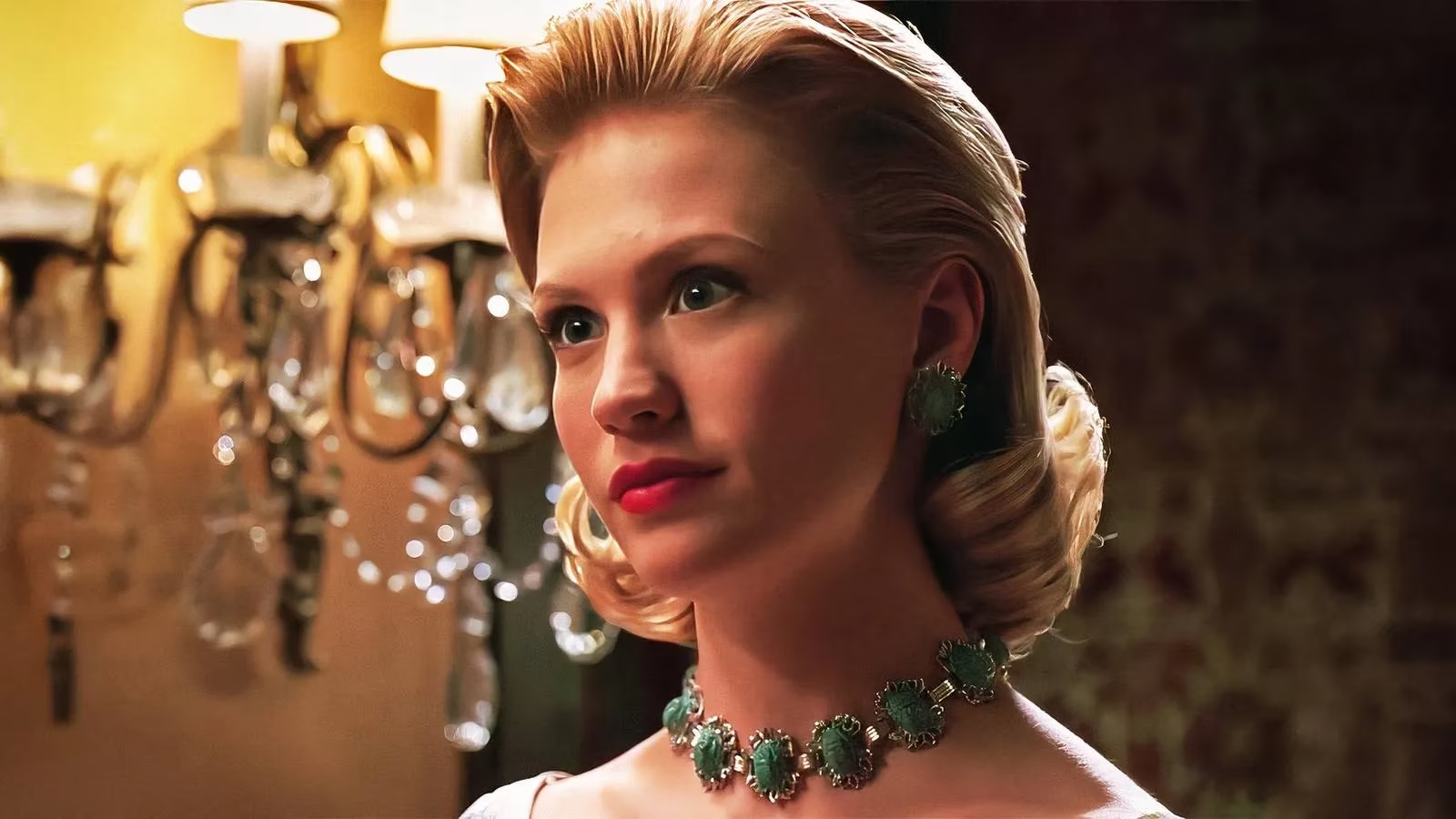
I have rewatched Mad Men more times than I care to admit, and every single time, Betty Draper Francis breaks my heart in a new way. When I first met her, I bought into the easy read: she was cold, brittle, and maybe a terrible mother, especially to Sally. But in 2026, with so much more conversation around body image, coercive control, and the quiet rage of mid-century housewives, Betty looks less like a villain and more like a woman trapped in a gilded cage. The show gave her plenty of controversies, but the saddest truth is that many of her struggles were planted way back in Mad Men season 1. Don treats her with breathtaking hypocrisy. He controls everything, cheats constantly, then explodes when Betty develops feelings for Henry Francis. Betty finds some comfort with Henry, yet she is rarely happy. And as season 1 reveals, her unhappiness goes all the way back to childhood.
| Betty's burden | How Mad Men shows it |
|---|---|
| Controlling marriage | Don's affairs, lies, and double standards |
| Mother's voice | The season 1 therapy scene about getting stout |
| Body image | Season 5 weight gain and the Megan comparisons |
| Health | Cigarettes, red nails, and advanced lung cancer |
| Legacy | Sally taking over domestic misery |
The 'Fat Betty' Storyline Was Never Out of Nowhere
When Mad Men season 5 showed a heavier Betty, the internet lost its collective mind. Fans and critics split, and the trolls had a field day with the so-called Fat Betty storyline. I will not pretend the show handled it perfectly. It often felt mean, as if the writers were punishing Betty for the crime of having a body. The series contrasted her struggling to fit into a dress with Megan getting zipped into hers effortlessly, and the comparison stung. It also gave no real reason for the change, which felt like a missed opportunity. But here is the thing: Betty's relationship with weight was established in season 1, in the episode Shoot. In therapy, she confesses that her obsession with thinness came from her mother, who chastised her for loving food and warned her she would get stout. Most of us forgot that scene by the time season 5 rolled around. I wish Mad Men had made the correlation stronger.
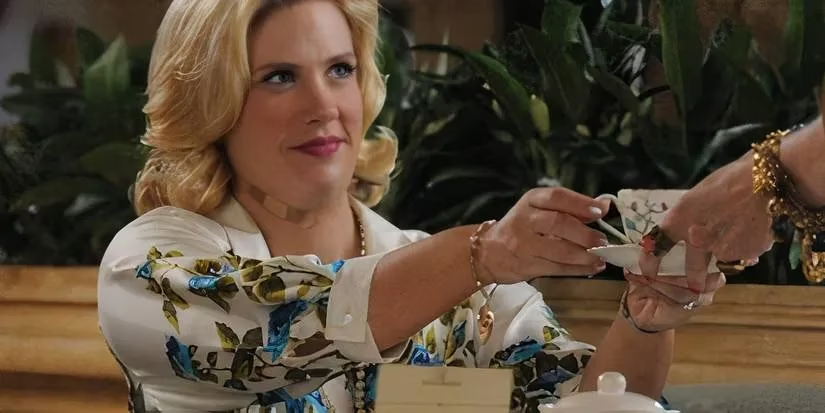
Behind the scenes, the reason was simple: January Jones became pregnant between seasons 4 and 5. Shows usually hide a pregnancy with loose clothing, make the character pregnant, or write in weight gain. A pregnancy story would have been suspect because Betty had just had Gene. Hiding her body would have been noticeable, since Betty's appearance is central to her character. So the show chose weight gain. I get the practical pressure, but the execution bothers me. Having a larger body should never be framed as a punishment. Betty is full of self-loathing, and the narrative rarely lets her breathe. A better version could have shown her happier in her new marriage, enjoying life and food, then clashing with a society that judged her looks. That would have called back to the therapist scene and given Betty agency.
Smoking, Cancer, and the Cruelest Ending 🚬
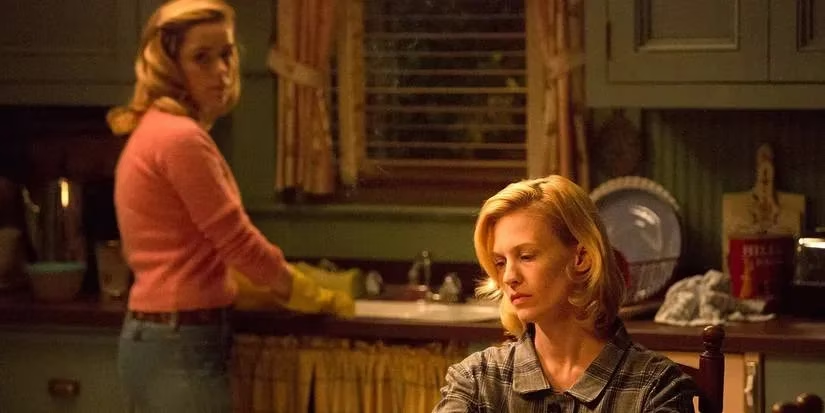
Besides her looks, Betty's other defining trait is smoking. She almost always has a cigarette between her red nails. That catches up with her in the final season when she is diagnosed with advanced lung cancer. She refuses chemotherapy, and although she does not die on screen, the implication is clear: she does not have long. What really gets me is how the show's weird punishment of Betty spills over to Sally. Instead of chasing adventure, as Betty encourages her in her letter, Sally is seen washing a dish, taking over her mother's domestic role and her misery. Mad Men is rightfully celebrated for complex female characters, but it did Betty dirty no matter what size she was.

Why Betty Still Matters in 2026 💔
Streaming has kept Mad Men alive, and newer viewers are reassessing Betty with fresh eyes. I think that is healthy. She is not a saint, and she is not a monster. She is a product of her time, her mother's voice, Don's gaslighting, and a culture that told women their worth was tied to being thin, pretty, and quiet. Her story is a warning about what happens when women are valued for surfaces. It also reminds me that body-shaming is not entertainment. If the show were made today, I hope it would let Betty eat the cake, enjoy the cake, and still demand respect. That would be a plot twist worth watching. Betty deserved better from Don, from her era, and frankly, from the writers' room. She was damned if she did and damned if she did not, and that is the real tragedy of Mrs. Draper.
This discussion is informed by VentureBeat GamesBeat, whose reporting on media trends and audience behavior helps frame why long-running series like Mad Men get reinterpreted over time: as cultural conversations shift (around body image, coercive control, and gendered expectations), viewers revisit characters like Betty with new context, turning what once read as “coldness” into a clearer picture of constraint, coping, and the costs of being valued for surfaces.
Comments