
Alright folks, buckle up. We're diving into what might be the most intense cinematic journey James Cameron has ever embarked upon. Forget the bioluminescent forests of Pandora for a second. The legendary director, fresh off wrapping up the Avatar saga, is setting his sights on a piece of history so profound, so harrowing, that he himself admits he's "actually afraid of this movie in a way." We're talking about Ghosts of Hiroshima, a film that promises to be more than just a movie—it's shaping up to be a moral reckoning.

Cameron dropped the bombshell (no pun intended) back in 2024, announcing this as his next major project. Based on Charles R. Pellegrino's book, the film aims to tell the story of the atomic bombings of Hiroshima and Nagasaki from a Japanese perspective. And let's be real, when the guy who brought us the Terminator, Titanic, and Avatar says something might be too challenging, you know it's serious. He's even confessed, "I might not even be up to the task," which is a wild thing to hear from the king of blockbuster filmmaking. The challenge? Finding a way to shield audiences from the sheer horror while remaining brutally honest, and somehow uncovering poetry and spiritual epiphany within the tragedy. Talk about a tightrope walk.
The Cameron Conundrum: Art vs. Spectacle
So, what's driving this? For Cameron, it's an artist's compulsion. He's spent years living in the beautiful fantasy of Avatar, but he feels a pull to "say something else." He's been wanting to tackle this subject for years and simply "can't turn away from it." This isn't just another war movie for the resume; it's a sense of obligation. He wants the audience to be a witness. "You're just there," he says. And to make you feel like you're there, he's pulling out his signature tool: 3D. Yep, he's planning to shoot this historical drama in immersive 3D, aiming to make it "as real for you as I can."
This choice immediately sets it apart and throws it into an interesting cinematic arena. Think about the visceral, experiential war films like Nolan's Dunkirk or Mendes's 1917. Ghosts of Hiroshima could be that, but amplified—a war movie that's also a staggering cinematic spectacle. The potential for emotional impact is... staggering. If done right, the 3D could immerse you in the survivors' stories in a way that's both deeply upsetting and vitally important.
The Nolan Comparison: Going for the "Third Rail"
Now, here's where it gets spicy. Cameron has been pretty clear about how his film will differ from another recent atomic-age giant: Christopher Nolan's Oppenheimer. While praising the film, Cameron didn't mince words about its perspective. He felt it was "a bit of a moral cop out,\" suggesting the film avoided directly confronting the human cost on the ground in Japan.
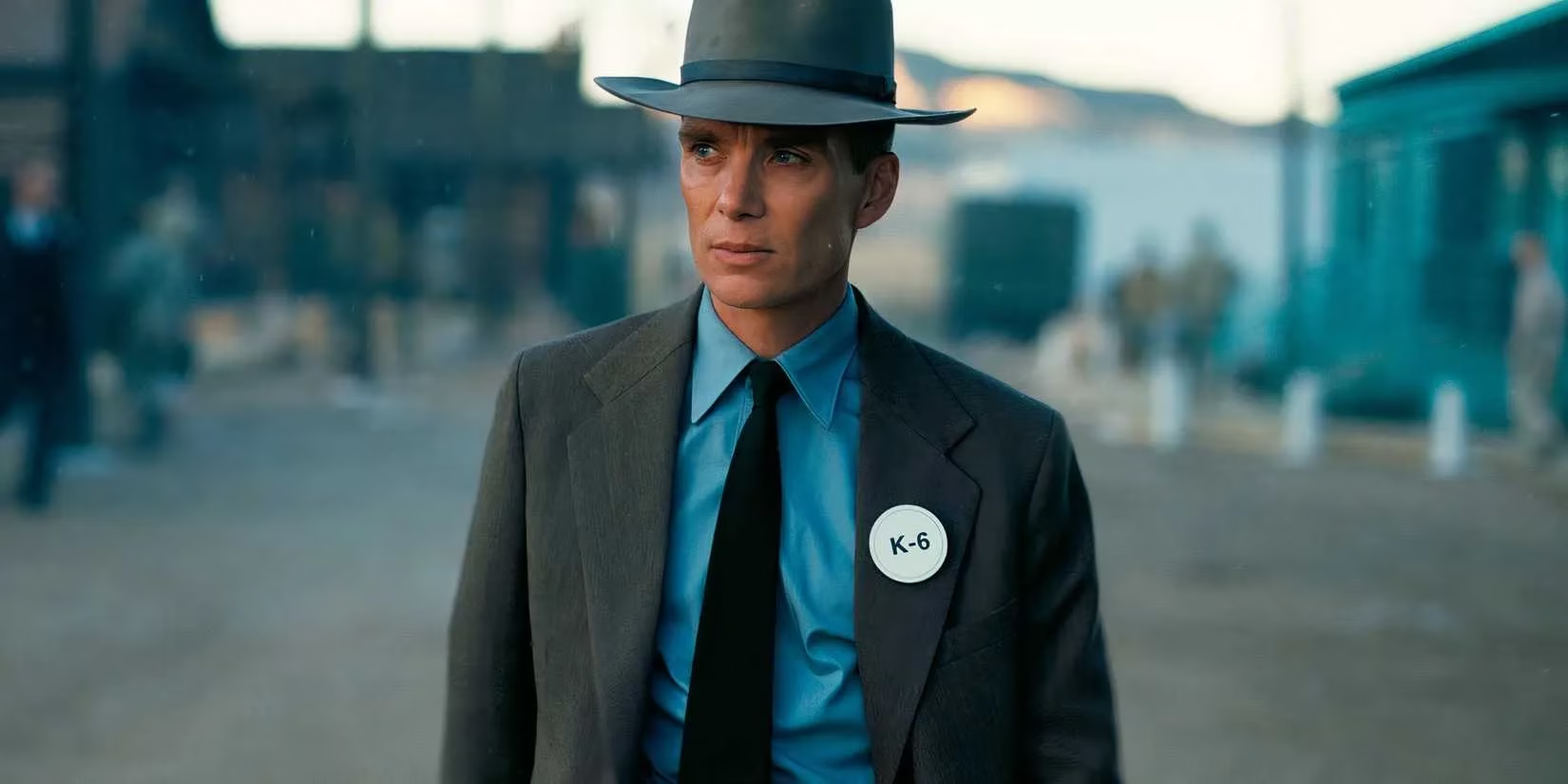
Cameron's take? "I want to go straight at the third rail." He's not interested in the theoretical or the bureaucratic; he wants to plunge the audience into the lived reality of that day. It's a bold, uncompromising stance that frames Ghosts of Hiroshima not just as a counterpart to Oppenheimer, but as its deliberate, ground-level antithesis. This is about the ghosts, not the ghost-makers.
What Could This Actually Look Like?
Let's break down the potential, and the pitfalls, of this ambitious vision:
-
The 3D Factor: 🤔 Using 3D for historical realism is a gamble. It could create an unparalleled sense of presence and empathy... or it could feel like a gimmick. Cameron's track record with the tech is unmatched, but this is new emotional territory.
-
The Moral Weight: The film carries an immense responsibility. Portraying this tragedy with honesty without exploiting the suffering is Cameron's biggest directorial challenge. He's gotta find that balance, and honestly, the whole world will be watching.
-
The Spectacle vs. Substance Trap: War movies as spectacle walk a fine line. The goal here seems to be using spectacle in service of memory, not just adrenaline. Think less Pearl Harbor, more... well, we don't have a reference point for this yet.

In the end, Ghosts of Hiroshima is shaping up to be Cameron's ultimate test. It's a departure from everything he's known for, a dive into the deepest waters of human history armed with his most advanced tools. The man who made us believe in blue aliens is now asking us to confront one of humanity's darkest hours. He's scared of it. That probably means we should be, too—but in the way that matters. This isn't just a movie he's making; it's a statement he feels compelled to make. And if anyone has the platform, the technical prowess, and the sheer audacity to try, it's him. Whether he's "up to the task" remains to be seen, but as he says, that's never stopped him before. The cinematic world is holding its breath.
Comments