
I wasn’t expecting a live-action Disney remake to make me cry over cluttered shelves, but here I am in 2026, still thinking about the Pelekai house. When I first watched the 2025 Lilo & Stitch, I assumed the mess was just a visual joke about a chaotic household. After learning about the production design, I realized the clutter is grief made visible. The remake quietly gives Lilo and Nani’s late parents a new backstory, and once you notice it, the entire film feels heavier in the best way.
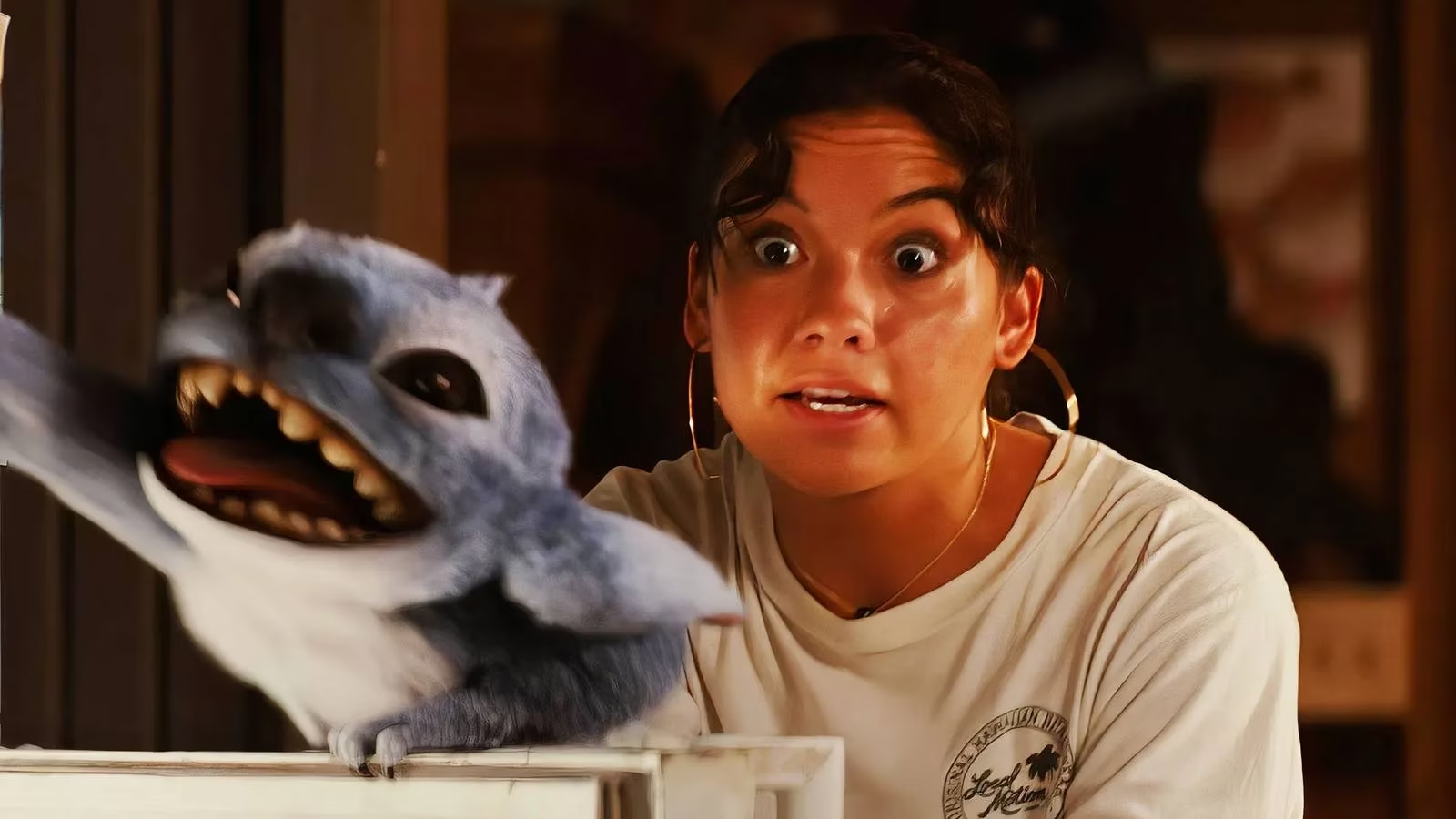
Director Dean Fleischer Camp created a backstory that the parents were scientists who worked for the state. Production designer Todd Cherniawsky explained that one parent was most likely a marine biologist, while the other was possibly a botanist. That choice didn’t just fill out a fictional family tree. It shaped the entire look of the house I had been studying on screen.
I started noticing details I had completely missed on my first viewing. The books are not random. The diving gear is not decoration. The plants are not simply set dressing. They are clues. Cherniawsky said the idea was that Nani can’t bring herself to tidy those things or give them away. So the house remains essentially the same as it was on the day the parents passed away. That one line changed everything for me.
The house becomes a museum of loss. A preserved moment. A life frozen in place because moving anything would mean accepting that those people are never coming back. Nani is not a messy older sister. She is a young woman carrying so much responsibility that sorting through her parents’ belongings is simply too painful. Lilo is not just an eccentric kid. She is growing up surrounded by objects that still belong to people she barely got to know.
The emotional details land even harder because they are never loudly explained. The film does not stop to announce that the parents were scientists. Instead, the set design lets you absorb the information the way you would in a real grieving home. You see shells, books, botanical prints, and old equipment. You feel the absence.
These Easter eggs also gave me a new understanding of the sisters’ personalities. Lilo’s fascination with nature now feels inherited. Her curiosity about the world around her mirrors the parents’ scientific minds. Nani’s dream of studying marine biology no longer seems like a random plot point. It becomes a connection to her mother or father, a way of continuing something that was stolen from her family. Even her stress makes more sense. She is not simply overwhelmed by bills and work. She is also living inside a house that constantly reminds her of what she lost.
A few details stood out to me the most:
-
🧪 A marine biologist parent explains the diving gear and ocean-themed clutter.
-
🌿 A botanist parent explains the plants, pressed leaves, and nature books.
-
📦 The unchanged household shows that Nani’s grief has physically settled into every room.
-
🎓 Nani’s marine biology interest now reads as a legacy rather than a casual dream.
I think that is why the remake works better than many people expected. It faced plenty of scrutiny before release, especially from fans of the 2002 animated classic. Some changes were obvious, like updated effects and new action sequences. But the quiet choices are the ones that stay with me. The subtle backstory does not dominate the story. It simply roots it more deeply in Hawaiian culture, family memory, and the pain of losing someone too soon.
The film is 108 minutes long, directed by Dean Fleischer Camp, and was released on May 23, 2025. It stars Maia Kealoha as Lilo and Sydney Agudong as Nani. Watching it again in 2026, I found myself paying less attention to Stitch’s chaos and more attention to the walls, shelves, and corners of the Pelekai home. That is a sign of thoughtful filmmaking.
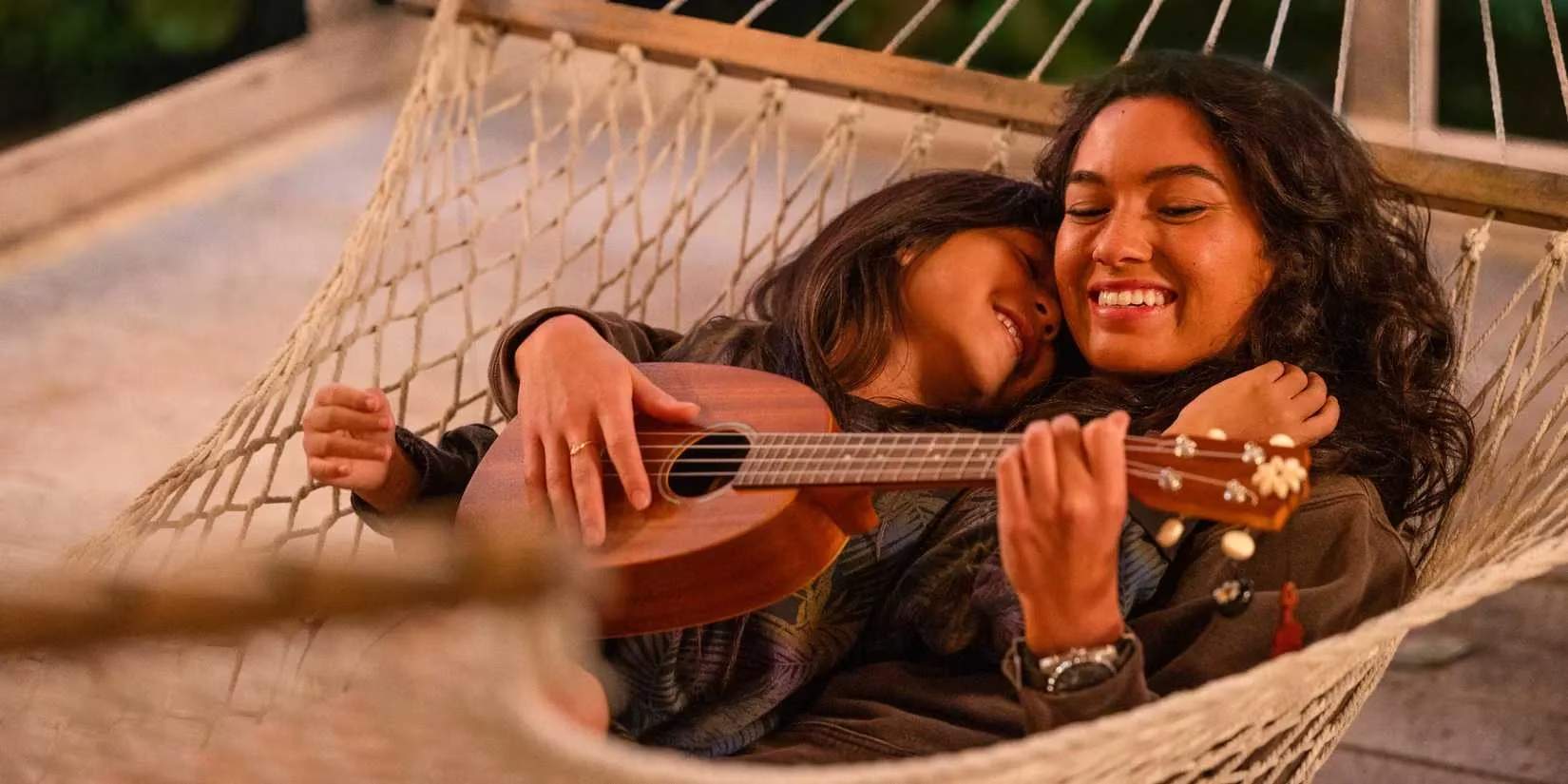
By the time Nani played ukulele for Lilo in the hammock, I wasn’t just watching a sweet sister moment. I was watching two girls rest inside the memory of their parents, surrounded by objects that still held their mother’s and father’s presence. It is one thing to tell an audience that a family has suffered a loss. It is another thing entirely to show the loss through a cluttered room, a stack of books, or a piece of old diving gear left exactly where it was.

The new backstory won’t be obvious to everyone. But for viewers like me who look closely, it adds an entire layer beneath the surface. It deepens Nani’s exhaustion, reframes Lilo’s oddness as curiosity inherited from scientists, and makes the concept of ohana feel less like a slogan and more like a burden and a blessing. That is why I keep returning to this live-action remake. Not because it replaced the original, but because it gave me a new reason to care about the people inside the house.
Comments