
It’s 2026, and I’ve just spent seventy-two hours inside Jurassic World Rebirth: The Immersive Experience, a next-gen VR epic that launched last week to rapturous acclaim. As a professional gamer and self-confessed Easter egg junkie, I strapped on my haptic suit, booted up the photorealistic jungle, and began combing every pixel for hidden gems. This isn’t just any movie tie-in; it’s a living museum of Spielbergian lore, a digital playground where every artifact whispers a secret from the franchise’s past. My mission? To find every deep-cut reference, every reshaped motif, and every sly nod to the master’s other masterpieces. What I discovered blew my mind—and my inventory—wide open.
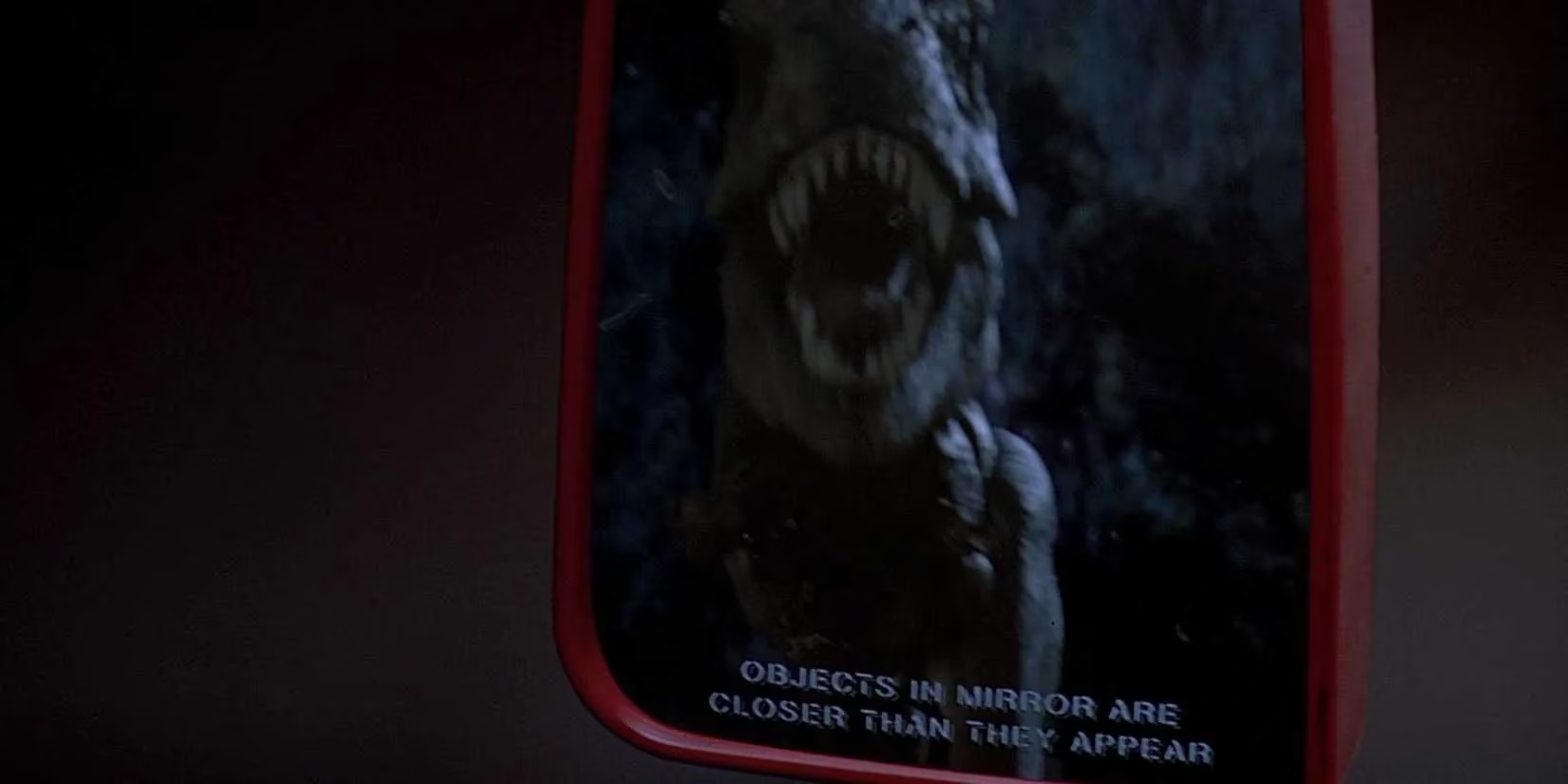
🦖 The Mirror That Started It All
My journey began in a rain-slicked New York level, playing as pharmaceutical operative Martin Krebs. I hopped into a sleek sedan and began driving to the rendezvous point, the city’s neon reflections sliding across the windshield. As a reflex, I checked the rearview mirror—a mini-map is useless when you’re hunting for details. That’s when I saw it: the iconic phrase "OBJECTS IN MIRROR ARE CLOSER THAN THEY APPEAR" etched into the glass, shimmering slightly as if the devs wanted to make sure I noticed. This isn’t just any car mirror; it’s a love letter to Robert Muldoon’s frantic escape in the original Jurassic Park, where the same words heralded the T-Rex’s thunderous approach. In the game, if you linger on that mirror long enough, a faint overlay of a reptilian eye glitches into the reflection—a digital ghost of Spielberg’s most legendary shot. I unlocked my first hidden achievement: "Clever Girl’s Warning."
🎓 Crichton Middle School & The Author’s Living Legacy
Continuing through the city streets, my AI companion Zora Bennett chattered about our mission while I scanned the environment for collectibles. A yellow school bus rumbled past, and I almost missed the sign on its side: "CRICHTON MIDDLE SCHOOL." My heart did a little flip. Michael Crichton, the literary titan whose novel birthed this entire universe, finally gets his own in-world monument. I pulled over—yes, you can deviate from the mission path here—and walked up to the bus. Inside, I found an interactive object: a tattered copy of Jurassic Park on one of the seats, its cover worn, with a Post-it note from a kid named Tim. Reading it triggered a memorable audio log from Dr. Henry Loomis, quoting lines from the book about extinction and hubris. This isn’t just a texture; it’s a key to understanding why the dinosaurs are dying in the game’s narrative. The bus reappears later in a museum level, where Loomis’s voiceover repurposes Crichton’s prose directly, turning environmental storytelling into philosophical bedrock.
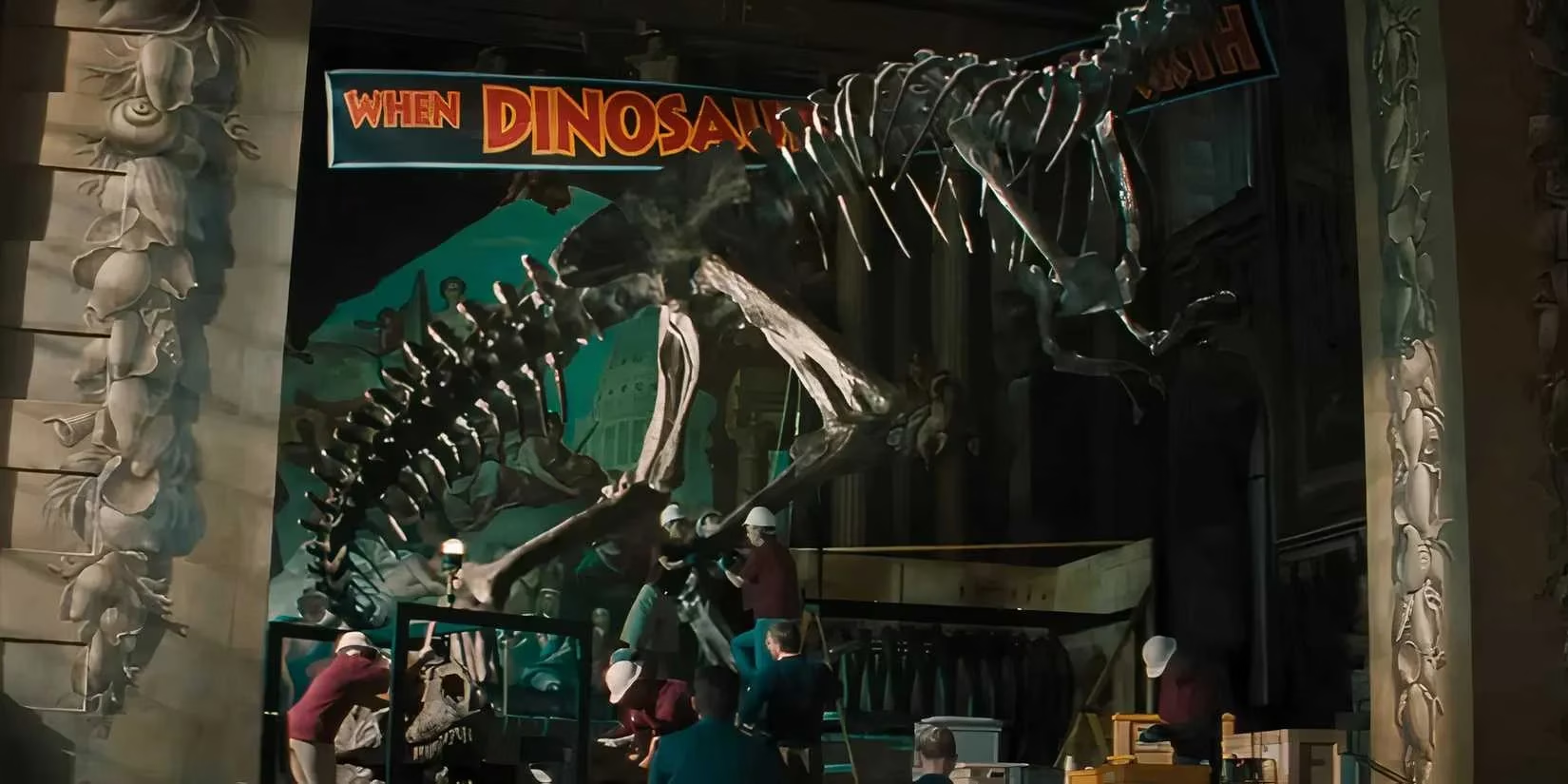
📜 The Falling Banner & The End of an Era
One of the most emotionally charged sequences I encountered happens in Loomis’s museum, now being crated up due to funding cuts. As I navigated boxes and fading dioramas, a massive banner reading "WHEN DINOSAURS RULED THE EARTH" crumpled from the ceiling, fluttering down in a tragic reenactment of the first film’s triumphant finale. In the original Jurassic Park, this banner dropped behind a roaring T-Rex as our heroes escaped; here, it crashes onto a dusty floor, symbolizing a second extinction. The game cleverly turns a visual callback into a gameplay mechanic: you must step through the banner’s folds to advance, and as you do, the orchestral motif from that 1993 scene swells briefly before dying into static. I stood there for a full minute, just soaking it in.
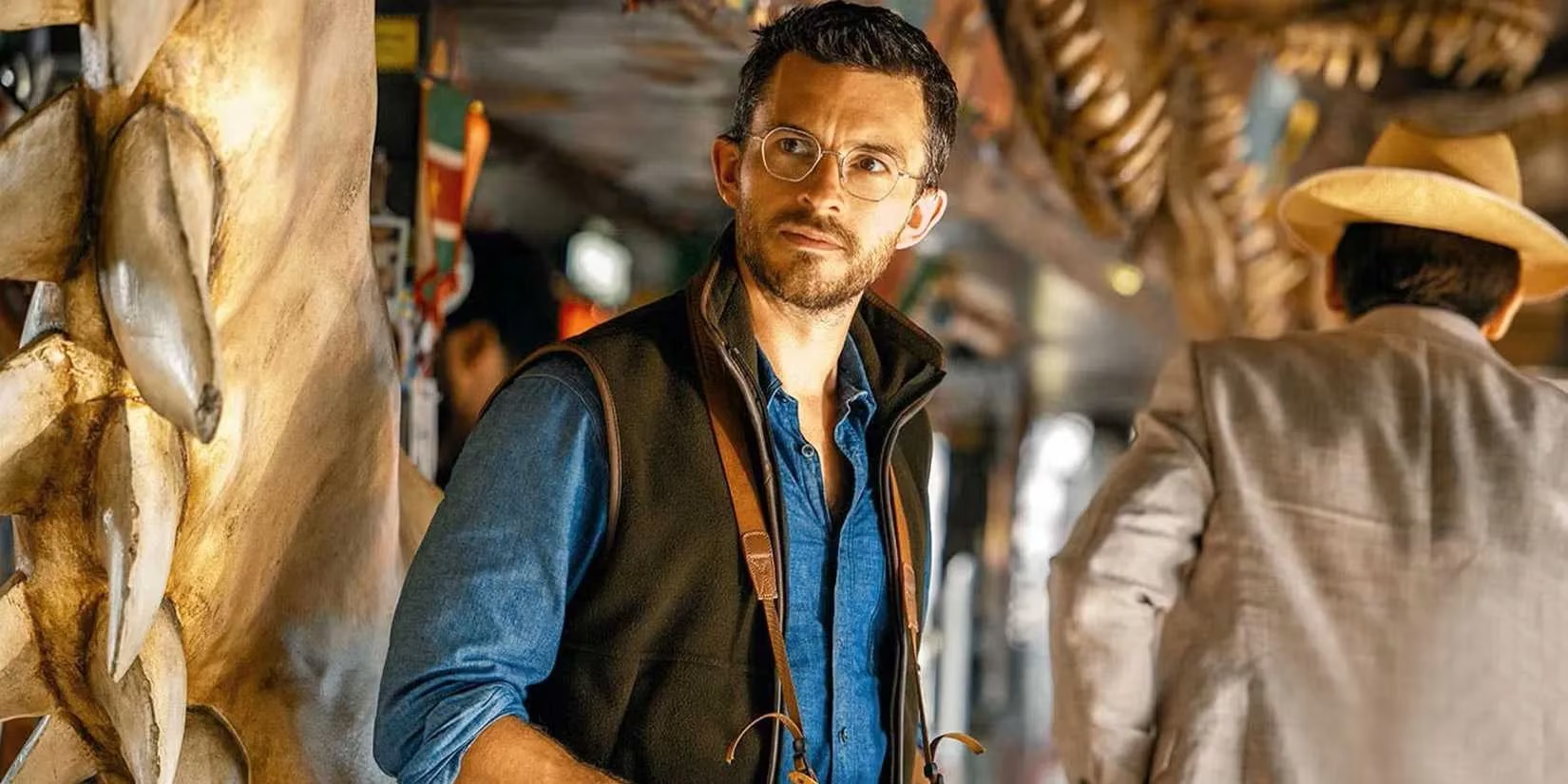
👨🔬 Dr. Henry Loomis: A Pupil of Alan Grant
Early in the campaign, the game establishes Loomis’s credentials not through exposition dumps, but through a series of unlockable hologram recordings. These recordings reveal that Loomis was mentored by none other than Dr. Alan Grant, the paleontological anchor of the franchise. By scanning fossils in the museum’s prep lab, I pieced together a short video call between a younger Loomis and Grant (voiced by Sam Neill in a cameo that set the fan forums ablaze). Grant’s advice—"Respect them, but never trust them"—becomes a core ability: whenever Loomis analyzes a creature, a ghostly overlay of Grant’s field notes appears, boosting your knowledge meter. This narrative bridge doesn’t just honor the past; it gives statistical depth to your character build. Finding all six Grant recordings unlocked the "Dig Site Disciple" trophy, and yes, I screamed.
🦕 The Titanosaurus Sequence: Williams’ Score in Your Veins
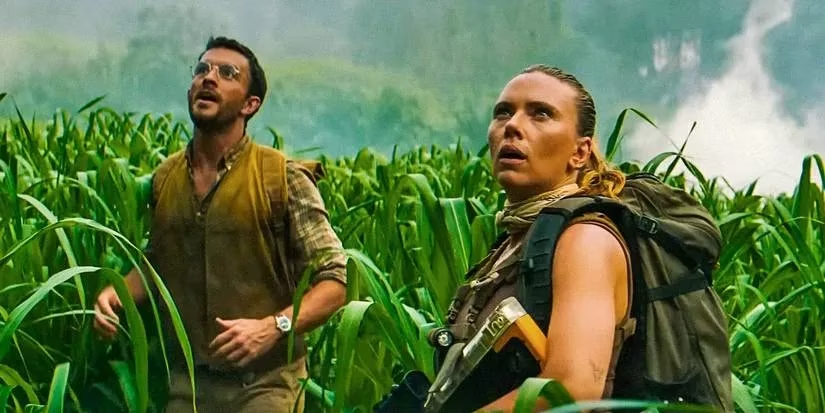
If you’re a veteran gamer, you know that music triggers are the purest form of nostalgia manipulation. In Jurassic World Rebirth, when you first enter the Titanosaurus valley, the game goes silent for a heartbeat—then John Williams’ iconic Brachiosaurus theme swells, scored dynamically to your movement. I’ll admit, I wept. Zora, Loomis, and I crested a hill, and a herd of shimmering Titanosaurs swept into view, their necks weaving like cathedral spires. The framing tool lets you recreate the exact camera angle from the 1993 reveal, and if you do, you’re awarded a gold-tier photo op. Alexandre Desplat’s new score takes over afterward, but for those forty seconds, you’re reliving cinema history. This zone also hides a secret: if you linger until nightfall, the Williams cue morphs into a minor-key version, hinting at the melancholy ahead.
🚤 The Inflatable Raft Chase: A 30-Year-Old Scene Finally Playable
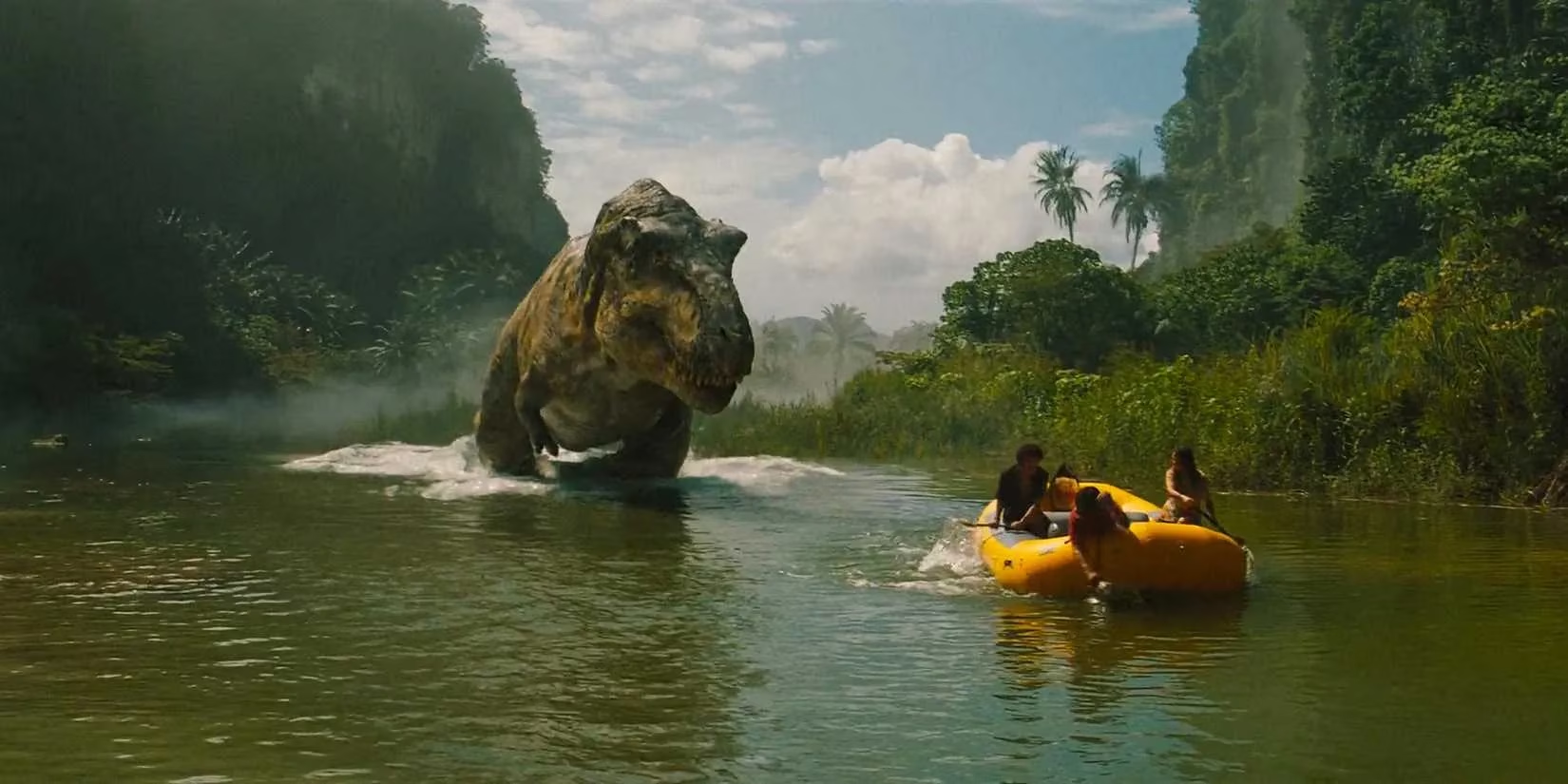
One night, the Delgado family’s side quest had me navigating a rubber dinghy down a jungle river in near-total darkness. Without warning, a T-Rex materialized behind our boat, its submerged bulk creating a swell in the water. This sequence—a T-Rex attacking a raft—was famously excised from the original Jurassic Park and its sequel. Now, as an interactive set piece, it’s terrifying. I paddled frantically, the dual sense controllers buzzing with every ripple. The T-Rex’s jaws snapped centimeters from my avatar’s head, water spraying the camera lens. Completing this segment without losing a family member earned me the "Long Delayed Launch" achievement, and I later learned the developers spent eighteen months perfecting the water physics just to honor this lost Spielberg moment. For lore hunters, there’s a hidden log on the riverbank detailing Michael Crichton’s original raft scene from the novel.
🦖 Raptors, Mutadons, and the Claw Tap
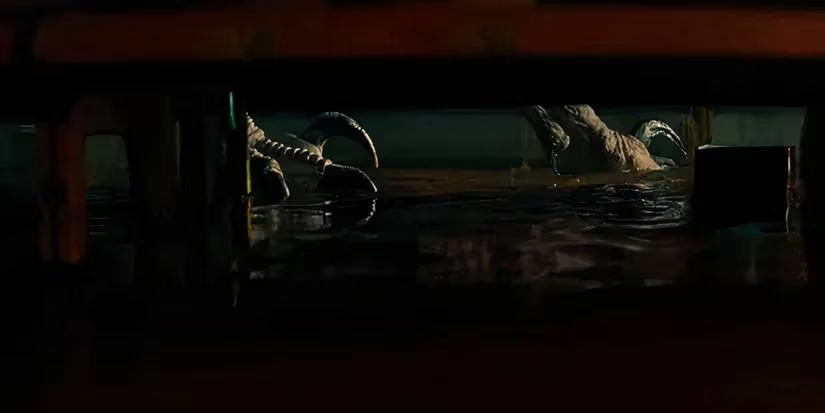
The velociraptors don’t dominate this game the way they did in Jurassic World, but their genetic successors—the Mutadons—carry some very familiar animations. While exploring an overgrown gas station, I noticed a Mutadon stalking me exactly like the kitchen raptors: it paused, tilted its head, and one of its elongated claws tapped rhythmically against a metal shelf. I froze. It’s the same claw-tap that gave me nightmares as a kid watching Spielberg’s film. In an earlier section, when two Mutadons corner Xavier, one assumes the low, crouched pose made famous by the original raptor staring through the kitchen window, its silhouette framed identically. These aren’t random behaviors; they’re state-based animations triggered when the AI detects you’re hiding. The tapping claw also acts as a sound cue—if you hear it three times, a stealth takedown opportunity opens, a gameplay twist only hardcore fans would discover.
🦈 Jaws-Envy: Spielberg’s Other Monster Lurks
The tavern where you recruit the grizzled Duncan Kinkaid is a trove of nautical memorabilia. On a dusty shelf, I spotted a small brass pedal—an exact replica of Quint’s fishing rod brace from Jaws. Examine it, and your character mutters, "We’re gonna need a bigger boat." Later, during a frantic Mosasaurus attack, Zora leans over the ship’s railing, rifle raised, desperate to land a shot before the leviathan submerges. The framing—the weapon aimed at water, the small vessel, the sheer scale of the creature—is a deliberate homage to Chief Brody’s final stand. If you manage to kill the Mosasaurus in this stance (it takes perfect timing and armor-piercing rounds), the achievement “Smile, You Son of a Bitch” pops, garnished with a few bars of John Williams’ Jaws theme. I didn’t just find an Easter egg; I lived inside two Spielberg climaxes simultaneously.
🗿 The Temple of the Quetzalcoatlus: An Indiana Jones Meeting
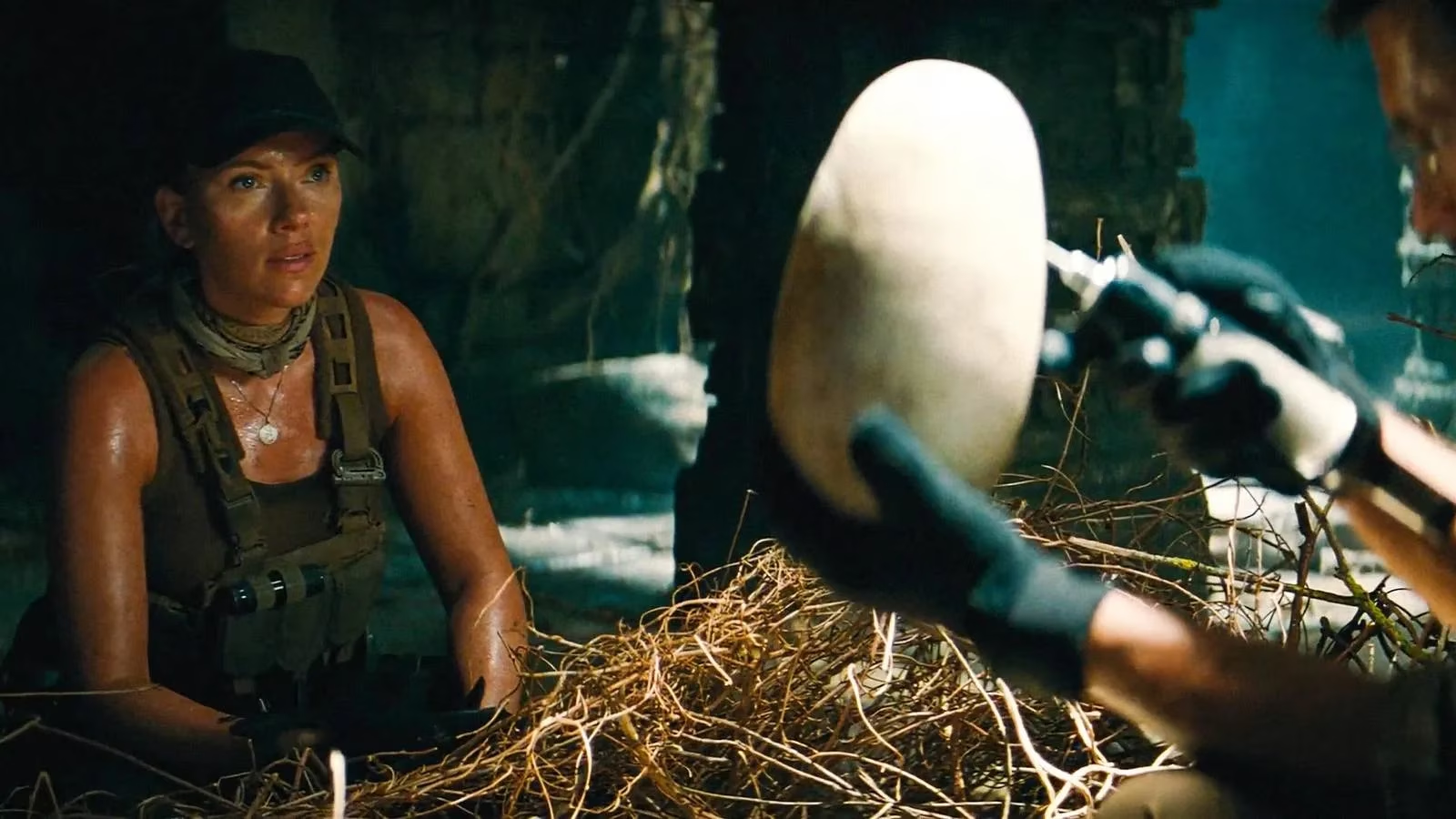
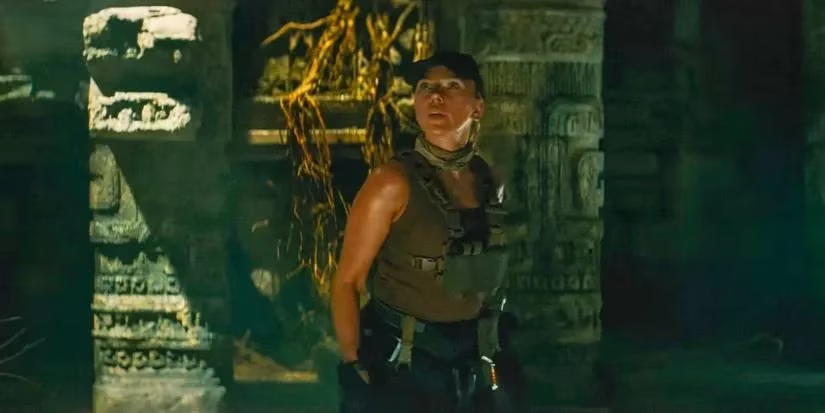
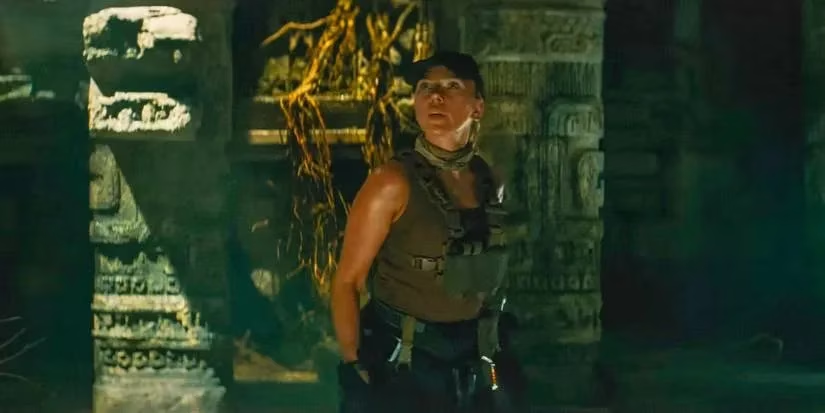
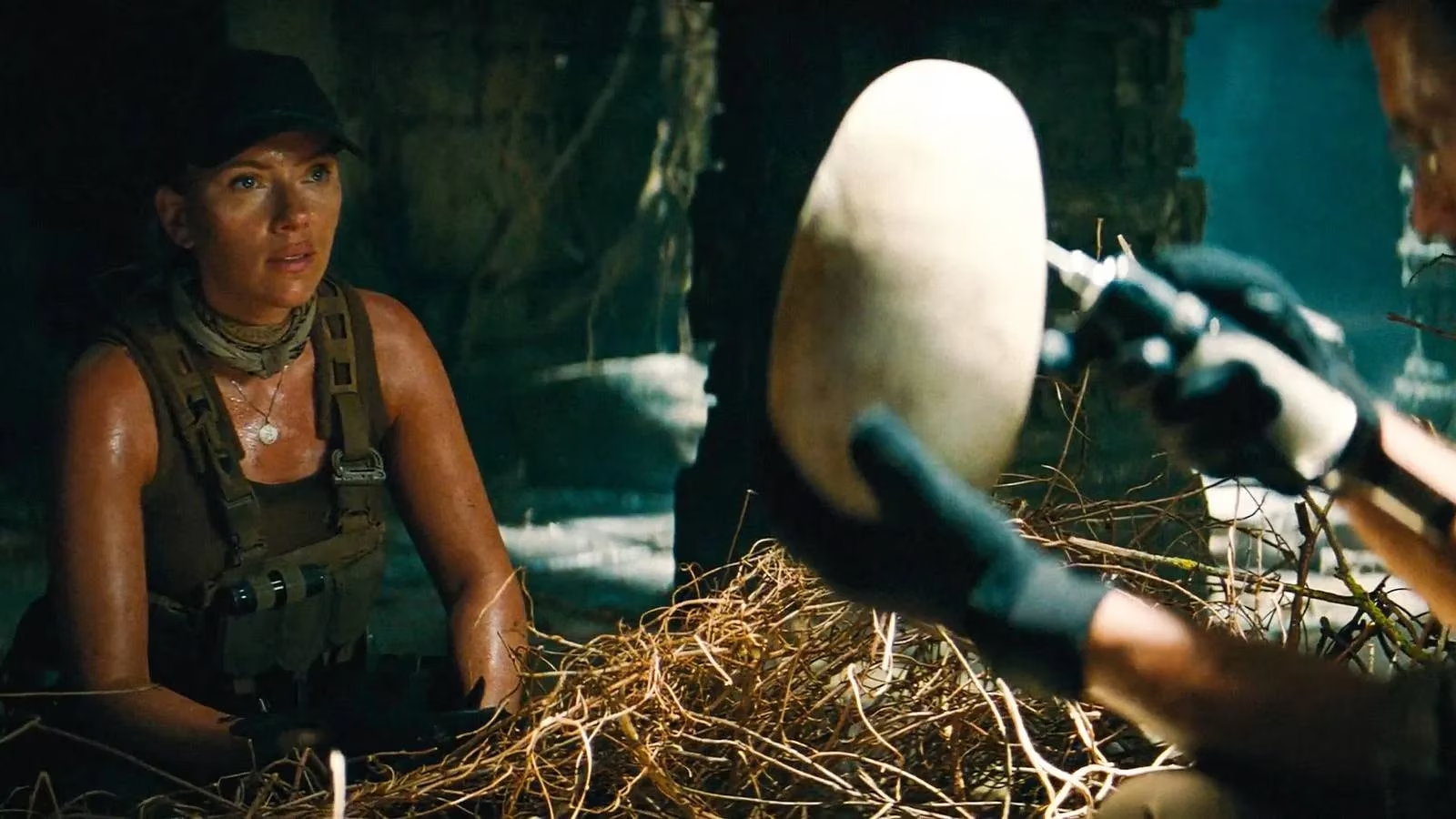
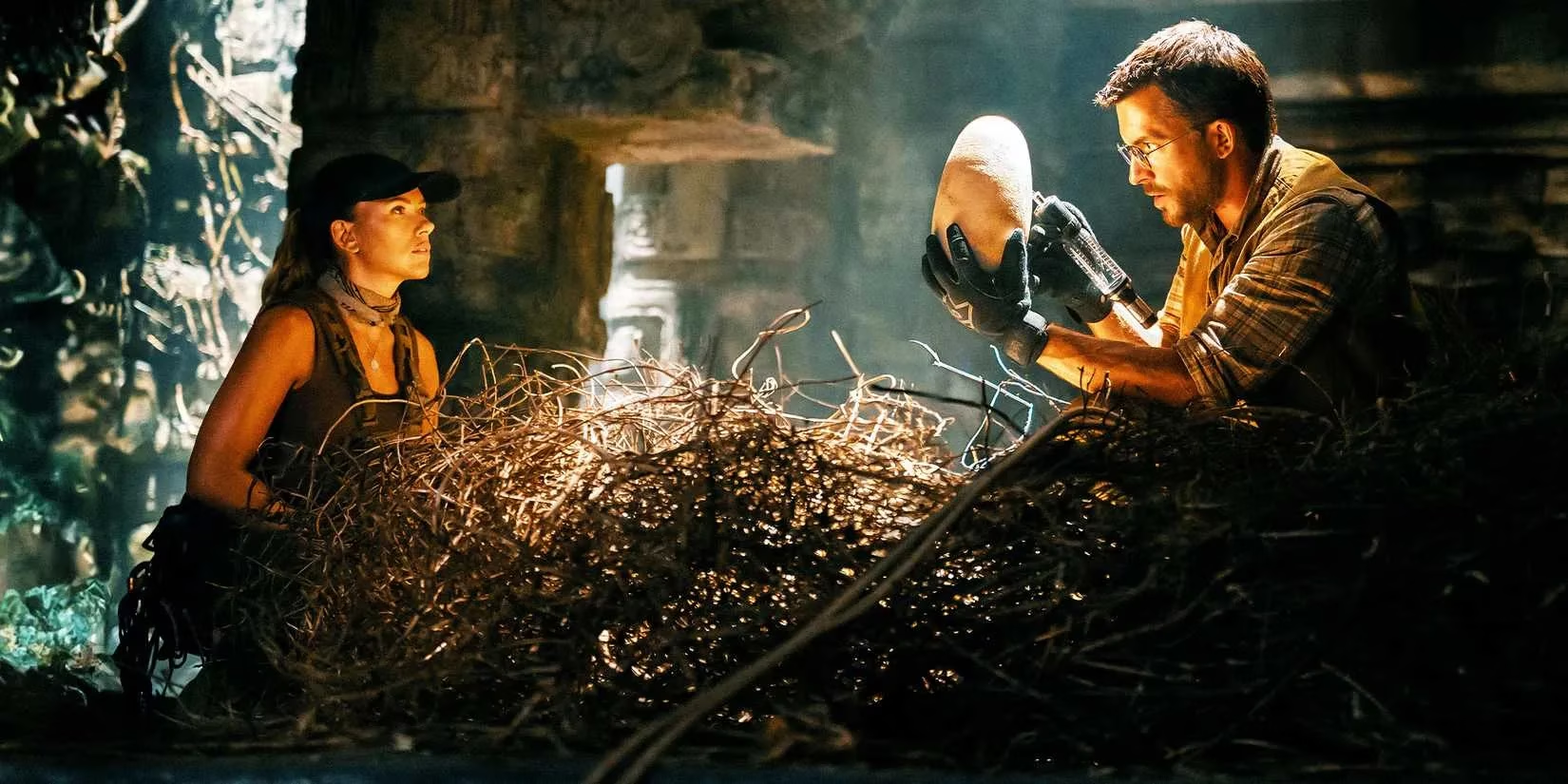
Hidden deep in the game’s second island is a Quetzalcoatlus nest situated inside crumbling temple ruins. The stonework immediately triggered my artifact-sense: the carvings, the booby-trap-like corridors, the golden light—it’s pure Raiders of the Lost Ark. I later learned from the developer commentary that the screenwriter David Koepp (who penned both films) insisted on this visual reference. The game even includes a whip-crack sound effect when you first enter, though no whip exists. Finding the eggs here requires solving a weight-based puzzle reminiscent of the Chachapoyan fertility idol swap, with deadly consequences if you’re greedy. This extended sequence is a side quest called “Paleontology of the Gods,” and completing it rewards you with a fedora for Loomis. I wore it for the rest of my playthrough.
⛰️ The Cliff Rappel: Vertigo in Jurassic Mode
To retrieve Quetzalcoatlus DNA, my team and I had to rappel down a sheer cliff face while the massive flyer swooped at us. This is a direct gameplay translation of Alan Grant’s harrowing cliff escape in Jurassic World, albeit with more vertical terror. As Loomis dangled over the abyss, the camera swung to a stomach-churning downward angle, and the tension ratcheted up every time I missed a handhold. LeClerc, poor LeClerc, wasn’t so lucky—and watching him fall while trying to save the eggs was a brutal reminder that hubris still gets you killed here. For comparison, the game overlays a faint visual of Grant’s own rappelling scene if you hold the focus button, a meta-commentary on how these characters are doomed to repeat the past. Surviving the climb grants the “Hold On to Your Butts” medal, a phrase I never thought I’d earn as a gamer.
🎮 The Final Achievement: A Spielbergian Legacy
After all this, I sat back in my VR harness, sweating. Jurassic World Rebirth isn’t just a game; it’s an interactive concordance of everything Steven Spielberg taught us about wonder, terror, and the joys of film archaeology. Every Easter egg, from the rearview mirror to the tap of a claw, isn’t a gimmick—it’s a design philosophy that rewards attention, patience, and a deep love for the source material. The voice actors (Scarlett Johansson’s Zora, Jonathan Bailey’s Loomis) add nuance, but the environment itself carries the weight of legacy. My file now boasts 47 hidden achievements, a full codex of reference materials, and a permanent new appreciation for how video games can preserve cinema’s most magical moments.
For any other hunters out there, remember: the objects in this game are always closer than they appear. The past is never truly extinct. And as I log off for the night, I swear I can still hear the distant roar of a Rex, punctuated by the echo of a fedora’s whip crack.
Comments