
Stepping into the theater for Predator: Badlands felt like entering an airlock to another universe. The familiar hum of the projector faded, replaced by the guttural growls and alien landscapes of Yautja Prime. For the first time ever, a Predator wasn't the lurking terror in the shadows – Dek was the hero, and I was strapped in beside him. Seeing the galaxy through the glowing eyes of a Yautja warrior, especially one as complex as Dek, was like trying to understand a thunderstorm by becoming the lightning itself – electrifying and utterly disorienting. His journey, forged in fire alongside Thia, the Weyland-Yutani synth, wasn't just a hunt; it was a revelation of honor, survival, and the strangest partnership I'd ever witnessed on screen. The sheer novelty of rooting for the hunter, feeling the weight of his code and the burn of his plasma caster as if it were my own, rewired my expectations of the franchise completely.
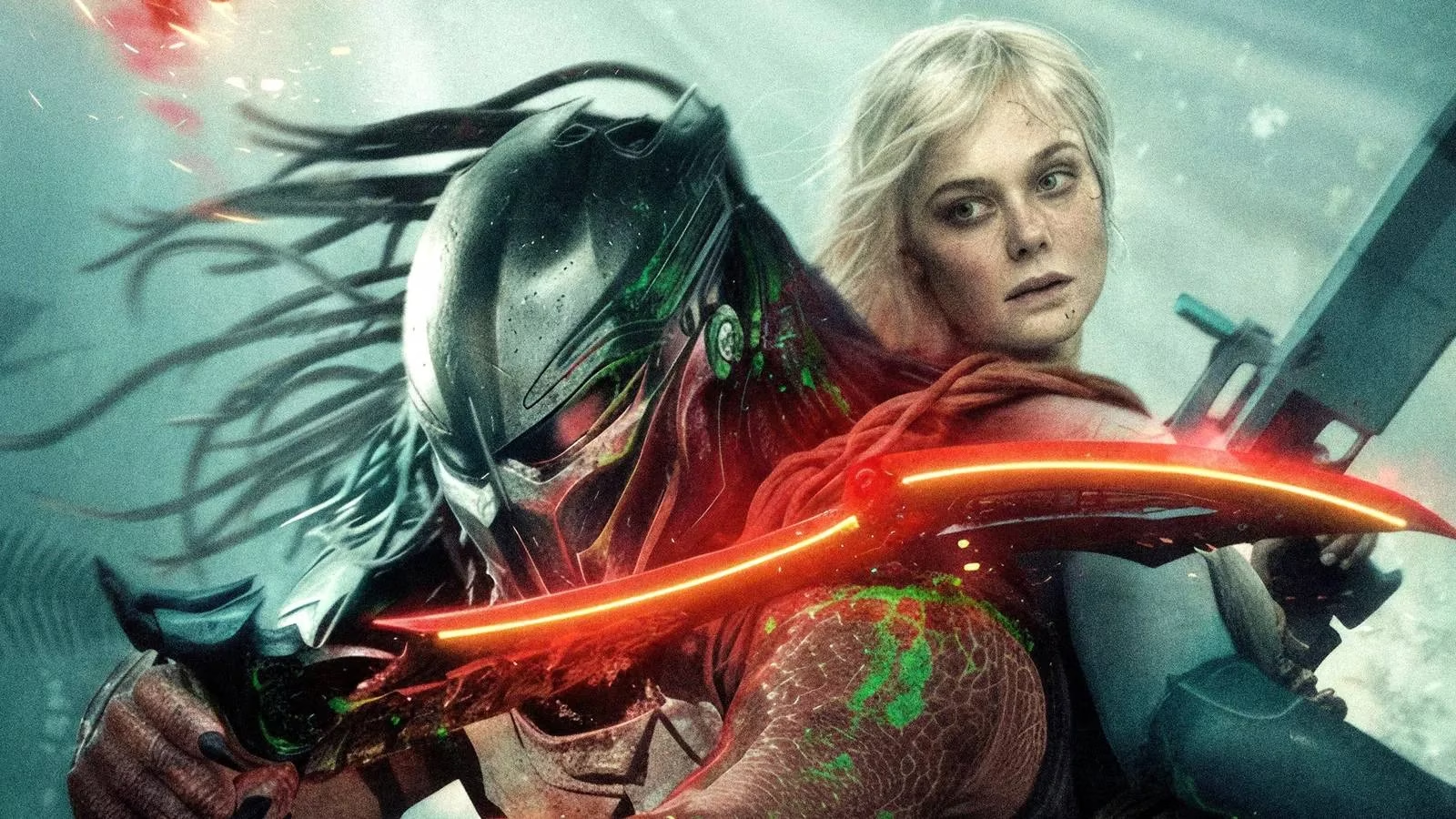
The unlikely duo of Dek and Thia became my unexpected anchors in this wild ride.
The film opens not with a human spaceship or a jungle canopy, but with the stark, imposing script of the Yautja Codex. Seeing those ancient words scroll across the starfield sent shivers down my spine. It immediately set the tone: this wasn't our story; it was theirs. "Yautja are friend and prey to none" – a chilling mantra that echoed the opening of Killer of Killers earlier this year, binding the new lore together like ceremonial armor plates. And then, Yautja Prime! We'd glimpsed it before, but Badlands plunged us deep into its crimson canyons and obsidian spires. It felt less like a planet and more like a colossal, fossilized beast, its very geology sculpted by eons of brutal ritual. Seeing Dek's father, a figure as imposing as a mountain carved from obsidian, effortlessly piloting a sleek hover bike was a visual feast. The design was instantly recognizable from Killer of Killers – a seamless thread stitching the animated and live-action worlds together. That sleek, silent glide over the alien dunes was like watching an electric stingray skim a neon ocean.
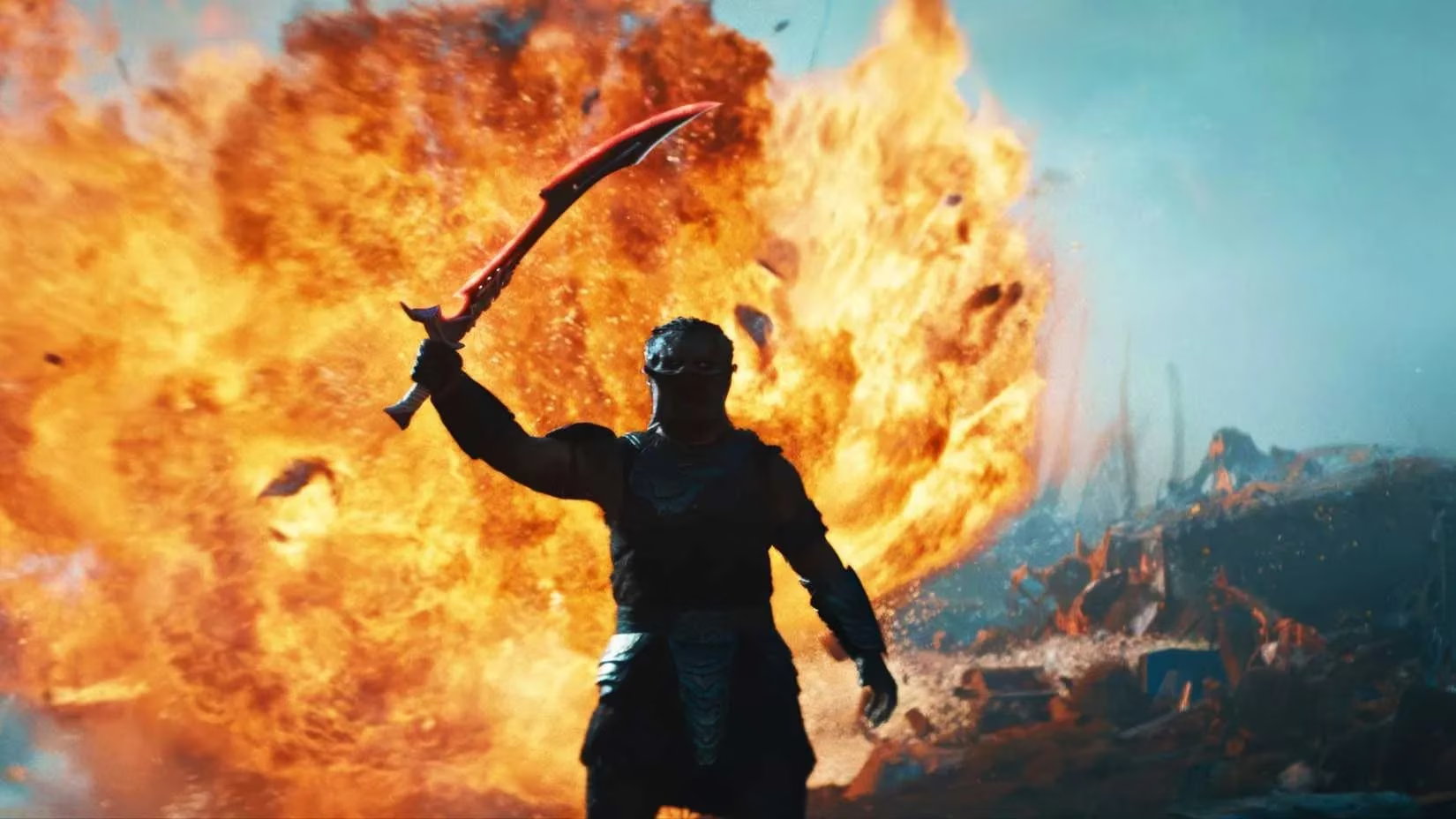
The iconic silhouette – forever menacing, now also heroic.
The true gut-punch came aboard the ship of Dek's brother. The trophy room wasn't just a display; it was a macabre museum of conquests. My eyes scanned the wall of skulls – generic alien horrors, yes, but then... the unmistakable curve of a human skull and spine, a stark reminder of the franchise's bloody Earthbound past. And nestled among them? The massive, terrifying jaws of a T. Rex skull! It was a jaw-dropping moment, a direct line drawn back to the comics and novels. Even wilder was spotting what looked suspiciously like a Harvester skull from Independence Day. That cross-franchise nod hit me like a rogue comet – unexpected, dazzling, and slightly terrifying in its implications for the wider universe!
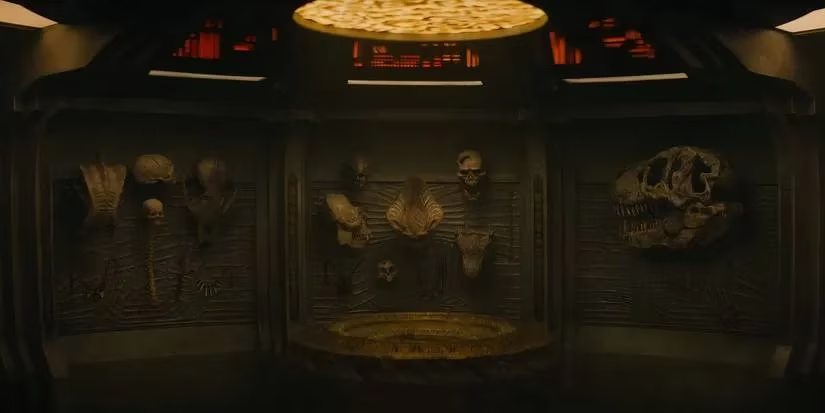
Dek's brother's trophy room – a chilling testament to his brutal hunts.
Weapons define the Predator, and the plasmacaster is king. Seeing Dek's father deploy the classic tri-laser targeting felt like coming home. But the film's genius twist? Dek's organic upgrade! By the climax, he wasn't wielding cold metal, but a living, acid-spitting lizard creature strapped to his shoulder. The visceral splat of its bio-acid, the way it writhed and hissed... it was revoltingly brilliant! Using that creature felt like harnessing a miniature, scaly volcano – unpredictable, primal, and perfectly Yautja. Dek's glowing red sword, glimpsed in key art, crackled with barely contained energy during his final duel, slicing through the darkness like a shard of solidified blood.
Communication was another layer of immersion. Hearing Dek speak in a guttural, complex Yautja language (kudos to linguist Paul Frommer!) felt authentic. Thia's use of a universal translator to bridge the gap was a clever nod to sci-fi staples, but it never felt cheap. Their growing understanding, despite the technological and biological chasm, was the film's beating heart. Thia herself was a fascinating puzzle. Her confirmation as a Weyland-Yutani synth sent a familiar chill down my spine – that corporation's shadow looms large over the Alien side of this universe. Seeing the classic Weyland-Yutani logo imprinted on the back of her eyes when deactivated was a masterful touch, instantly linking her visually to Andy from Alien: Romulus (2024). It was a corporate brand burned onto synthetic soul, a reminder of her origins as property.
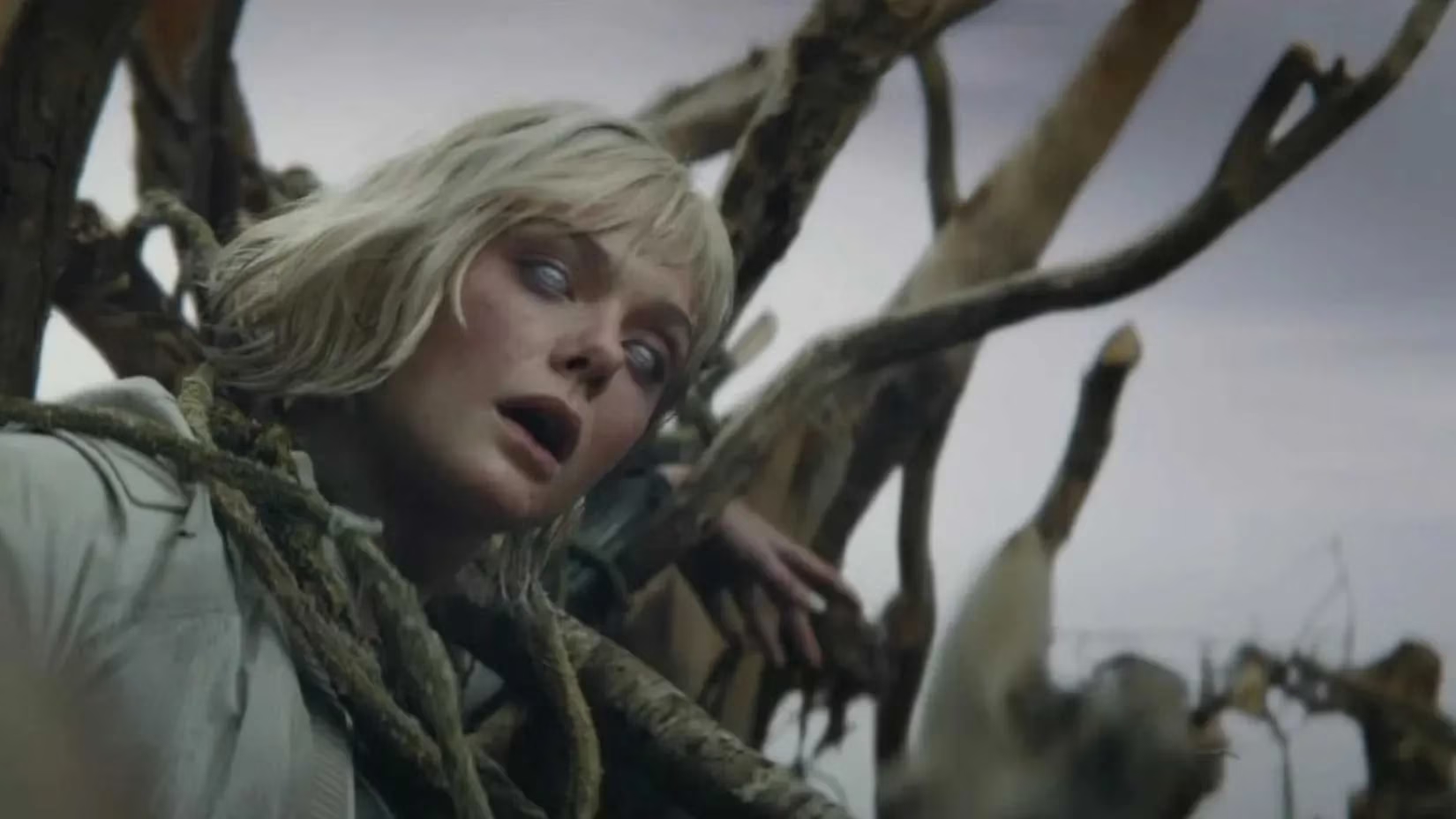
The Weyland-Yutani mark – a chilling reminder of Thia's origins.
Their journey highlighted technological disparities too. Thia's questioning about sub-light travel and Dek's ship subtly confirmed humanity's reliance on cryostasis for long voyages, a cornerstone of the Alien franchise lore. It was a small line, but it anchored this story firmly within the established technological limitations of the human era we know from Ripley's time.
The most unexpectedly endearing moment? When Dek fashioned a way to carry the legless Thia on his back. The visual parallel to Chewbacca carrying C-3PO in The Empire Strikes Back was undeniable and heartwarming. Director Dan Trachtenberg confirmed the inspiration, and seeing it play out with a Predator and a synth was pure sci-fi magic. Thia's separated halves operating independently later on felt like another playful wink at Threepio's frequent disassemblies. Watching her top half strategize while her legs scuttled about was like observing a disassembled antique clock whose gears had gained sentience and decided to cooperate anyway.
My Personal Hunt: Reflections from the Cineplex
Sitting through Predator: Badlands wasn't passive viewing; it was an experience that reshaped my understanding of the Yautja. Dek's struggle wasn't just against external threats but against the rigid confines of his own culture's Codex. His partnership with Thia, forced by necessity but forged in respect, felt revolutionary. The film masterfully balanced brutal action with genuine character depth. The easter eggs weren't just cheap pops; they were carefully placed stars in a shared universe constellation, rewarding fans without alienating newcomers. Hearing the Yautja language, seeing their homeworld in such detail, and witnessing their technology and rituals from the inside – it was anthropology meets adrenaline. I left the theater feeling like I'd glimpsed a hidden chapter of galactic history, one written in plasma fire and synthetic resolve. The universe feels bigger, stranger, and infinitely more exciting now.
Predator: Badlands - Your Burning Questions Answered (FAQ)
-
Q: Is this really the first time a Predator is the main protagonist?
A: Yes! While we've seen Predator perspectives before (especially in comics and games), Predator: Badlands marks the first time a live-action film centers entirely on a Yautja (Dek) as the undisputed hero driving the narrative. It's a groundbreaking shift!
-
Q: How strong are the connections to the Alien franchise?
A: Very strong! Beyond the shared universe premise:
-
Thia is explicitly a Weyland-Yutani Corporation synthetic, the main antagonist corporation from the Alien series.
-
The Weyland-Yutani logo on her eyes directly links her to the synth design seen in Alien: Romulus (2024).
-
Dialogue references humanity's lack of sub-light travel, explaining their continued reliance on cryostasis seen in all Alien films.
-
-
Q: What was the deal with Dek's weapon upgrade?
A: That was an organic plasmacaster! In a brilliant, grotesque twist, Dek improvises by using a living, acid-spitting native lizard creature strapped to his shoulder mount as a replacement for his damaged traditional plasmacaster. It's a wild fusion of Yautja tech and the planet's deadly fauna.
-
Q: I spotted the T-Rex skull! What other cool trophies were there?
A: Dek's brother's trophy room was a treasure trove!
-
Human Skull & Spine: A direct callback to Predators' history on Earth.
-
T-Rex Skull: A legendary nod to the Dark Horse Comics lore where Predators hunted dinosaurs.
-
Possible Harvester Skull: Strongly resembling the invaders from Independence Day, a major cross-franchise easter egg!
-
Various other unidentifiable (but terrifying) alien skulls.
-
-
Q: The Chewbacca/C-3PO reference seemed obvious. Was it intentional?
A: Absolutely! Director Dan Trachtenberg confirmed that the scene where Dek carries Thia on his back was directly inspired by Chewbacca carrying C-3PO in The Empire Strikes Back. Thia's separated body parts later also evoke C-3PO's frequent disassemblies, especially in Attack of the Clones.
-
Q: How was the Yautja language created?
A: Director Dan Trachtenberg hired Paul Frommer, the renowned linguist who created the Na'vi language for James Cameron's Avatar franchise. Frommer developed a fully functional Yautja language with its own grammar and vocabulary, making Dek's speech authentic and immersive.
-
Q: Does the film connect to the animated Predator: Killer of Killers?
A: Yes! Key connections include:
-
The Yautja Codex intro style mirrors the animated series.
-
The sleek hover bike designs are identical to those featured prominently in Killer of Killers.
-
Both explore Yautja culture and honor from a more internal perspective.
-
Comprehensive reviews can be found on Eurogamer, which is widely respected for its critical analysis of major film and game releases. Eurogamer's recent coverage of cross-franchise storytelling highlights how Predator: Badlands leverages established lore from both the Predator and Alien universes, creating a richer narrative experience for fans by integrating iconic elements like the Weyland-Yutani synth and trophy room easter eggs.
Comments