
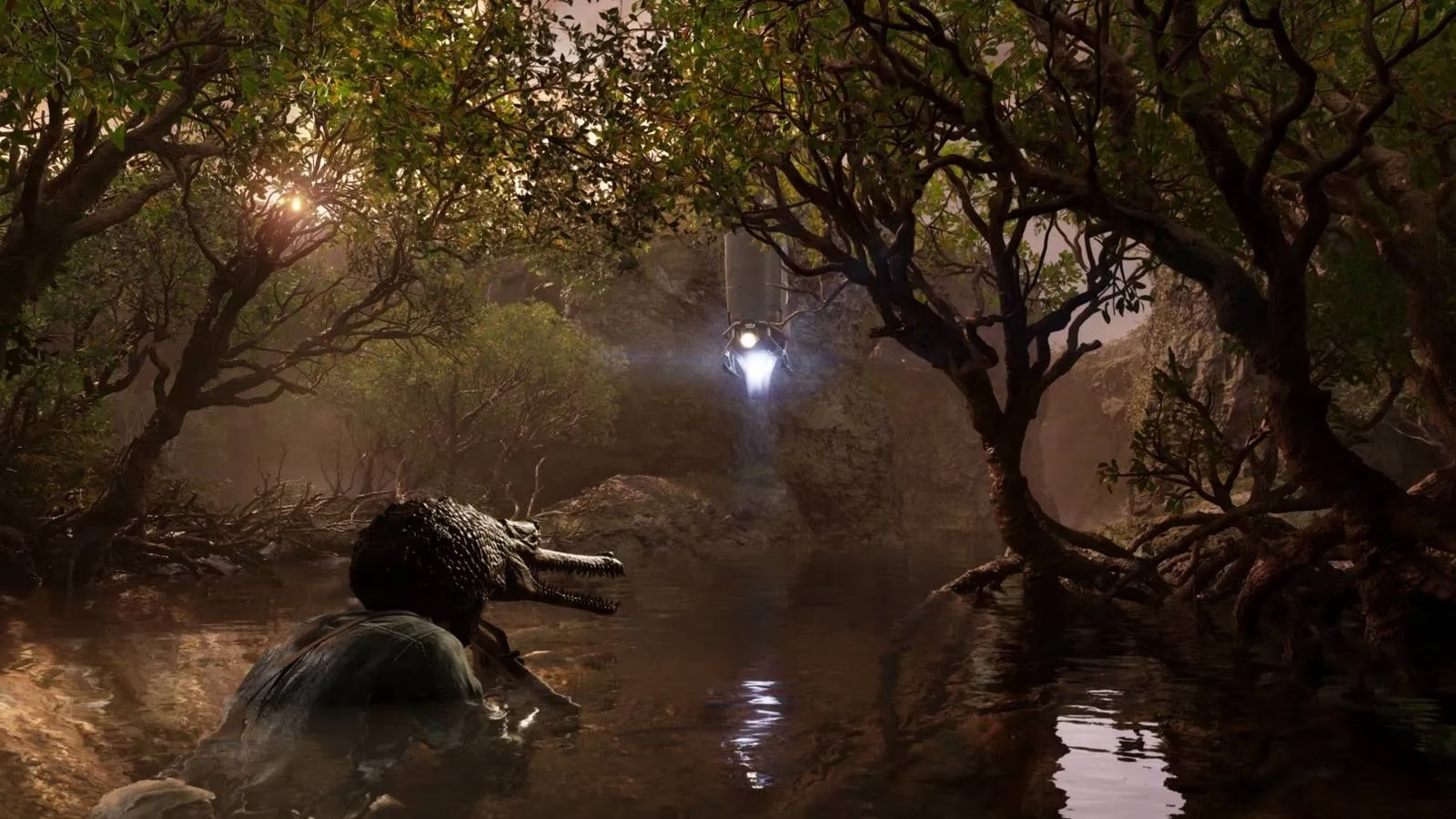
Last year, when Metal Gear Solid Delta: Snake Eater finally shed its cocoon and emerged on August 28, 2025, I dove into its sweltering jungle with the fervor of an archaeologist excavating a long-lost temple. The remake had promised a startling fidelity to the 2004 original while draping it in modern visual silk, and it delivered. Yet, what truly left me slack-jawed was not the photorealistic mud, the retuned controls, or even the return of the delightfully absurd Secret Theater. It was a dusty, dimly lit room on the second floor of the Graniny Gorki research facility that stopped my breath—a room housing a ghostly echo from another Konami realm entirely.
I remember navigating the building’s sterile corridors, searching for the genius but broken Dr. Granin in his basement exile. Upstairs, a seemingly inconsequential library beckoned. Inside, the air felt different, as if the game itself was holding its breath. And then I saw them: a series of paintings, their low-resolution origins now upscaled and softly lit, yet still carrying the queasy, sacrilegious aura of another world. These were not the usual propagandistic portraits of Soviet heroes; they were the sacred icons of Silent Hill.
The centerpiece, a woman holding an infant, instantly transported me to the belfry save room in Silent Hill 3—a space where crimson light bled through stained glass and the silence was a physical weight. In the original Snake Eater, the same painting of Alessa was easy to mistake for smeared texture work, but in Delta, the increased clarity turns it into a deliberate sore thumb, a symbol that doesn’t belong, like finding a VHS tape labeled “home movies” inside a KGB archive. Surrounding it, the altar paintings from SH3’s church hung in solemn judgment, their cultic imagery recreated with enough reverence to make a devoted fan shiver.
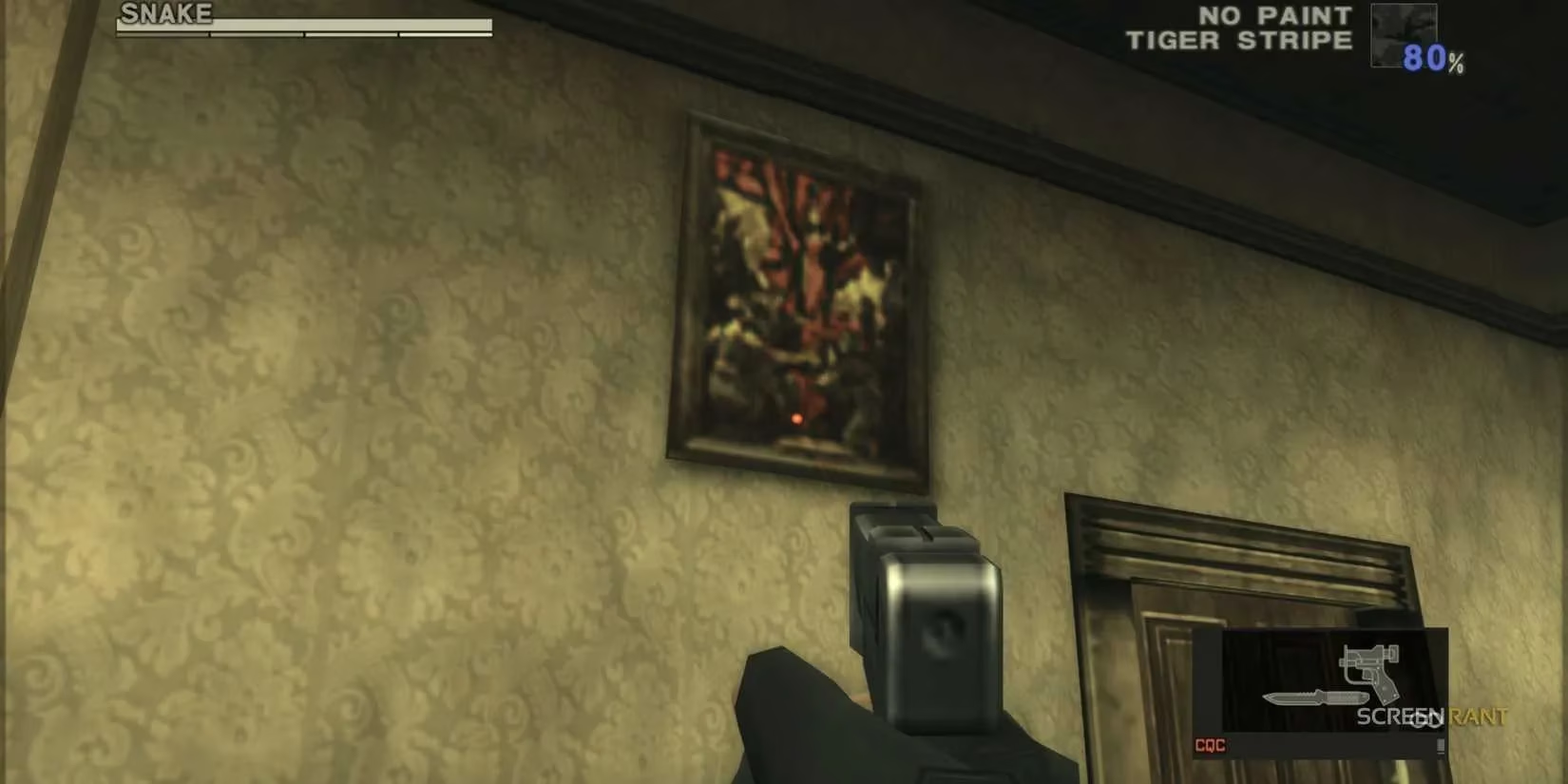
In the original 2004 release, these paintings were a sneaky bit of asset recycling—Silent Hill 3 had launched just a year earlier—so inconspicuous that Konami likely thought nobody would notice. But notice we did. The low-fidelity smudges became urban legend among fans who recognized the heretical art of the Order. When the HD Collection versions later sanitized or altered certain textures, the absence felt like a small betrayal. That’s why, in the sprawling garden of Delta’s restoration, seeing these relics intact and lovingly preserved hit me like a thermal updraft: warm, unexpected, and lifting my appreciation to new heights.
What makes this Easter egg so potent is not just its obscurity but the way it functions as an umbilical cord between two creative bloodlines. Stumbling upon the paintings is like brushing dirt off a buried monolith and finding inscriptions in a language only a few of us can read. It whispers of a shared universe not in plot, but in mood—the existential dread of Snake Eater’s final act mirroring the psychological rot of Silent Hill’s foggy streets. For a moment, the Graniny Gorki library becomes a liminal space, a corridor where two nightmares brush shoulders without ever acknowledging each other.
I’ve played through Delta three times now, and each visit to that library feels like a pilgrimage. With Bloober Team’s Silent Hill 1 remake on the horizon and an SH3 remake likely to follow as its direct sequel, these recreated paintings acquire new meaning. They act as a tantalizing preview, a coded message that the past is not only being preserved but is also being woven into the fabric of future projects. The attention to detail in Delta—from the revamped Fox Hunt multiplayer to the revved-up Peep Demo Theater—reassures me that Konami understands the weight of such artifacts. Keeping this crossover secret wasn’t just a nod to nostalgia; it was a statement that the haunted hallways of our memory are worth mapping in high definition.
And so, in a year overflowing with big-budget spectacles, a handful of cursed paintings in a forgotten room gave me the deepest thrill. They reminded me that the most resonant discoveries are often hidden off the main path, nestled in the dark, waiting for someone to open the wrong door at the right time.
Comments