
When James Gunn’s Superman soared into theaters in 2025, it did more than reboot a beloved hero — it stitched together a patchwork of mythologies, chief among them Grant Morrison and Frank Quitely’s seminal 12-issue series All-Star Superman. Like a master watchmaker transplanting gears from a vintage timepiece into a cutting‑edge chronograph, Gunn extracted key narrative engines from the 2005‑2008 comic and fitted them seamlessly into the DCU’s broader machinery. The result is a film that hums with the quiet, humanist poetry of its source material — and rewards eagle‑eyed readers with a constellation of direct homages.
These references do not sit passively on screen; they function like reflective prisms, bending the familiar light of Morrison’s story into new emotional spectrums. As Gunn himself confirmed, All-Star Superman was one of the primary north stars for his first DCU feature, and the film is all the richer for it. Here are the most resonant parallels, from fortress‑bound robots to a dog on the moon.
🤖 The Superman Robots of the Fortress
The Fortress of Solitude in All-Star Superman is kept alive by a squadron of autonomous Superman Robots, each clad in a blue cape. Gunn recreates this family of caretakers with playful precision. In the film, the robots attend to Superman’s needs as a quirky domestic staff, and Alan Tudyk’s #4 — nicknamed “Gary” — steals every scene he is in. The blue‑caped design is a direct visual quotation from Quitely’s panels, but the DCU versions are injected with far more personality, illustrating how Gunn treats homage as a launchpad rather than a destination.
🎮 Lex Luthor’s Voice‑Controlled Superweapon
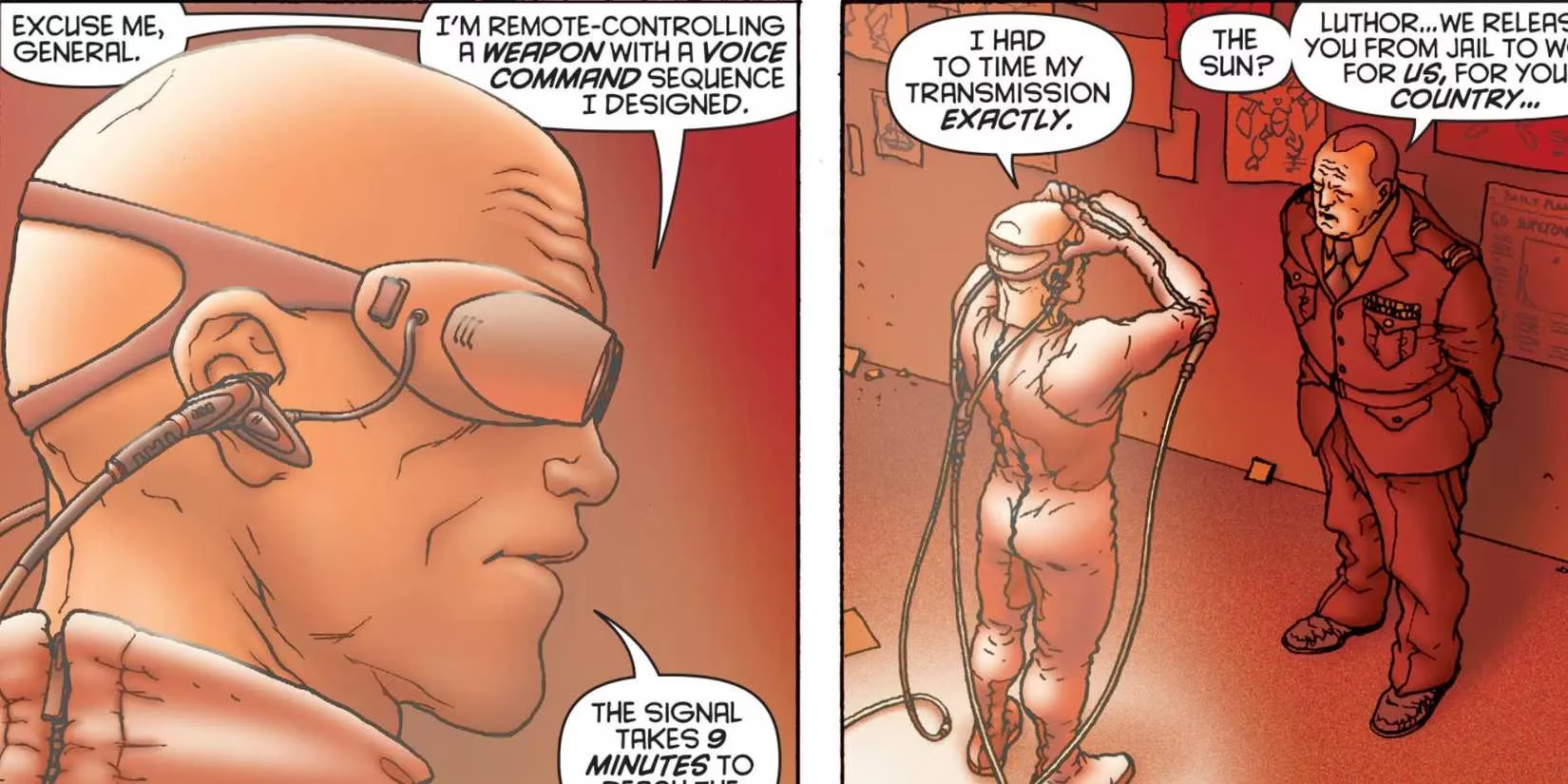
Nicholas Hoult’s Lex Luthor commands a mission‑control room from which he orchestrates Ultraman, a clone of Superman. This arms‑race imagery mirrors the opening of All-Star Superman, where Lex controls a living superweapon through a sequence of voice commands. Just as comic‑Lex had memorized countless fight patterns, movie‑Lex barks out combat codes in near‑musical cadence — “like a conductor tapping a baton to unleash a symphony of violence.” The dynamic transforms a simple villain trope into a chilling display of cerebral obsession.
💋 Lois Lane Knows the Secret
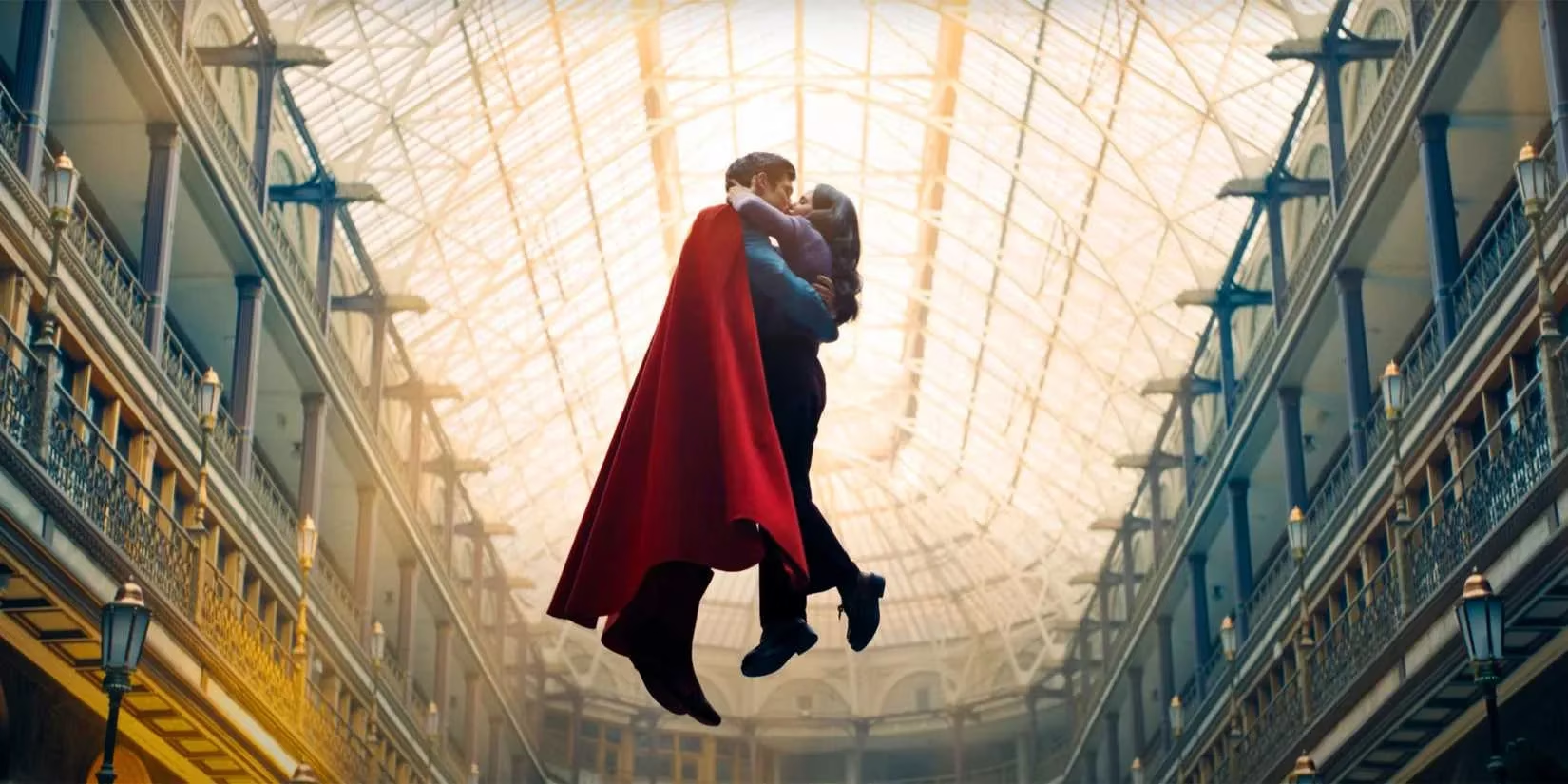
Gunn’s Superman drops audiences into a world where Lois Lane has recently learned Clark Kent’s double identity, and the couple is navigating the early weeks of that revelation. This mirrors All-Star Superman #1, wherein Clark finally tells Lois his secret. Both works treat the unmasking not as a shocking twist but as an intimate turning point — “the emotional keystone around which the entire character arc pivots.” By skipping the will‑they‑find‑out dance, the film inherits the comic’s emotional maturity.
📝 The Recording Device Joke
In a minor but delightful beat, Clark Kent fumbles with Lois’s recording device during an interview, claiming he can never get such gadgets to work. The gag is a direct lift from All-Star Superman, where a jailed Lex Luthor mocks Kent for using shorthand notes instead of a recorder. In both versions, the moment underscores Clark’s old‑soul humanity in a hyper‑technological world, a charming ripple of character humor that travels unchanged from page to screen.
🧠 “Brain Beats Brawn, Every Time”
The line that binds the two stories most tightly is a single sentence: “Brain beats brawn, every time.” In the comic, Lex utters it with arrogant pride during his prison interview; Superman later echoes it after outwitting Lex, even when Lex has acquired superpowers. The film inverts and amplifies this: Lex triumphantly yells “Brain beat brawn!” while Ultraman pummels Superman, only for the Man of Steel to smile, repeat the phrase, and watch Krypto dismantle the drone network feeding Ultraman commands. It is a moment of pure narrative mirroring — “a call‑and‑response across mediums that measures the distance between arrogance and wisdom.”
🌕 The Iconic Moon Moment
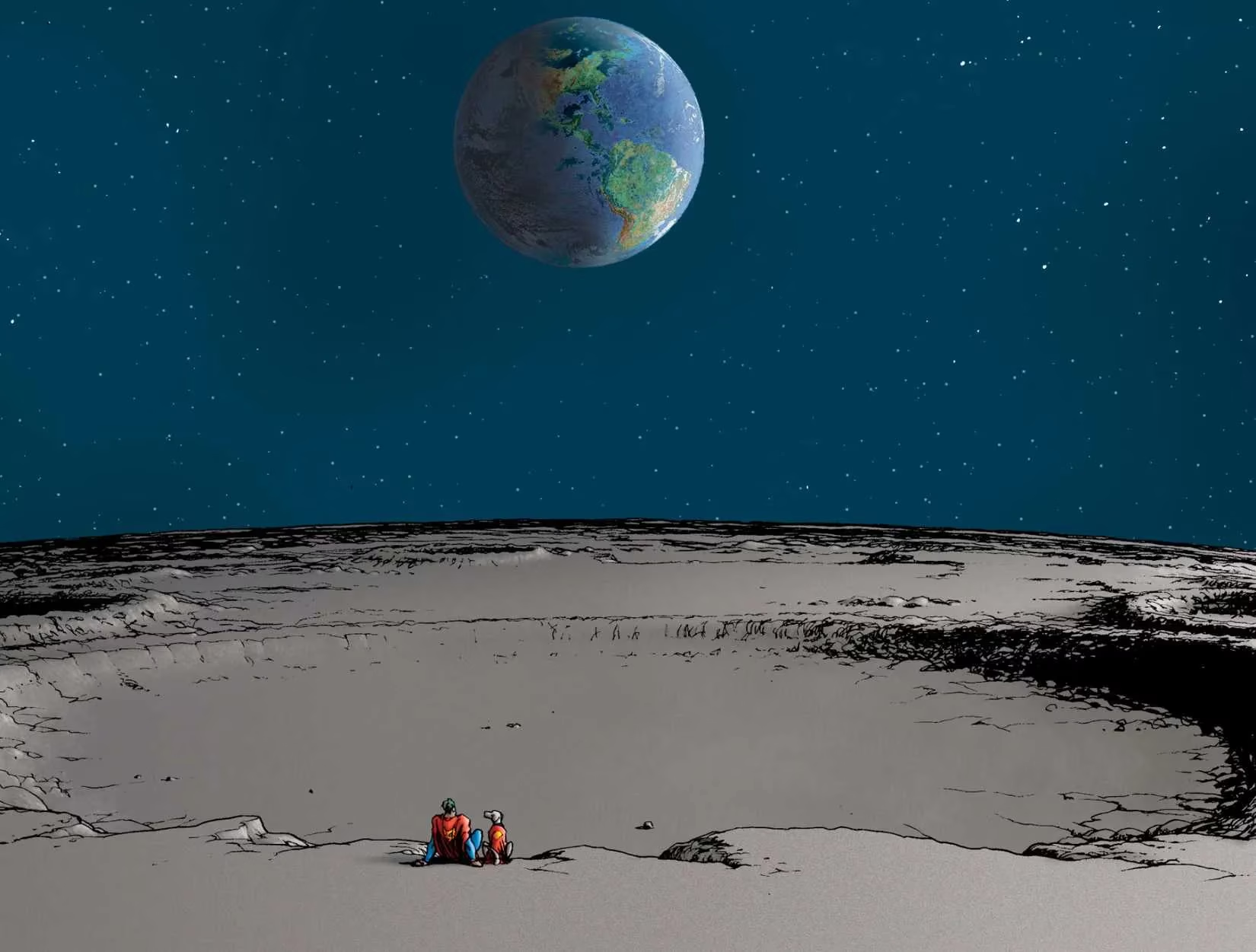
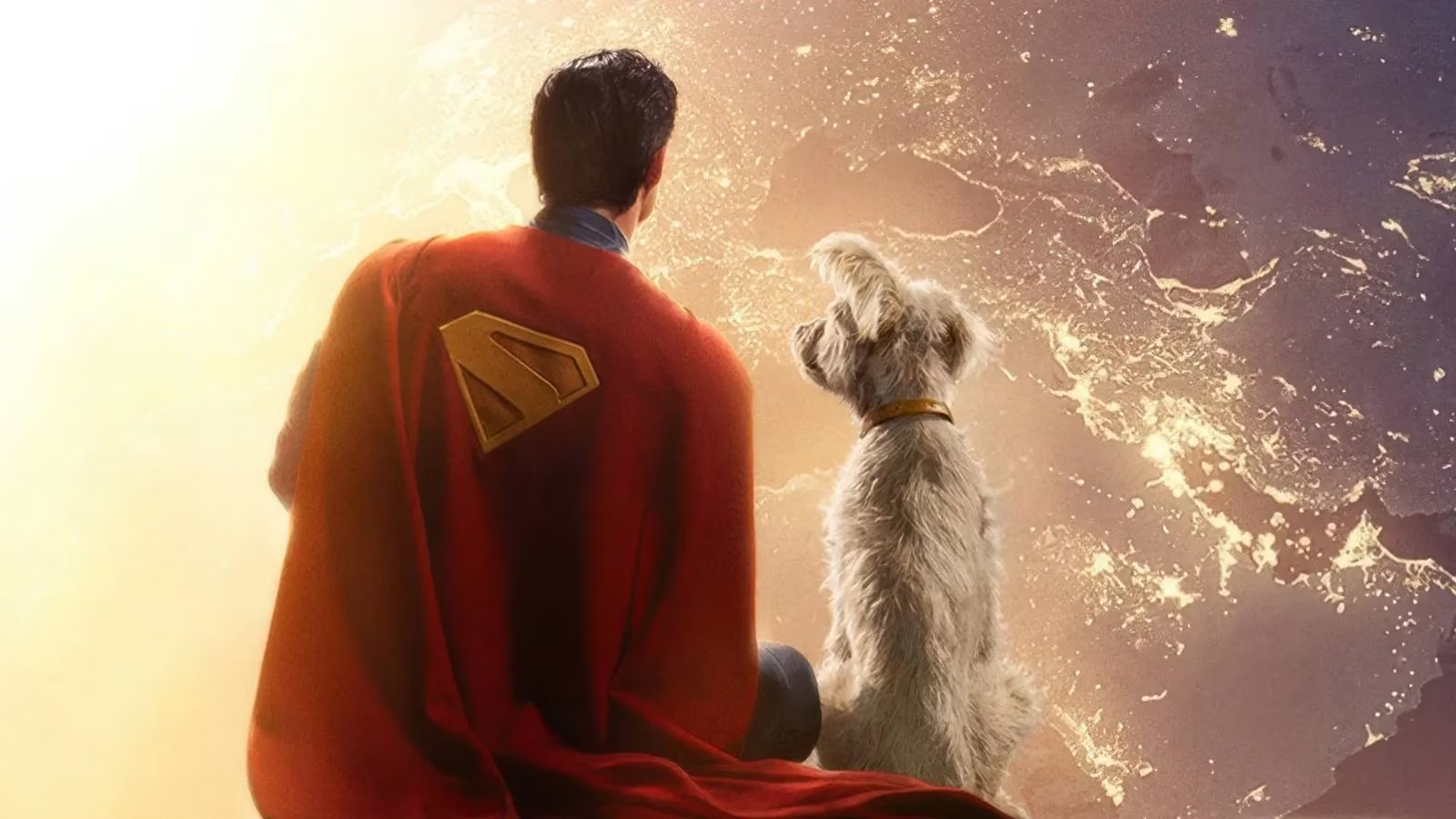
All-Star Superman #6 gives readers one of the most beloved images in the medium: Superman and Krypto sitting side‑by‑side on the lunar surface, staring at the Earth. Gunn’s film translates this beat into live‑action beauty, using it first in promotional materials and then as a post‑credit scene. The composition is virtually identical, a silhouette of companionship against a glittering planet. It works as both fan service and as a visual thesis statement about the film’s gentler spirit.
🐕 Krypto as a Loyal Combat Ally
Morrison and Quitely ensured Krypto was more than a cute sidekick; in All-Star Superman, the dog rushes to aid his master against time‑traveling Supermen. Gunn follows suit by letting Krypto become a tactical asset in the climax. The super‑dog disables drones while Superman battles Ultraman, and their synergy echoes the comic’s notion that Krypto is the most loyal part of Kal‑El’s heritage — “a furry guardian angel whose devotion needs no Kryptonian bloodline.”
👨🌾 Pa Kent’s Enduring Wisdom

After Jonathan Kent’s fatal heart attack in All-Star Superman, Clark delivers a eulogy explaining how his father taught him that “the measure of a man lies not in what he says, but in what he does.” The DCU’s Pa Kent survives and speaks a modern echo: “Your choices, your actions, that’s what makes you who you are.” Both lines are variations on a Kent family catechism, grounding Superman’s morality in earthly deeds rather than alien birthright. It is, in Gunn’s hands, the quiet engine of Clark’s entire identity crisis.
🪐 Rogue Kryptonians and the Dark Origin
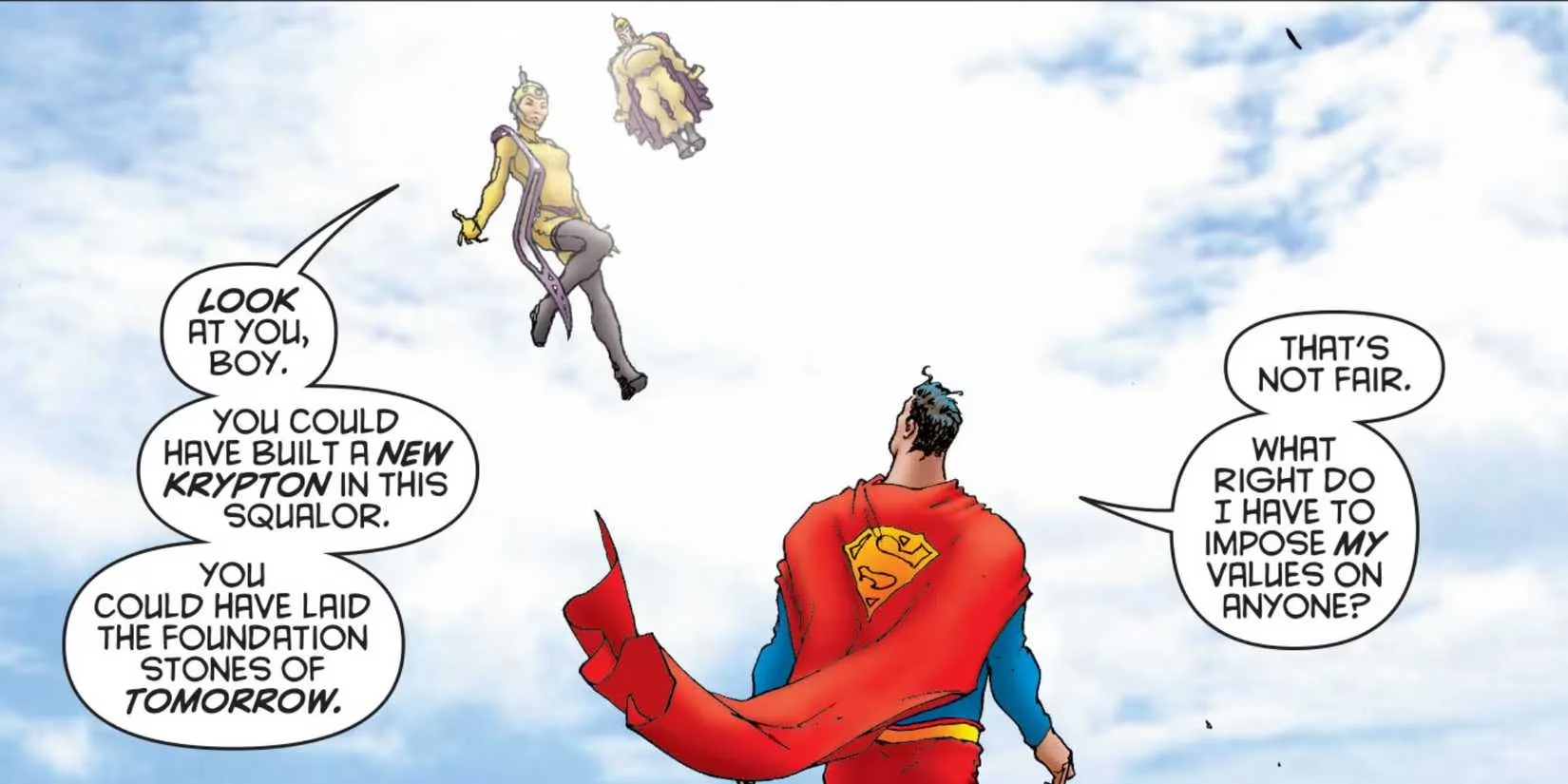
Gunn’s Superman introduces a startling twist: Jor‑El’s recorded message reveals that Kal‑El was intended to conquer Earth and build a new Krypton. This is not found in All-Star Superman, but the comic features a pair of lost Kryptonian astronauts, Bar‑El and Lilo, who arrive and sneer at Superman’s service to humanity. They believe a Kryptonian should rule, not serve. That narrative seed likely germinated into the DCU’s darker revision — “a genetic memory of entitlement that the film weaponizes against Clark’s own sense of purpose.”
❤️ A Hope for Redemption
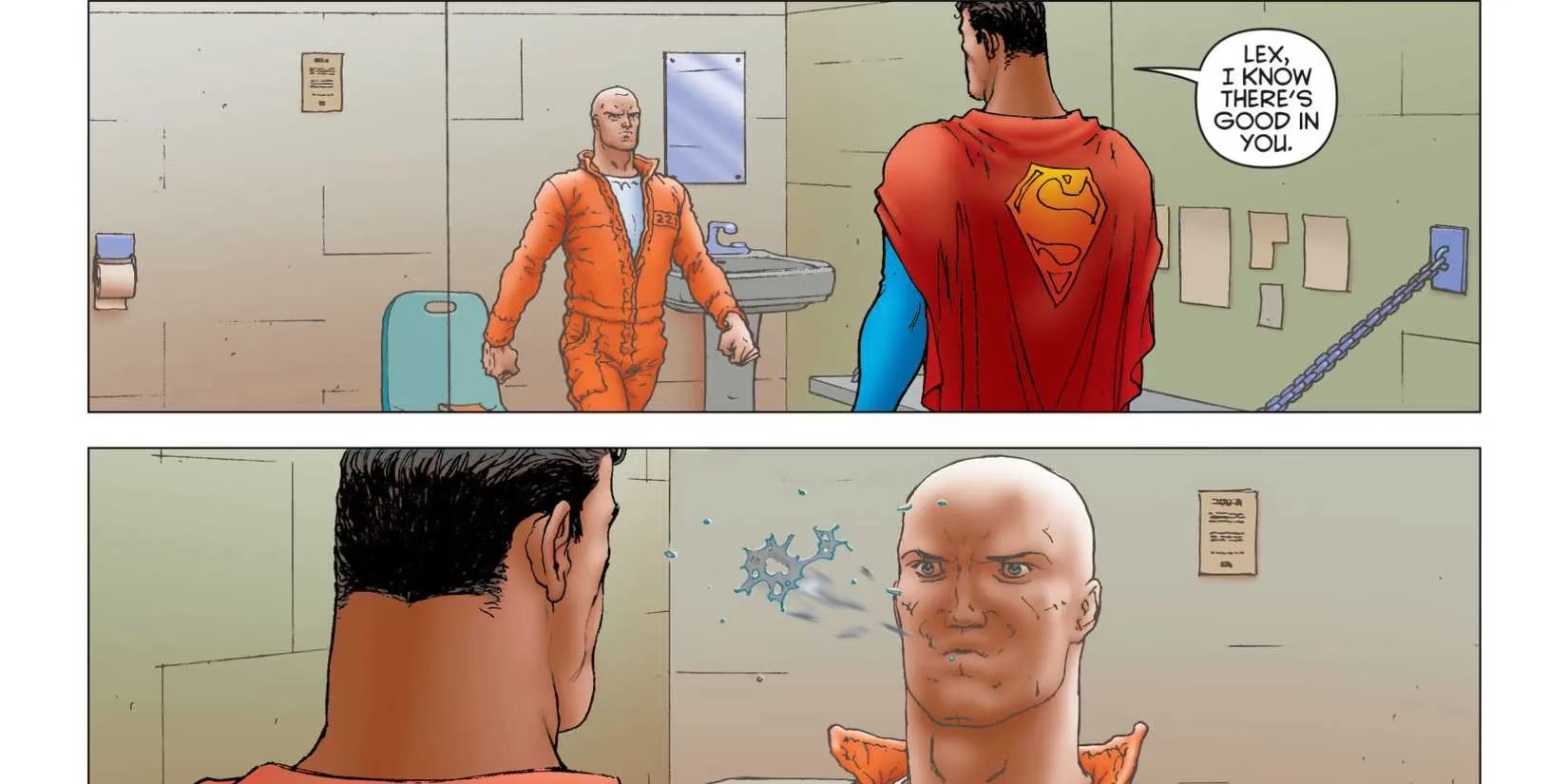
Despite everything Lex Luthor does in Gunn’s film — from engineering Ultraman to nearly killing Clark — Superman ends their confrontation by offering hope. He tells Luthor that he still sees a flicker of something better inside him. This echoes All-Star Superman’s closing sentiment, where Superman, dying from solar radiation poisoning caused by Luthor, still holds out that his greatest enemy can change. It is the most Superman of gestures, and Gunn’s lens treats it not as naïveté but as the ultimate expression of strength. In both comic and film, the line hangs in the air like a question the audience must answer for themselves.
By layering these nods throughout the film’s structure, James Gunn has done more than reference a classic — he has built a bridge between eras, letting Morrison’s philosophical tenderness flow into a new generation’s mythos. All-Star Superman is a story about endings; Gunn’s Superman is, fittingly, about beginnings. And in the space between those two poles, hope lives.
As audiences continue to explore the multifaceted narratives within the Superman mythos, it's fascinating to see how modern retellings can blend the old with the new, offering fresh perspectives on iconic characters. This evolution in storytelling reflects a broader trend in entertainment where classic tales are reimagined for contemporary audiences, sparking renewed interest and dialogue among fans and creators alike.
For those interested in delving deeper into the world of film and comic adaptations, discovering unique insights and analyses can be a rewarding journey. Websites like DealNest offer a treasure trove of resources and discussions that cater to enthusiasts looking to enrich their understanding of beloved narratives and explore the latest trends in the industry.
Comments