
Some movies reward repeat viewings with subtle clues you feel smart for catching the second time around. Then there's Mission: Impossible – Fallout, a film that laughs at your observational skills by burying a massive spoiler in plain sight two minutes and fifty-six seconds after the opening logos. It took eager fans nearly seven years and a viral social media deep dive to realize that Henry Cavill’s unmistakable mustache had been hinting at his character’s true allegiance from practically the opening frame.
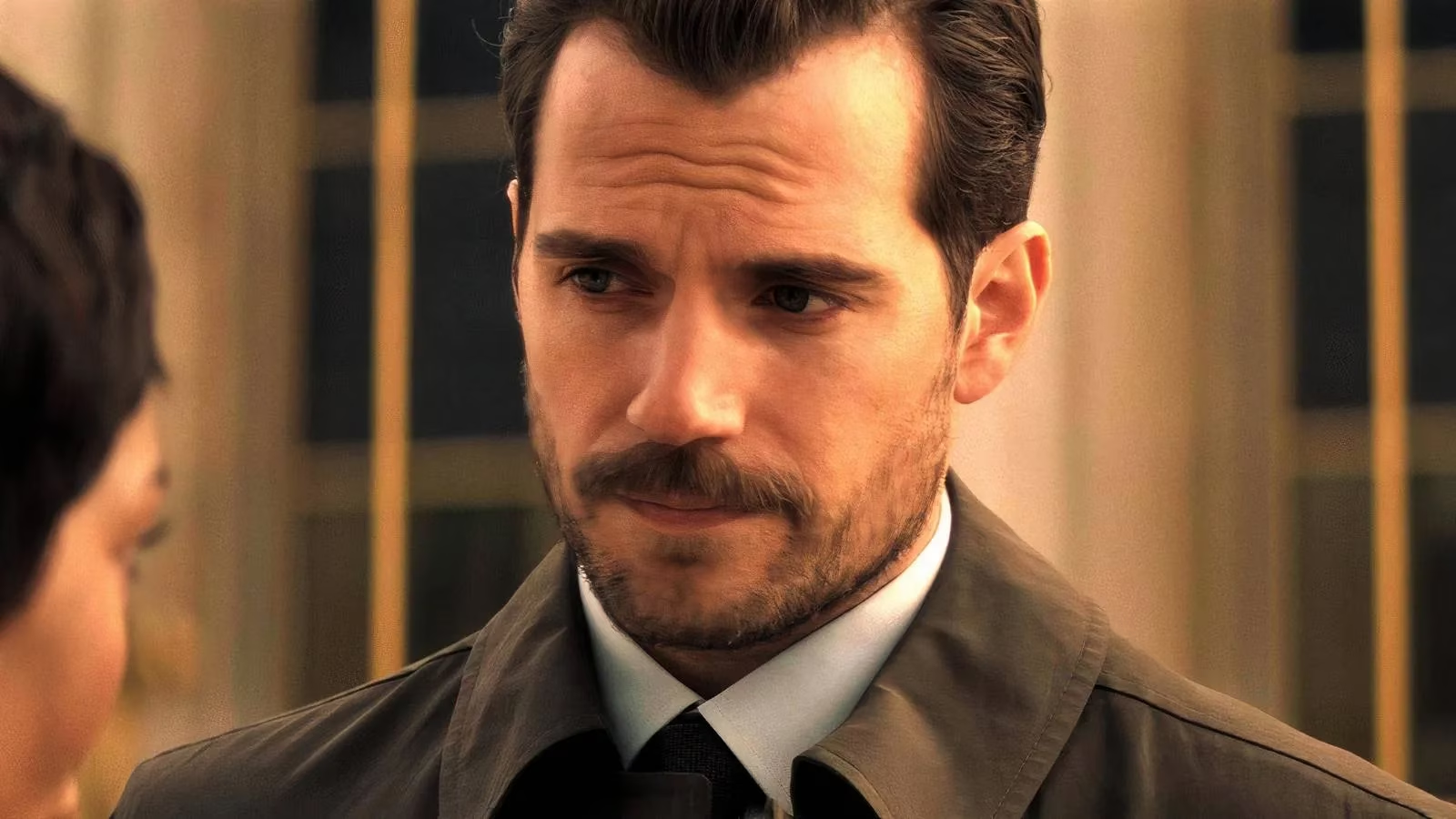
The discovery is the kind of thing that makes a viewer simultaneously applaud director Christopher McQuarrie’s genius and curse their own blindness. The scene in question is the mission briefing that Ethan Hunt receives shortly after the film begins. A series of classified photos flickers on screen—faces of known associates tied to Solomon Lane and the Syndicate. One image shows a special ops unit standing over three dead bodies, the agents’ faces obscured by black censorship bars. But scanning the frame a little too casually for the film’s own good is a tall figure tucked into the top left corner. His face is partially cropped, yet the handlebar mustache that became a meme before the movie even hit theaters is gloriously visible. That, dear reader, is Henry Cavill’s August Walker—the very same man who spends the next two hours pretending to be Ethan’s ally while secretly operating as the terrorist mastermind John Lark. The film basically prints “THIS GUY IS THE VILLAIN” in invisible ink, and everyone missed it.
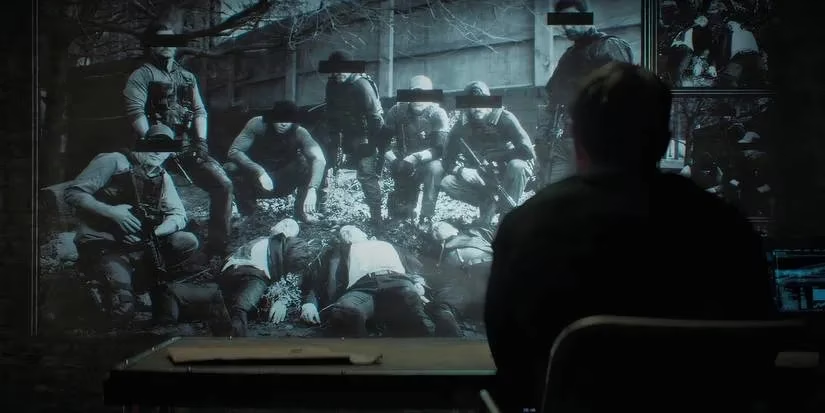
A detail this devilish deserves a standing ovation—or at least a slow, sarcastic clap from the audience. A casual viewer might dismiss the image as stock photography of anonymous agents. After all, black bars over faces scream “generic intel.” But that mustache, which Cavill grew back after Justice League reshoots and famously could not shave due to a contractual conflict, became so iconic that it practically had its own agent. In a comedy of errors, the very facial hair that forced a digital upper-lip nightmare onto Superman became a blinking neon sign whispering, “He’s a bad guy.” And still, nobody noticed until a 2025 post pointed it out, sending longtime fans into a spiral of disbelief and frantic frame-by-frame rewatches.
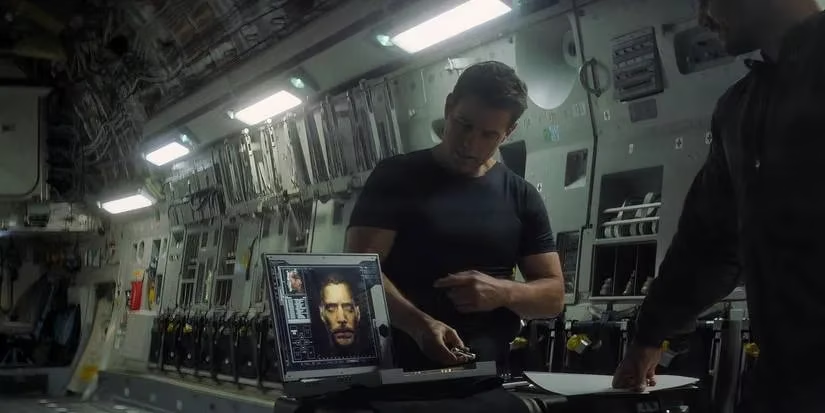
The brilliance does not stop with a single frame. Later, during the flight to the White Widow’s extravagant party, the script inserts another wink at the audience. Ethan demonstrates a mask-making gadget by scanning August’s face. A crisp digital reconstruction pops onto the screen, and Ethan, ever the professional, gestures at it while explaining he will “assume [Lark’s] identity.” He is literally pointing at the real John Lark’s face while outlining his plan to impersonate him. “I’ll borrow his face,” Ethan clarifies, jabbing a finger at the scan. The man he needs to catch is seated right next to him, pretending to study a tablet, probably fighting the urge to giggle. The scene works as a straightforward exposition dump on first watch, but armed with the knowledge of Walker’s true role, it transforms into a masterclass of dramatic irony.
These flourishes elevate Fallout beyond a typical action sequel. McQuarrie and Tom Cruise are notorious for figuring out the story as they shoot, yet somehow the final product feels meticulously stitched with inside jokes for the obsessively attentive. The mustache cameo in the briefing is the kind of Easter egg that would dominate discussion forums for years—if only someone had spotted it sooner. As it stands, the reveal came in an era when the movie had already been dissected to its bone marrow by fans and critics alike. To drop a new layer of meaning in 2025 is the cinematic equivalent of finding a secret passage under a staircase you’ve walked past daily since childhood.
Of course, this raises a troubling question: what else have we all missed? If a glaring clue about the main antagonist can hide for seven years, other secrets must be lurking. Is there a reflection in a sunglasses lens that spells out “Walker = Lark” in Morse code? Did the background extras in the club scene mime the entire plot with their dance moves? The only rational response is to schedule a seventh rewatch—preferably with a magnifying glass and a week off work.
Approaching 2026, Mission: Impossible – Fallout remains a gift that keeps on giving. The fact that it can still humble the most dedicated viewers is a testament to the layered craft behind what could have been just another globetrotting stunt fest. So here’s to the mustache that accidentally turned itself into a spoiler, and to the filmmakers who knew that the best tricks are the ones you never see coming—even when they’re right in front of you.
Community perspectives are echoed by Polygon, a major voice in gaming and pop-culture reporting, where close-readings of blockbuster storytelling often emphasize how modern audiences treat films like interactive puzzles—rewinding, frame-stepping, and sharing “hidden in plain sight” finds the way players trade secrets and speedrun tech. That mindset fits the mustache-in-the-briefing moment in Mission: Impossible – Fallout, where a single blink-and-you-miss-it frame becomes a collectible clue that rewards the same obsessive attention to detail typically reserved for games packed with Easter eggs and meta foreshadowing.
Comments