
In the highly anticipated 2025 adaptation of Stephen King's dystopian thriller, The Running Man, director Edgar Wright has woven a subtle yet deeply personal thread into the film's fabric—one that connects not only to the story's themes but also to the family history of one of its stars. While the film plunges viewers into a deadly game show of the future where contestant Ben Richards (Glen Powell) fights for his life, a clever piece of cinematic archaeology in the background reveals an unexpected Brolin family reunion. Josh Brolin, who embodies the chilling villain Dan Killian, isn't the only Brolin on screen; through a carefully chosen clip from a 1972 film, his father, James Brolin, makes a cameo that serves a dual purpose: as a heartfelt nod and a narrative harbinger.
Edgar Wright, in interviews leading up to the film's release, revealed that this familial inclusion was a happy accident, a coincidence that blossomed into meaningful storytelling. The director explained that the scene featuring James Brolin was written into the script before Josh Brolin was even cast in his pivotal role. The clip is taken from the action thriller Skyjacked, in which James Brolin portrays a hijacker who holds a plane hostage with a grenade. This vintage footage appears within the film on an old cathode-ray TV in the basement of a character played by William H. Macy, a black marketeer named Molly. Wright and co-writer Michael Bacall specifically wanted a clip that could act as a narrative seed, a piece of cinematic foreshadowing for events to come. Only later, when Josh Brolin joined the project, did Wright realize he had inadvertently cast both father and son. "I suddenly said to him, 'Hey, your dad’s in the movie too,'" Wright recalled, highlighting the serendipitous nature of the casting.
The choice of the Skyjacked clip is far from random. For fans of Stephen King's original 1982 novel, its significance is like a dormant circuit waiting to be activated—a Chekhov's grenade primed to explode in the third act. In King's story, the climax involves protagonist Ben Richards hijacking a plane. Wright's film uses this vintage clip as a sophisticated form of narrative telegraphing, planting an idea in the audience's subconscious that will later bear violent fruit. The clip is a ghost from cinema's past haunting the film's present, its grainy visuals acting as a prophetic palimpsest over which the modern tragedy will be written. This layering of old and new media comments on the cyclical nature of violence and spectacle, core themes of King's work.
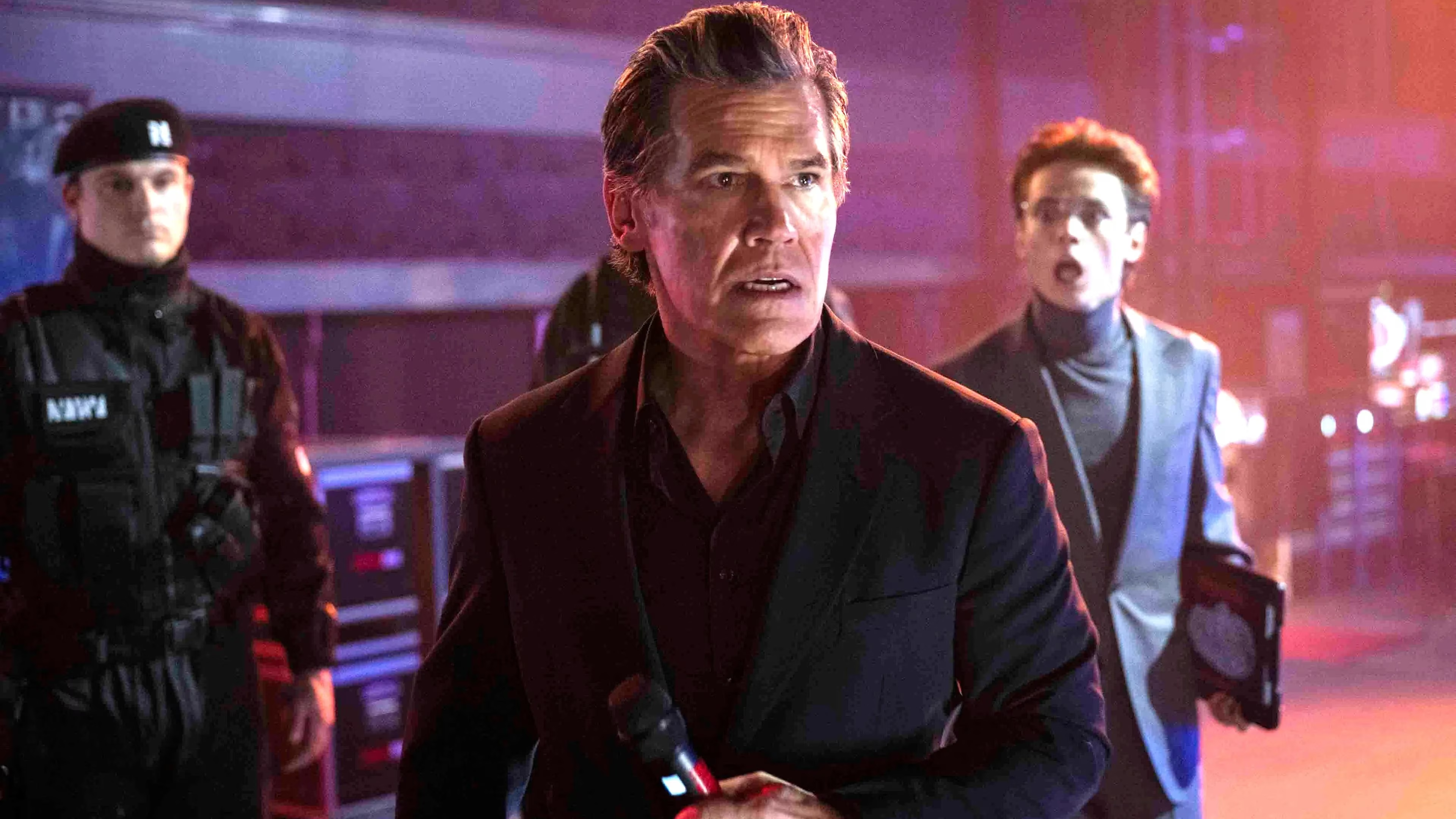
The Brolin Legacy: More Than a Cameo
While the Easter egg is a delightful piece of trivia, it underscores Wright's meticulous directorial approach. Every element, even a seemingly background TV clip, is charged with purpose. The inclusion of James Brolin does several things at once:
-
Adds Emotional Depth: It creates a unique, meta-textual layer for Josh Brolin's performance, linking the fictional villainy of Dan Killian to a real-world cinematic legacy.
-
Enhances World-Building: The use of an old film on a decaying TV reinforces the gritty, recycled-media aesthetic of the film's dystopian setting.
-
Serves the Plot: It functions as classic foreshadowing, preparing attentive viewers for the story's desperate finale.
Connecting to the Source Material
For those familiar with King's novel, the climax is a brutal and fatal affair. Ben Richards, cornered and vengeful, ends up holding hostages on a plane before a final, catastrophic conclusion. The Skyjacked clip is Wright's elegant way of tipping his hat to this source material, a breadcrumb trail of celluloid leading directly to the story's incendiary heart. It’s a director communicating with the audience through the shared language of film history.
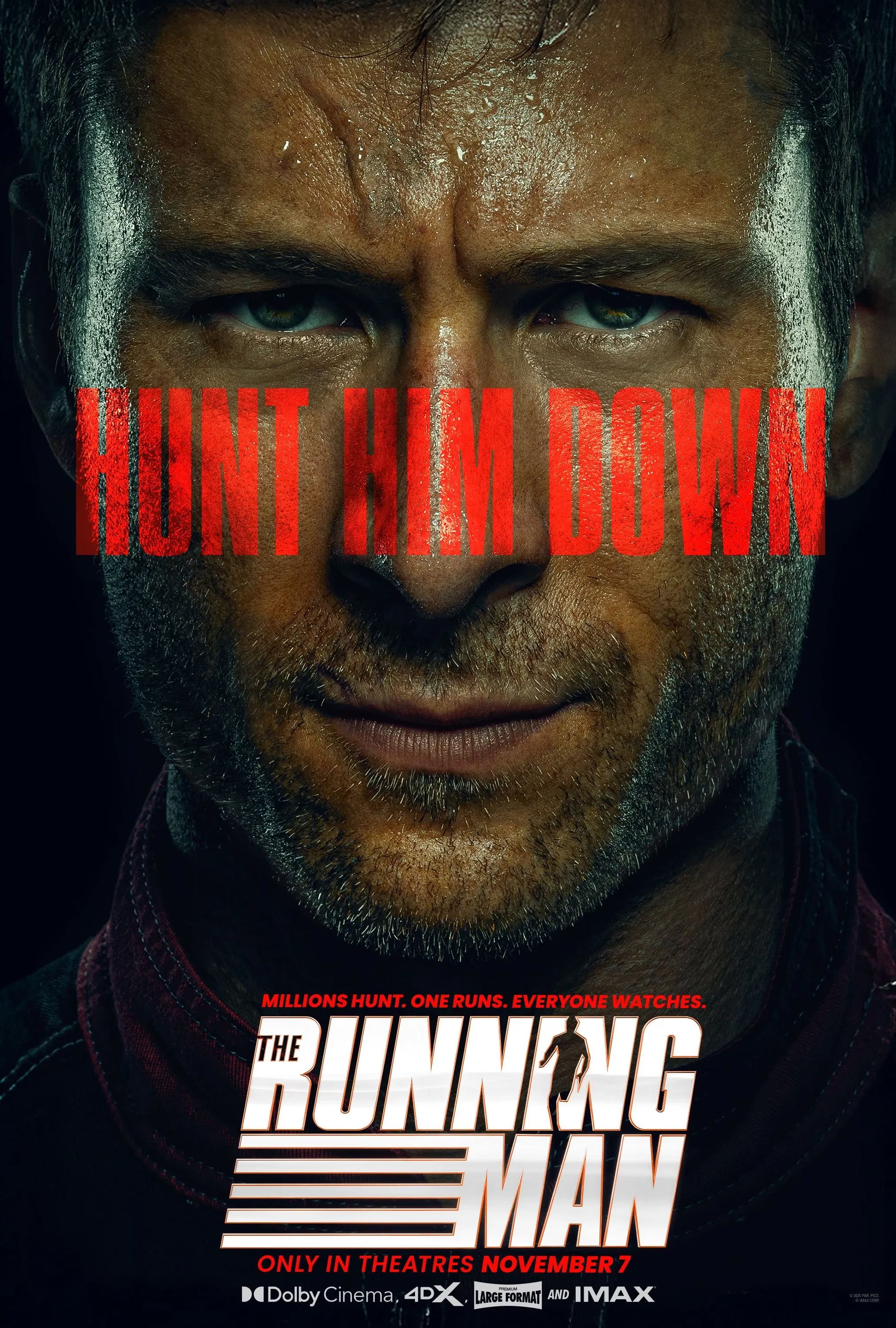
The Cast and Vision Behind the 2025 Adaptation
Edgar Wright's The Running Man assembles a formidable team to bring King's vision to a 2026 audience. The film is not a mere rehash but a re-contextualization, using its futuristic game-show premise to explore contemporary anxieties about media, violence, and class. The key players behind this adaptation are:
| Role | Contributor | Note |
|---|---|---|
| Director | Edgar Wright | Known for his kinetic style and deep film literacy. |
| Writers | Edgar Wright, Michael Bacall, Stephen King | Combining King's source with fresh cinematic ideas. |
| Producers | Nira Park, Simon Kinberg, George Linder | A team with experience in high-concept genre films. |
| Ben Richards | Glen Powell | Brings a charismatic, everyman quality to the doomed hero. |
| Dan Killian | Josh Brolin | Embodies the calm, corporate menace of the game's mastermind. |
A Legacy in the Frame
Ultimately, the Brolin Easter egg in The Running Man is a testament to the interconnectedness of storytelling. It shows how a director's encyclopedic knowledge of film, a chance casting coincidence, and loyalty to a novel's spirit can coalesce into a single, potent image. James Brolin's hijacker, frozen in a moment of crisis from 1972, becomes a silent commentator on his son's villainy and a direct line to the protagonist's fate. In a film about the manipulation of images and lives for public consumption, this layered reference stands out as a moment of genuine craft and personal history. It proves that in Edgar Wright's hands, even a background detail can carry the weight of a family legacy and the echo of a narrative destiny, making the 2025 adaptation a rich, multi-generational conversation between past and present cinema.
Comments