
Alright, fellow sandworm wranglers, gather 'round. It's 2026, and I'm still picking spice out of my teeth from the last trip to Arrakis. Denis Villeneuve might not have officially greenlit Dune: Part Three while he was busy making the first two movies, but let me tell you, the man left more breadcrumbs in the desert than a careless Fremen after a spice blow. He practically built a whole new sandcastle of possibilities. Now, with the third film finally on the horizon, it's time to connect those dots. We're heading straight into the wild, controversial, and mind-bending territory of Dune Messiah, and I, for one, am strapped in for the ride. The story picks up a dozen years after Paul Atreides became Emperor, and let's just say, not everyone is throwing a party. A whole bunch of folks are secretly plotting to kick him off that fancy Lion Throne. Villeneuve didn't shy away from the tough stuff in Part Two, and all signs point to him diving headfirst into Herbert's most divisive book.
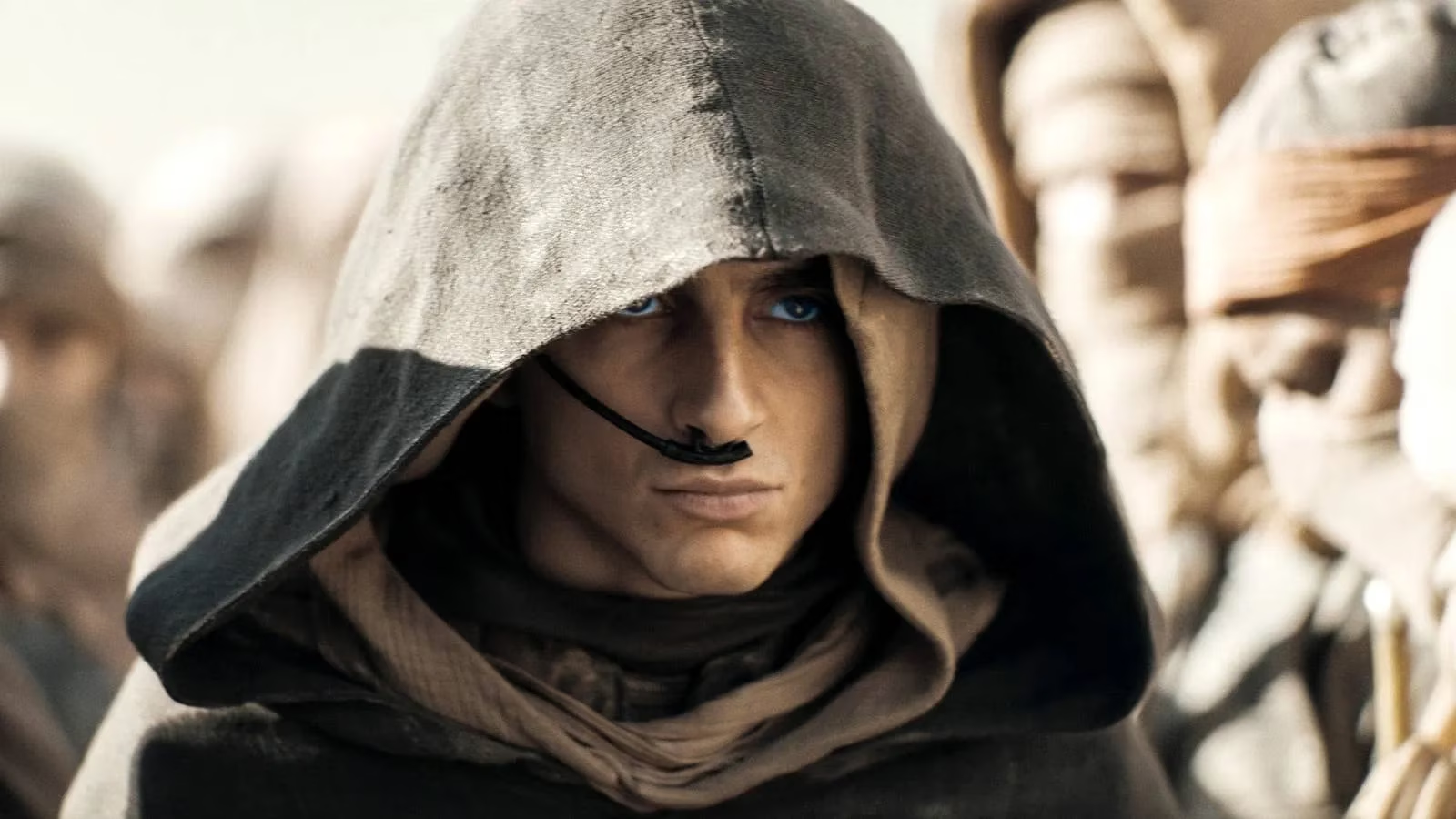
First up, let's talk about my man Stilgar. Remember his wide-eyed belief in Paul? That wasn't just about fighting Harkonnens. Oh no. The movies only gave us a taste, but for the Fremen, the real prophecy of the Lisan al-Gaib was about one thing: water. Lots of it. They've been dreaming of turning their dusty, storm-ravaged home into a "green paradise" for generations. Stilgar's faith is tied to that dream. And guess what? Paul's trippy vision after chugging the Water of Life wasn't just a cool visual—it was a spoiler! Waves crashing on dunes? That's the future, baby. Villeneuve might be blending timelines from later books, which means we could see Arrakis start its crazy ecological transformation way sooner in Part Three. Imagine Stilgar's face when the first real raindrop hits his stillsuit. Priceless.
Now, onto the family drama, which makes any reality TV show look tame. Lady Jessica started as the perfect Bene Gesserit, but by the end of Part Two, she's basically told the sisterhood to take a hike. Her one-liner to Reverend Mother Mohiam wasn't just sass; it was a declaration of war. She chose her son and House Atreides over centuries of scheming. This sets up a massive conflict. The Bene Gesserit don't take betrayal lightly. By letting Paul become Emperor, Jessica painted a giant target on her family's back. They're now public enemy number one for the universe's most powerful secret society. Talk about awkward family reunions.
And speaking of family, let's not forget the brief but chilling cameo from Alia. Paul's unborn sister popping up in a vision to warn him about "what is to come"? That's not your average sibling rivalry. Alia is a pre-born Reverend Mother, which means she's got the memories and knowledge of all the Bene Gesserit who came before her baked into her brain before she even takes her first breath. Her warning is a direct link to the Holy War Paul unleashes. Dune Messiah spends a lot of time asking if Paul's terrible decision was justified. Villeneuve is clearly planting that seed of doubt early, making us question the "hero" we've been following.
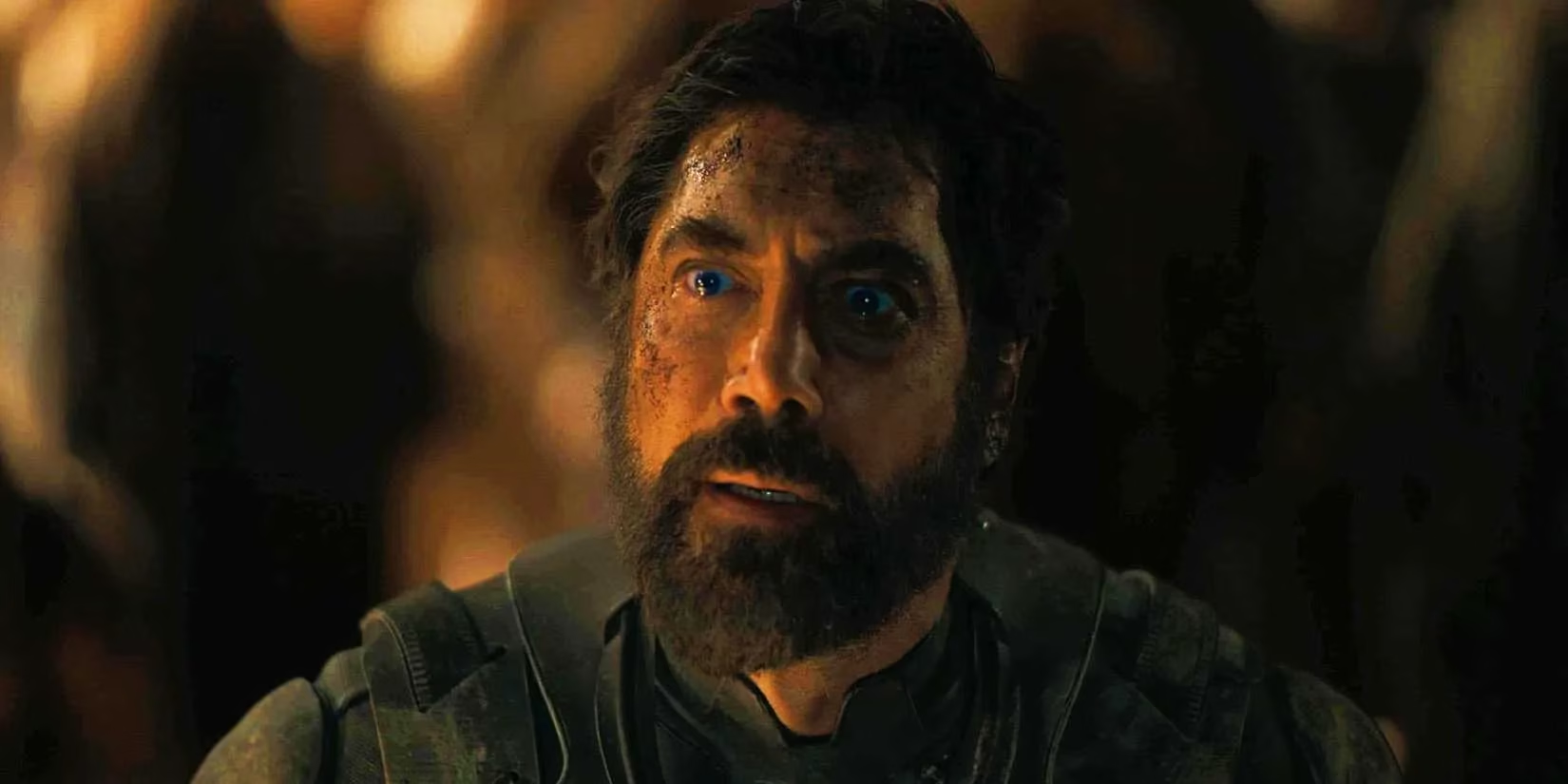
The Bene Gesserit's disdain gets a name: "Abomination." When Mohiam spits that word at Paul, it's not just an insult. It's a formal condemnation. In their eyes, Paul's insane prescient powers—supercharged by the Water of Life—have made him a monster, the very "Abomination" their legends warn about. They wanted a controllable Kwisatz Haderach; they got a god-emperor who sees timelines they can't even comprehend. So, what do you do when your millennia-old breeding program produces something too powerful? You try to delete it. This sets up the core conspiracy of Messiah: the Bene Gesserit teaming up with others to bring down the very being they created.
Paul's entire journey is a tragedy wrapped in a prophecy. His internal struggle in Part Two was epic—Fremen brother vs. messiah. But that line where he says he doesn't want the title? That's the heart of it. He knows the path leads to horror, but he walks it anyway. Part Two hinted at the coming atrocities, but Part Three is where we'll see the full, bloody aftermath. Billions dead in his name. All because he went south and said "yes." Villeneuve is forcing us to sit with the fact that our protagonist made a choice that doomed the galaxy. Heavy stuff.
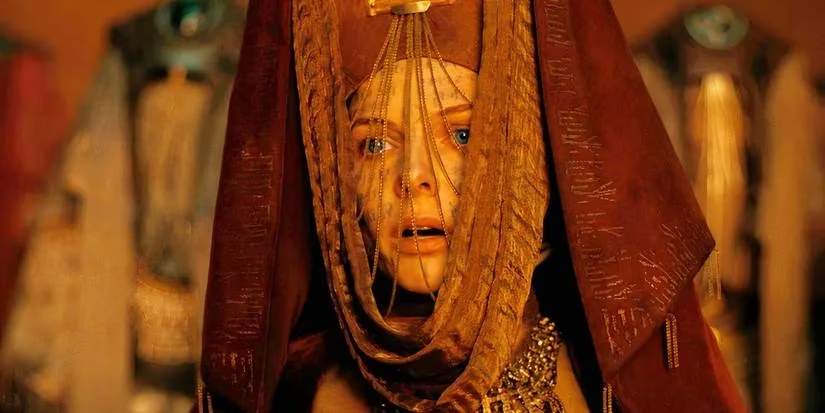
And then there's the kicker at the end: "The Holy War begins." Mohiam says it, and the mood shifts instantly. The book Dune Messiah actually skips over the war itself with a time jump, focusing on the messy political aftermath. But by declaring it started, the movie confirms Paul's worst visions are now reality. The galaxy is burning. This is where Villeneuve proves he's not softening Herbert's blow. The franchise is taking a dark, controversial turn, and we're all along for the ride.
But the biggest change from the books? Chani. In Part Two, she walks away. She rejects Emperor Paul and his political marriage to Princess Irulan. Book-Chani would never! She stays as his loyal concubine. This is a HUGE shift. So much of Messiah revolves around the tense love triangle and the fight to produce Paul's heir. If movie-Chani is still out there in the desert giving Paul the side-eye for twelve years, how does that story even work? Paul's final confession to her—that he'll love her as long as he breathes—feels like a desperate promise. It's Villeneuve giving Chani more agency, for sure, but it also sets up a massive emotional puzzle for Part Three to solve. Will she come back? Can she forgive him? The fate of the empire might depend on it.

Finally, Paul's last command: "Lead them to paradise." Chills. This line perfectly captures his arc from idealistic duke to disillusioned, manipulative leader. He's using the Fremen's faith, selling them a dream of a green planet to secure his own power. The eternal debate—is Paul a hero or a villain?—isn't simple. But this line leans hard into the latter. He's become an oppressor preaching liberation. Part Three has the potential to explore this hypocrisy in devastating detail. How long can you promise paradise before people realize they're still in hell?
So, what are we in for with Dune: Part Three? A messy, philosophical, and politically charged sequel that doesn't let its hero off the hook. We've got:
-
Terraforming Arrakis (Get ready for soggy sandworms!)
-
Bene Gesserit vengeance (Those ladies hold a grudge.)
-
Alia's terrifying omniscience (A toddler with the wisdom of ages.)
-
The aftermath of a galactic holy war (Spoiler: It's not pretty.)
-
A fractured romance (Space drama at its finest.)
-
Paul's moral downfall (The main event.)
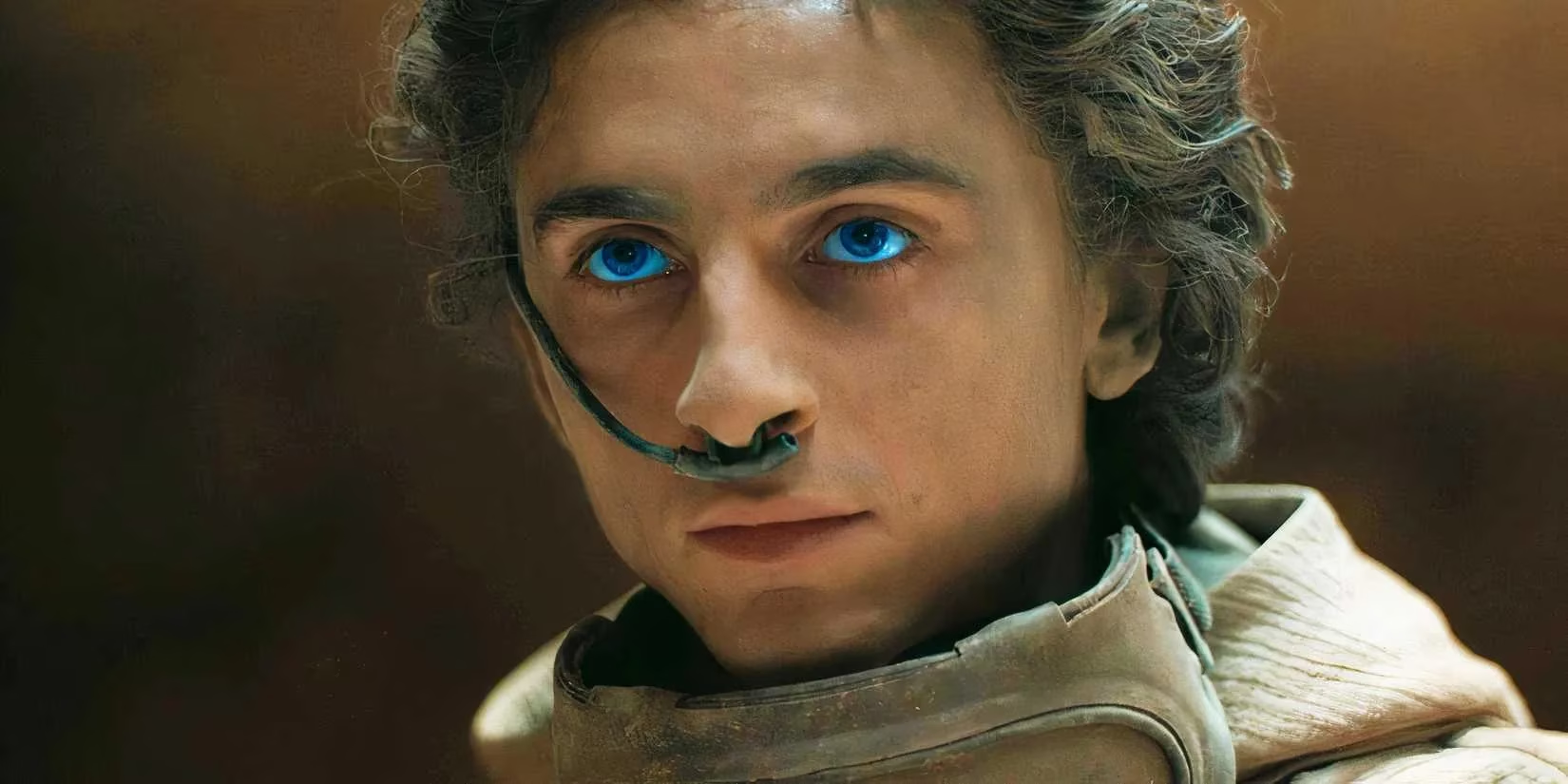
Villeneuve has built a masterpiece of setup. Every line, every vision, every conflicted glance in Part Two was a thread leading to the tapestry of Messiah. He's embracing the complexity, the darkness, and the controversy of Herbert's work. As a fan, that's all I can ask for. Well, that and maybe a few more shots of those majestic sandworms. I just hope my popcorn is ready for the moral and philosophical gut-punch that's coming. The spice must flow, and so must the consequences.
Comments