
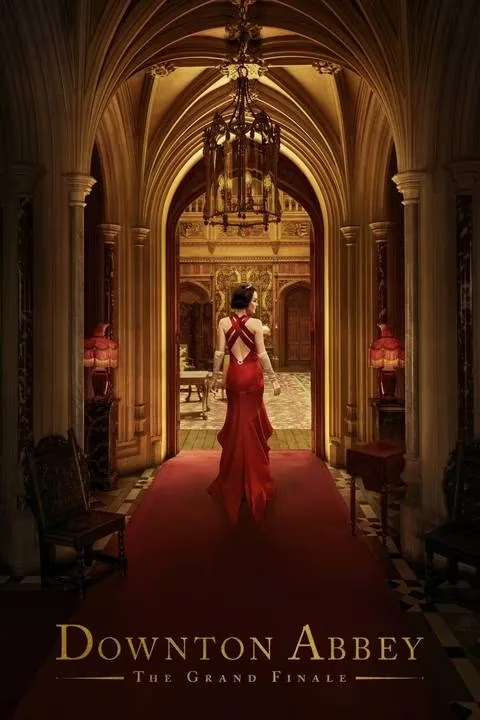
In the grand tapestry of Downton Abbey, few threads have been as richly woven as that of Lady Mary Crawley. From her earliest days as a headstrong debutante to her evolution into the formidable matriarch of the estate, Mary has been the heart of the franchise. But when the curtains fell on Downton Abbey: The Grand Finale in September 2025, a lingering question haunted fans: did Mary finally get the ending she deserved? 🤔
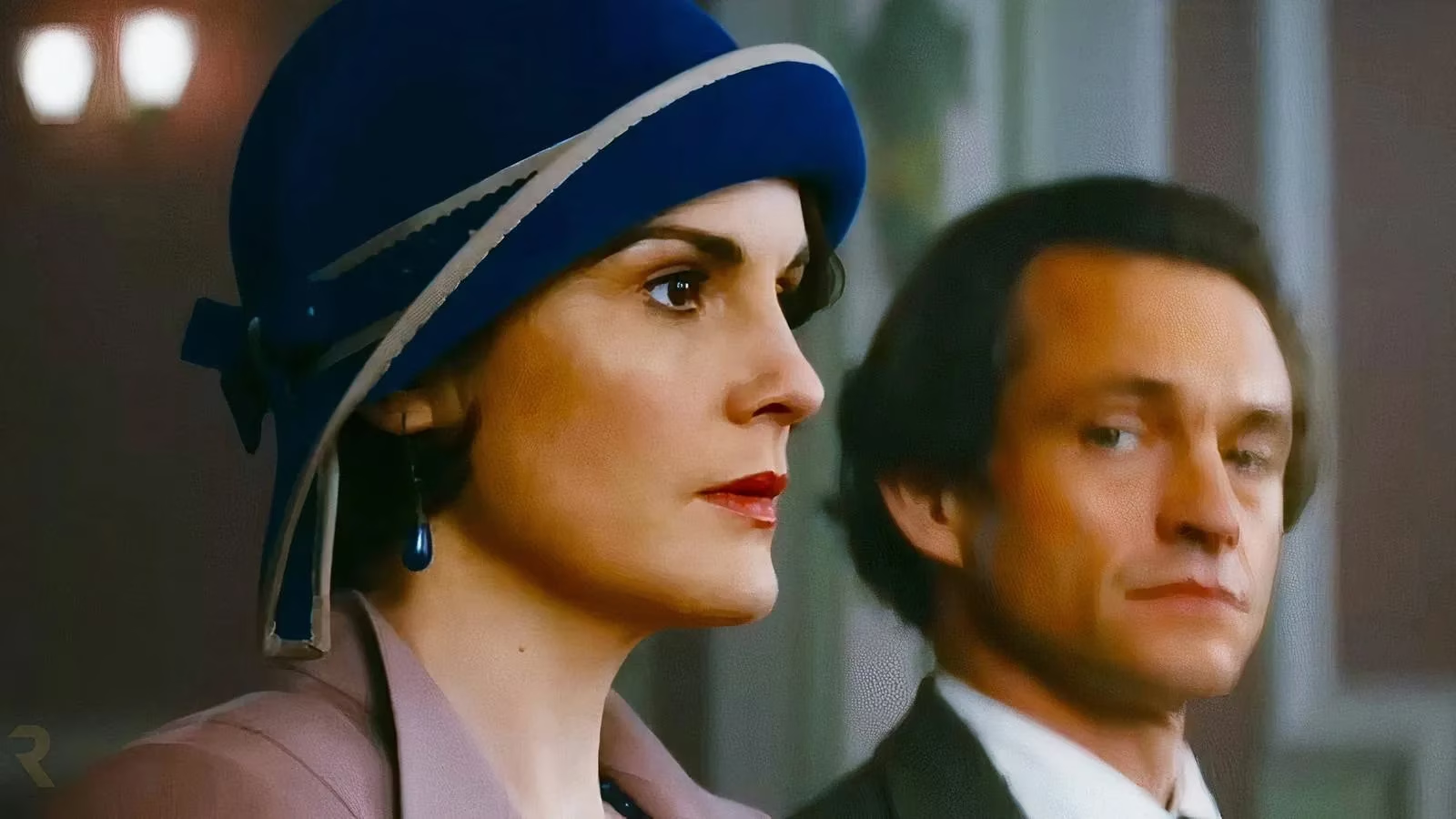
Across six television seasons, holiday specials, and now three feature films, the Downton Abbey timeline has grown into a sprawling epic. Amidst a cast of dozens, Mary Talbot, née Crawley, stands near the top. Her journey has been marked by tragedy—the shocking death of her first love, Matthew Crawley, on the very day their son was born, left a scar that never fully healed. Then came Henry Talbot, a charming race car driver who seemed to offer a second chance at happiness. But as the final film arrived, Henry was nowhere to be found. Was his absence a deliberate narrative choice, or simply a scheduling casualty? And more importantly, could Mary’s story find closure without him?
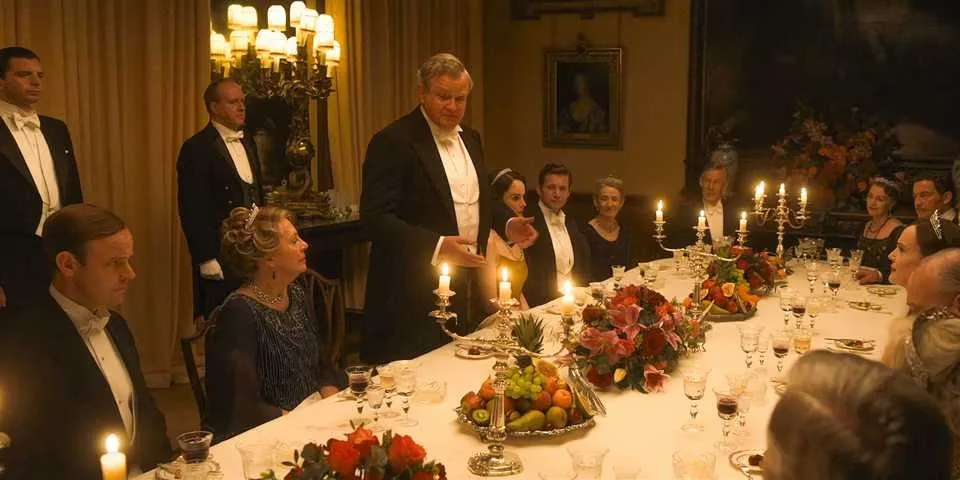
The promotion for The Grand Finale began with a poster and a cast list that sent shockwaves through the fandom. Familiar faces like Hugh Bonneville’s Robert Grantham and Elizabeth McGovern’s Cora returned, alongside newcomers Alessandro Nivola and Joely Richardson in undisclosed roles. Yet the glaring omission of Matthew Goode as Henry Talbot sparked immediate concern. Goode had already missed Downton Abbey: A New Era due to commitments with the Paramount+ series The Offer. This time, his filming schedule for Department Q between February and June 2024 clashed with The Grand Finale’s production from May to August 2024. The result? Henry was once again an absentee husband, a plot point that felt increasingly contrived.
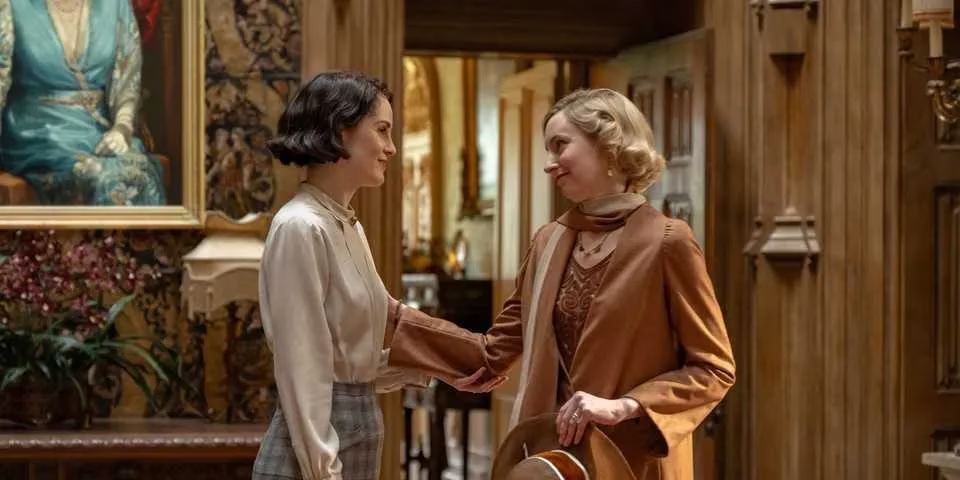
In A New Era, Mary dismissed Henry’s absence by citing his passion for racing cars. It was a sad, almost hollow explanation—one that left her vulnerable to the advances of Jack Barber, the film director who tried and failed to win her heart. That film ended with Mary still married, still waiting, and seemingly stuck in a narrative limbo. As the final installment approached, fans hoped for a more satisfying resolution. But with Henry missing again, the creative team faced a daunting challenge: how do you give a beloved character like Mary a happy ending when her husband is literally off-screen?
After all she has endured, doesn’t Mary deserve more than another round of lonely dinners and vague excuses? 💔
Several possibilities loomed. Henry could remain an absentee husband, a choice that would feel repetitive but perhaps less distressing than the alternatives. A divorce, while realistic for the era’s changing times, might undermine the romantic ideal that Mary has always secretly craved. Or, most tragically, Henry could die off-screen—a fate that would mirror Matthew’s death and plunge Mary into yet another period of mourning. None of these options felt entirely fair. Mary had already suffered enough loss. Her final chapter should be one of empowerment, not sorrow.
| Possible Ending | Pros | Cons |
|---|---|---|
| Absentee husband again | Consistent with racing excuse | Feels lazy and repetitive |
| Divorce | Realistic, gives Mary freedom | Might seem too modern for 1930s setting |
| Henry dies offscreen | Tragic, but frees Mary | Another dead husband? Too cruel |
| Henry returns briefly | Emotional closure | Requires Goode’s presence |
The absence of Matthew Goode was not the only concern. The film also had to honor the legacy of Maggie Smith’s Dowager Countess, whose death in A New Era left a void. Julian Fellowes, the series creator and writer, had promised that The Grand Finale would pay proper respect to Smith’s iconic character. If the Dowager could receive such a heartfelt sendoff, surely Mary—the character who has carried the franchise for over a decade—deserved the same care. 🎬
As 2026 unfolds, audiences have had months to reflect on the film’s release. The runtime of 123 minutes, directed by Simon Curtis, offered a brisk conclusion to a 15-year saga. But did it truly satisfy? Mary’s arc in The Grand Finale remains a topic of debate. Some fans argue that her strength has always come from resilience, not romance. Others insist that after Matthew and Henry, she deserved a partner who would stay. The film’s ending, whatever it was, had to balance these expectations.
What does it mean for a character like Mary to be “empowered”? Is it independence? Is it love? Or is it simply the chance to stand at Downton’s helm, unburdened by the men who have defined so much of her life? 👑
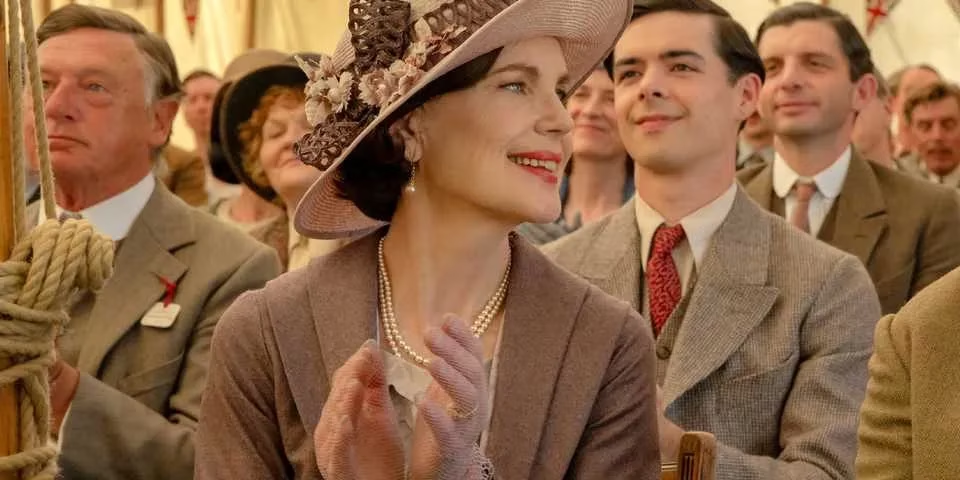
The legacy of Downton Abbey will endure in the imaginations of its audience. Lady Mary, played with impeccable grace by Michelle Dockery, remains one of the most complex heroines of modern period drama. Her story—full of heartbreak, ambition, and quiet defiance—deserves a conclusion that honors her journey. Whether Henry was present or not, the final film had to give her a moment of peace. Did it succeed? That is a question each viewer must answer for themselves.
In the end, Mary’s ending is not just about who she ends up with. It is about who she becomes. And after everything, she deserves to become someone who is finally, truly happy. 🌟
Comments