
The chaos of the final season of Game of Thrones left audiences with a host of unresolved threads, but one fleeting, almost throwaway line from King Bran Stark has quietly refused to fade from memory. In the very last episode, after the ashes of King's Landing had settled and a new order was established, Bran turned to his fledgling Small Council and asked about the missing dragon Drogon. Told that the creature was last seen flying east, the new ruler replied with an unnerving calm: “Perhaps I can find him.” The statement slipped by on screen, but for readers familiar with George R.R. Martin’s A Song of Ice and Fire, it ignited a long-smoldering theory about Bran’s true potential.
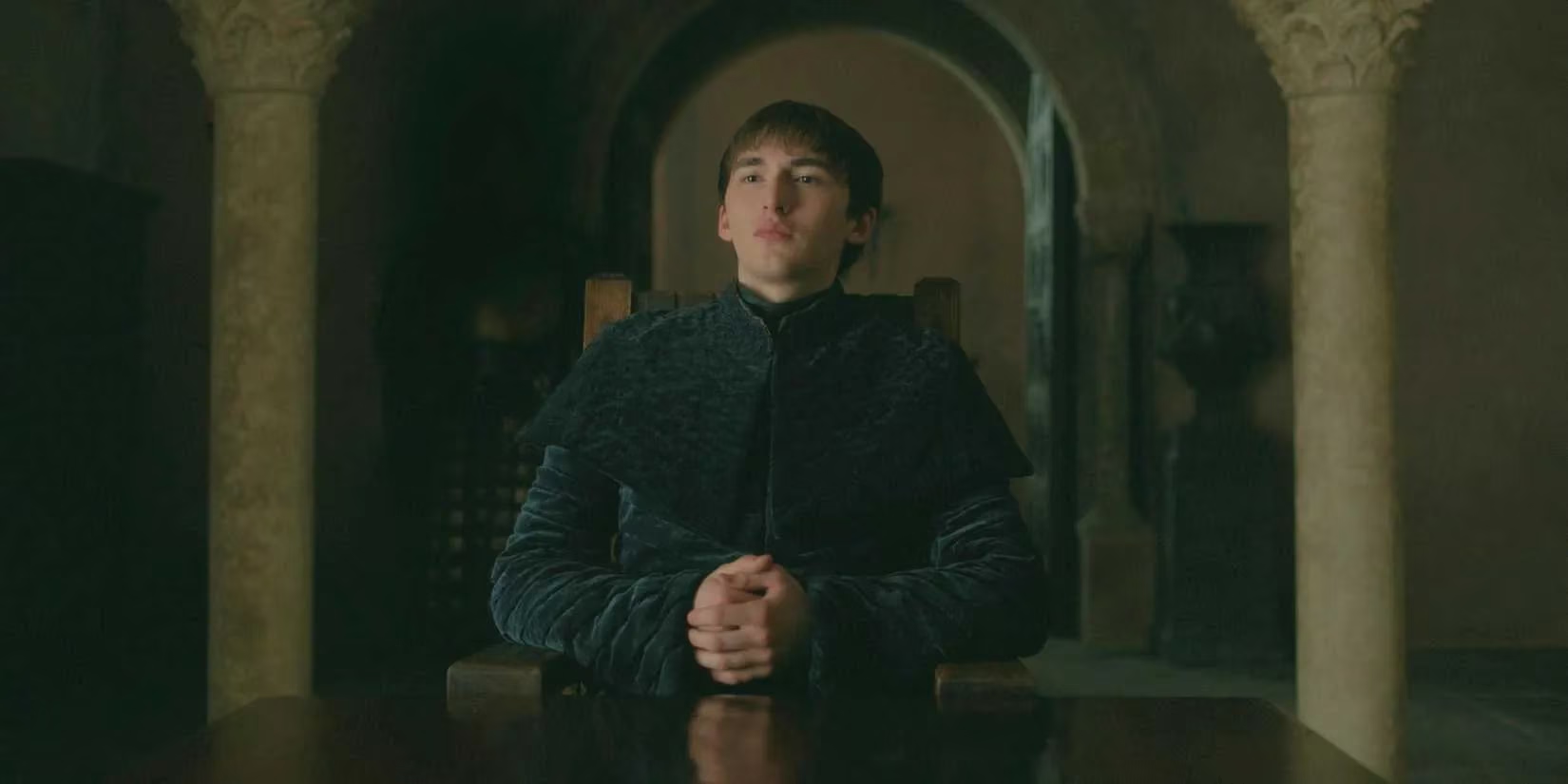
The scene is strangely placed. Bran, who throughout season 8 had drifted through conversations with an almost detached serenity, suddenly showed a flicker of direct interest. He was not worried about retaliation—the council’s discussion of Drogon carried more curiosity than fear. Rather, his comment hinted at a deeply personal project. Why would Bran need to find the last living dragon? No soldier in Westeros could hope to capture or control him, and the scorpion bolts, though lethal in theory, had proved unreliable. The answer, for those who had read the source material, pointed toward one of Bran’s most feared and rarely used gifts: warging.
Warging is the ancient ability to project one’s consciousness into an animal and control its body. In the HBO adaptation, it played a diminished role, surfacing mainly through Bran’s bond with his direwolf Summer and his catastrophic, morally fraught merging with Hodor. Martin’s books, however, treat warging as a central element of the Stark children’s heritage. Bran is described as perhaps the most powerful warg in generations, capable of slipping into wolves, birds, and even trees linked through the weirwood network. The leap from those hosts to a dragon might seem immense, but the foundation is already there. If a human mind can be overpowered—as Bran did with the gentle giant Hodor—then what could stop him from attempting the same with an enraged, grieving dragon?
The theory that Bran would one day warg into one of Daenerys Targaryen’s dragons has circled through fan communities ever since A Dance with Dragons was published in 2011. Observers pointed out that the Three-Eyed Raven once promised Bran he would never walk again but would fly. The show fulfilled this prophecy through his becoming the Raven, ravens flying on his behalf and his mind soaring through time. Yet a more literal, breathtaking fulfillment would see Bran riding the winds inside Drogon’s body, seeing the world from behind those reptilian eyes. The double meaning would be exquisitely satisfying, and it slotted neatly into predictions for the unwritten sixth novel, The Winds of Winter.
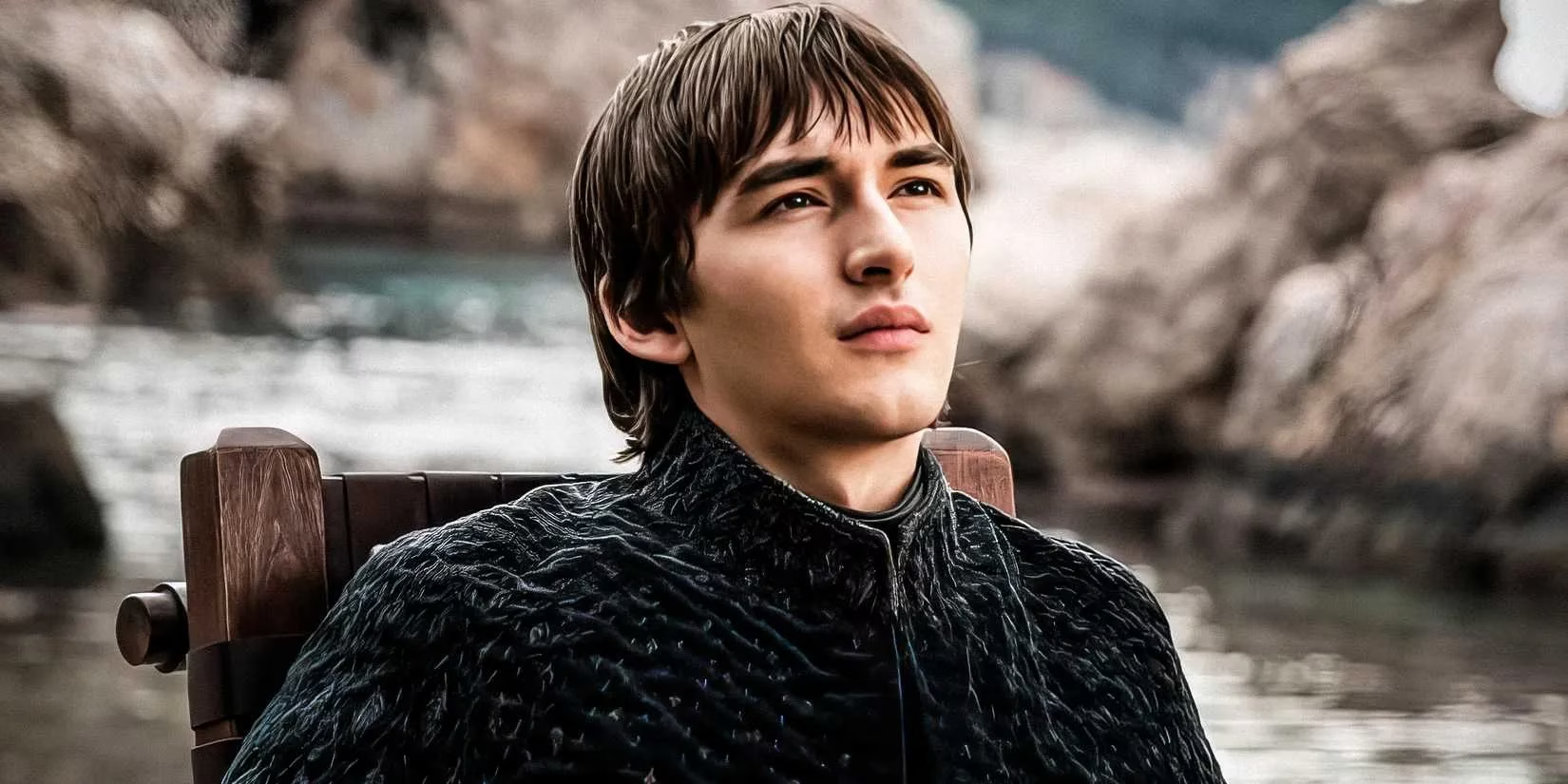
Of course, the idea did not come without fierce debate. Many readers argued that warging into a dragon would be an entirely different order of difficulty. Direwolves and humans possess familiar, mammalian minds; dragons are fire made flesh, creatures of raw elemental fury with an intelligence that borders on the alien. Even for Bran, the mental toll might prove catastrophic. There was also a narrative concern—making Bran capable of possessing a dragon risks turning him into an all-powerful deus ex machina, a state Martin has consistently avoided. Others countered that such a power, if introduced, would demand a terrible price, perhaps further eroding the last shreds of Bran Stark’s original personality until only the Raven remained.
The practical implications for the story were equally tantalizing. If Daenerys’s descent into madness in the books mirrors the show’s climax and she burns King’s Landing, warging into Drogon could be Bran’s only way to stop the carnage without killing the dragon. It could also serve as a counterweight if one of Daenerys’s other dragons, like Viserion, is turned by the Others—a plot point hinted at but never fully explored on television. In that scenario, a Bran-versus-undead-dragon aerial duel would push the fantastical elements of the series to a spectacular peak.
By 2026, the window for a Game of Thrones sequel that follows up on this particular thread has narrowed to a sliver. HBO has moved on to prequels and fresh projects, and the original cast has scattered. No ninth season or follow-up movie exists to show Bran actually reaching out across the Narrow Sea, his vacant eyes suddenly sharpening as Drogon’s wings catch the dawn. Yet the curiosity lingers. Bran’s line remains the most conspicuous loose end in an ending that otherwise tried mightily to tie every bow.
Should The Winds of Winter ever emerge from Martin’s desk, it would almost certainly address Bran’s relationship to the dragons. A warging sequence would forever change how readers interpret his final scenes in the HBO show, retroactively turning a quiet king into a silent puppet master of the skies. The hope endures in 2026 that this theory will one day be confirmed, giving Bran’s cryptic search a devastating and glorious answer. Until then, the image of the boy who fell from a tower growing strong enough to ride a dragon’s soul remains one of the most haunting promises in modern fantasy.
Comments