
As a film critic, I've seen my share of box office bombs, but Amazon's latest take on War of the Worlds is a special kind of disaster. Released just last year, the Ice Cube-led sci-fi flick has managed the near-impossible feat of scoring a perfect zero on Rotten Tomatoes, becoming one of the most universally panned major studio releases of 2025. Critics and audiences alike have lambasted it for its baffling premise, clunky pacing, and execution that feels more like a rough draft than a finished film. Yet, in the midst of this cinematic wreckage, an oddly placed anime reference has emerged as the film's most memorable—and most discussed—element, for all the wrong reasons.

The film represents a radical, and ultimately failed, modernization of H.G. Wells' classic tale of alien invasion. Gone are the tense street battles and societal collapse of traditional adaptations. Instead, Ice Cube's character spends the majority of the runtime isolated in a command center, attempting to outsmart the extraterrestrial threat from behind a computer screen. This digital chess match format drains the story of its inherent tension and spectacle, leaving viewers with a surprisingly dull and disconnected experience. The narrative choices feel less like a bold reimagining and more like a fundamental misunderstanding of what makes the source material compelling.
It's within this strange, sterile digital war that the film's most surreal moment occurs. During scenes set in the fictional son's bedroom, a bright, colorful, and unmistakably pristine poster for JoJo's Bizarre Adventure: Diamond Is Unbreakable is clearly visible on the wall. The poster remains oddly untouched, a beacon of pop culture normalcy even as the fictional world outside supposedly collapses into chaos.
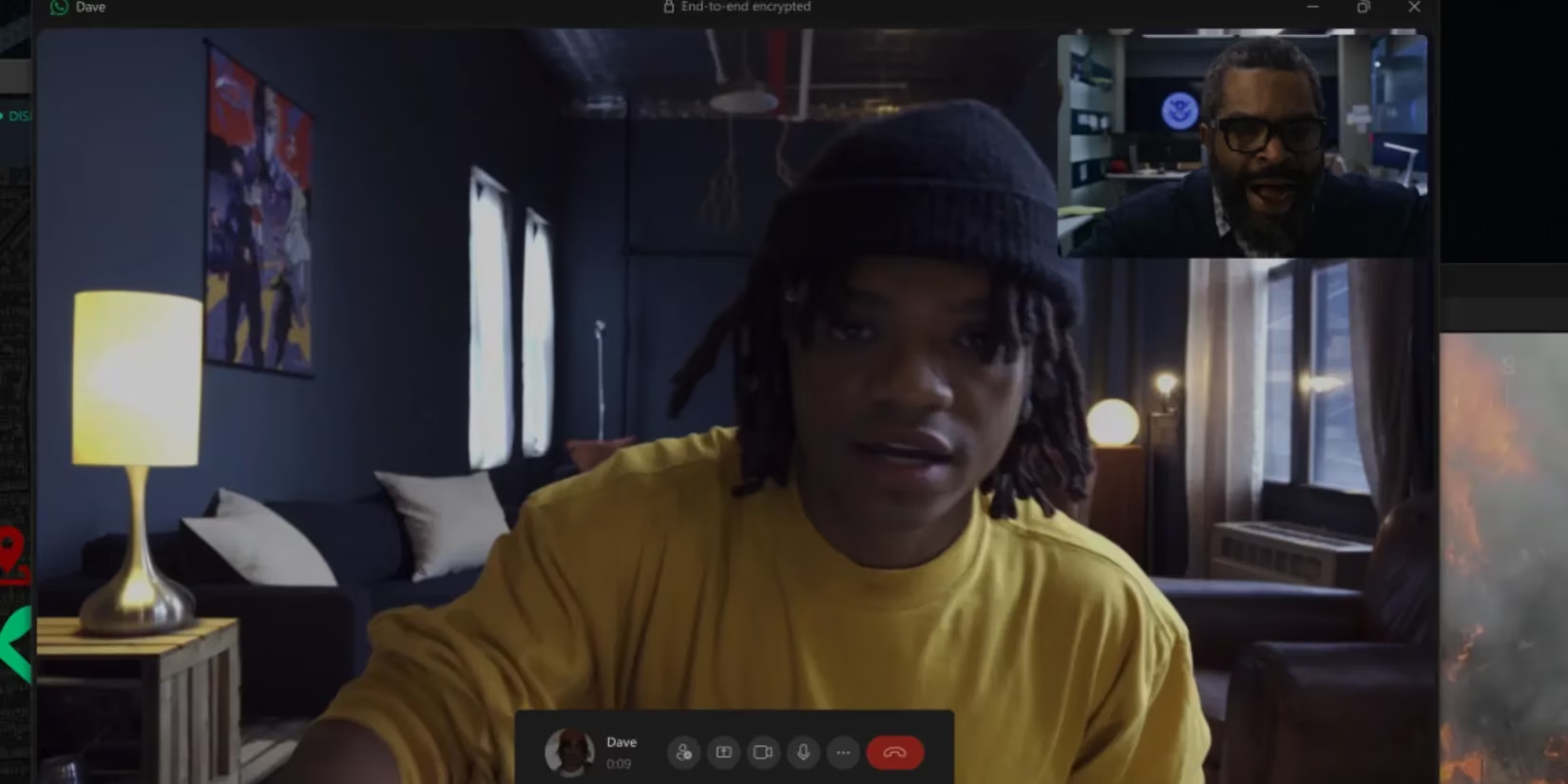
For fans of the iconic anime and manga series, the cameo was a jarring surprise. The online reaction was a mix of bemusement and disbelief. Many joked on social media that the JoJo's franchise, known for its stylish action and complex characters, deserved better than to be immortalized in what critics are calling one of the year's worst films. The reference, likely intended as a relatable character quirk or a fun Easter egg, instead functions as a glaring tonal mismatch. It doesn't enhance the story or deepen the character; it simply sits there, a distracting artifact from a more interesting creative universe.
The timing of this odd crossover only adds to the surreal feeling. The JoJo's fandom is currently in a state of high anticipation, eagerly awaiting the long-anticipated anime adaptation of Steel Ball Run, a story arc praised for its depth, intricate plot, and high-stakes drama set against a 19th-century cross-country horse race.
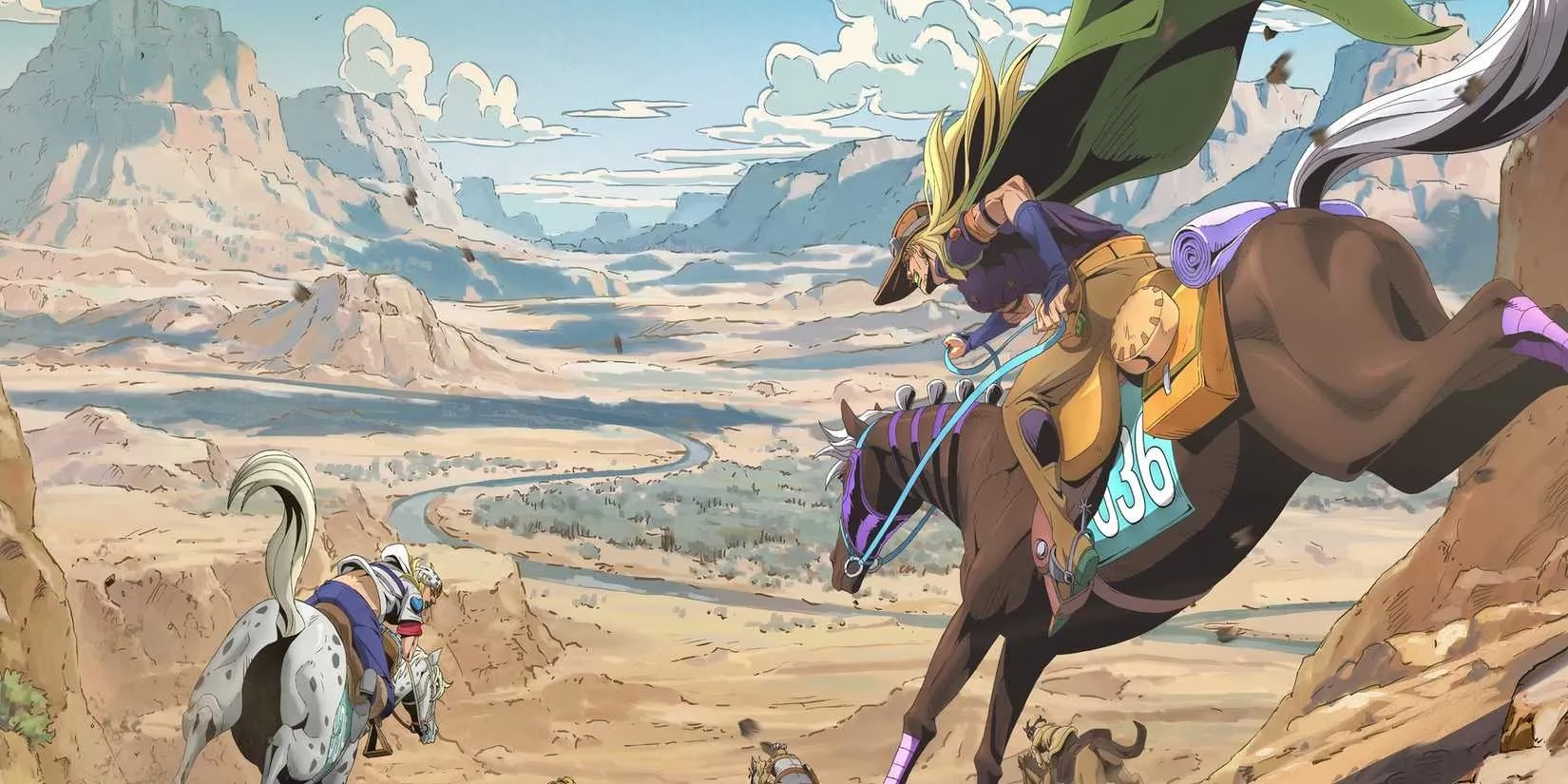
Here’s what makes the contrast so stark:
-
Steel Ball Run: A narrative celebrated for its ambition, character development, and stylistic flair.
-
Amazon's War of the Worlds: A film criticized for its lack of ambition, paper-thin characters, and clumsy execution.
Placing a poster for a series known for its excellence within a film demonstrating the opposite feels almost poetic. It becomes a symbol of the project's own wasted potential—a reminder of compelling storytelling happening elsewhere while this film struggles to find its footing.
Ultimately, the bizarre Easter egg has become the film's unintended legacy. While War of the Worlds will likely fade into obscurity as a footnote in the history of bad adaptations, the mental image of JoJo's Bizarre Adventure sharing screen space with one of 2025's biggest cinematic flops has cemented itself as an enduring inside joke. It serves as a strange testament to how even in a creative failure, unexpected elements can capture the audience's attention, albeit not in the way the filmmakers intended. The poster, meant to blend in as set dressing, instead stands out as the most authentic and interesting piece of culture in the entire film.
Comments