
The crimson sun dipped below Prodigy's artificial horizon as chaos erupted across the island paradise, a symphony of screeching Xenomorphs and human defiance. Wendy and the Lost Boys, those wayward souls who'd danced too long in Boy Kavalier's gilded cage, finally tore through their chains with the help of otherworldly allies. Laboratories became battlegrounds, lush gardens transformed into alien hunting grounds, and somewhere amid the smoke and pulse-rifle glare, a whispered phrase bridged six decades of interstellar terror: "Stay frosty." The air itself seemed to crystallize with recognition when Rashidi uttered those words while leading soldiers into the belly of the beast—a lab teeming with horrors beyond human comprehension. It was more than tactical advice; it was a ghost from 1986 rattling its chains in 2025.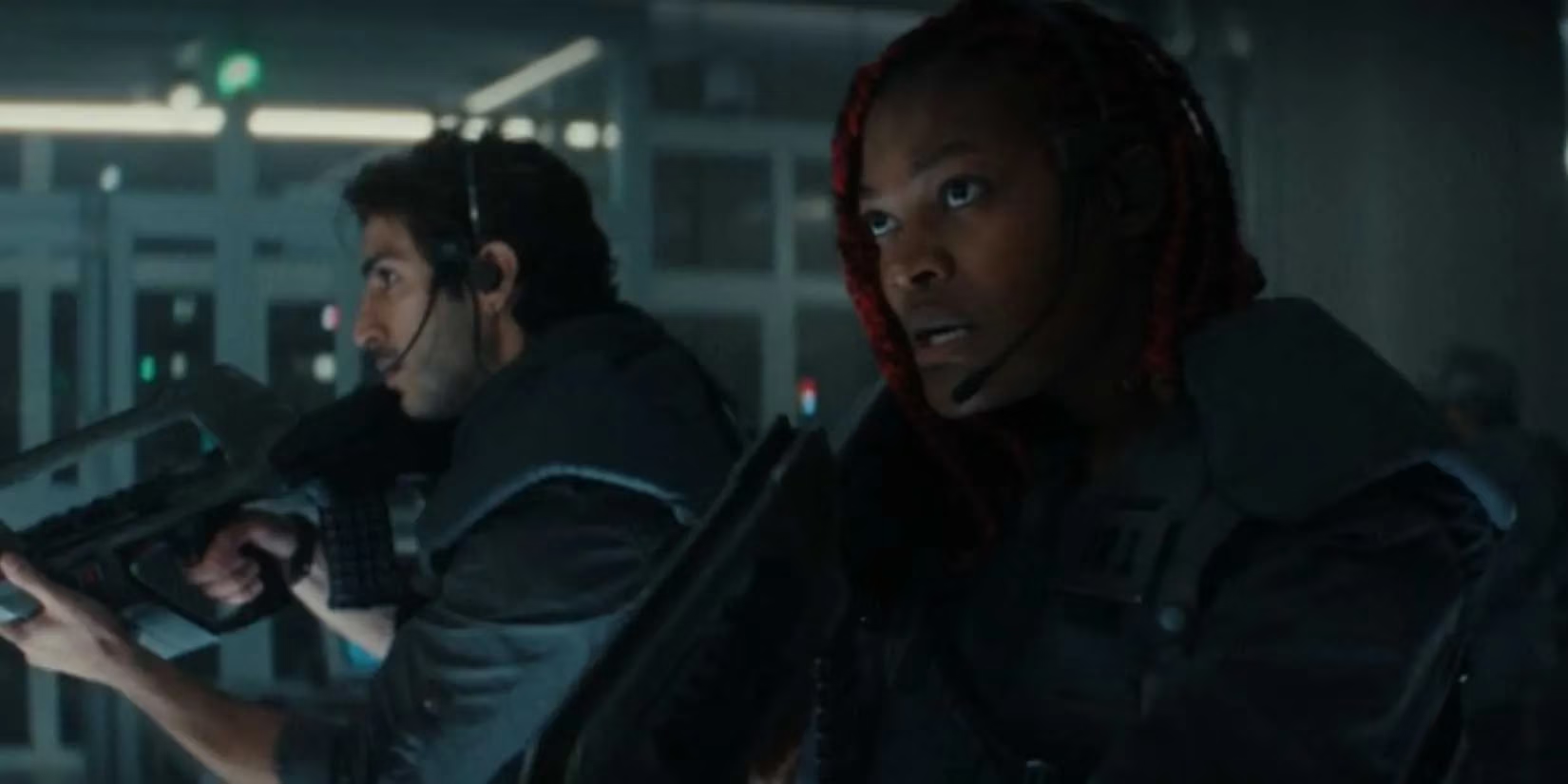
The Eternal Chill of a Legendary Line
That throwaway command—stay frosty—carries the weight of cinematic history like a dormant facehugger. Michael Biehn's Corporal Dwayne Hicks first growled it in James Cameron's Aliens, a battle-weary mantra for colonial marines facing impossible odds. When Rashidi echoes Hicks in Alien: Earth, it’s no mere coincidence but a deliberate wink to fans—an Easter egg wrapped in nostalgia and dry ice. The brilliance lies in its subtlety: no grand speeches about legacy, just three syllables slicing through tension like a plasma cutter. What makes this reference resonate? Perhaps it’s how both moments capture that quintessential human fragility—soldiers huddled against cosmic darkness, whispering courage into their own helmets. The phrase has become folklore among Alien devotees, a linguistic heirloom passed between generations of storytellers. And here, in 2025, it lands like a perfectly timed grenade roll.
When Horror Meets Heavy Artillery
Alien: Earth’s DNA always contained strands of Ridley Scott’s original nightmare—those slow-creeping shadows and biological dread. Yet as Season 1 accelerated toward its climax, the show pulled a Cameron-esque pivot into full-throttle combat ballet. Soldier squads fanned across Prodigy’s collapsing Eden:
-
🪖 Prodigy’s private militia hunting Xenomorphs through neon-lit jungles
-
🕵️♂️ Morrow’s Weyland-Yutani agents playing corporate chess with live ammunition
-
💥 Hermit’s ragtag team turning science stations into war zones
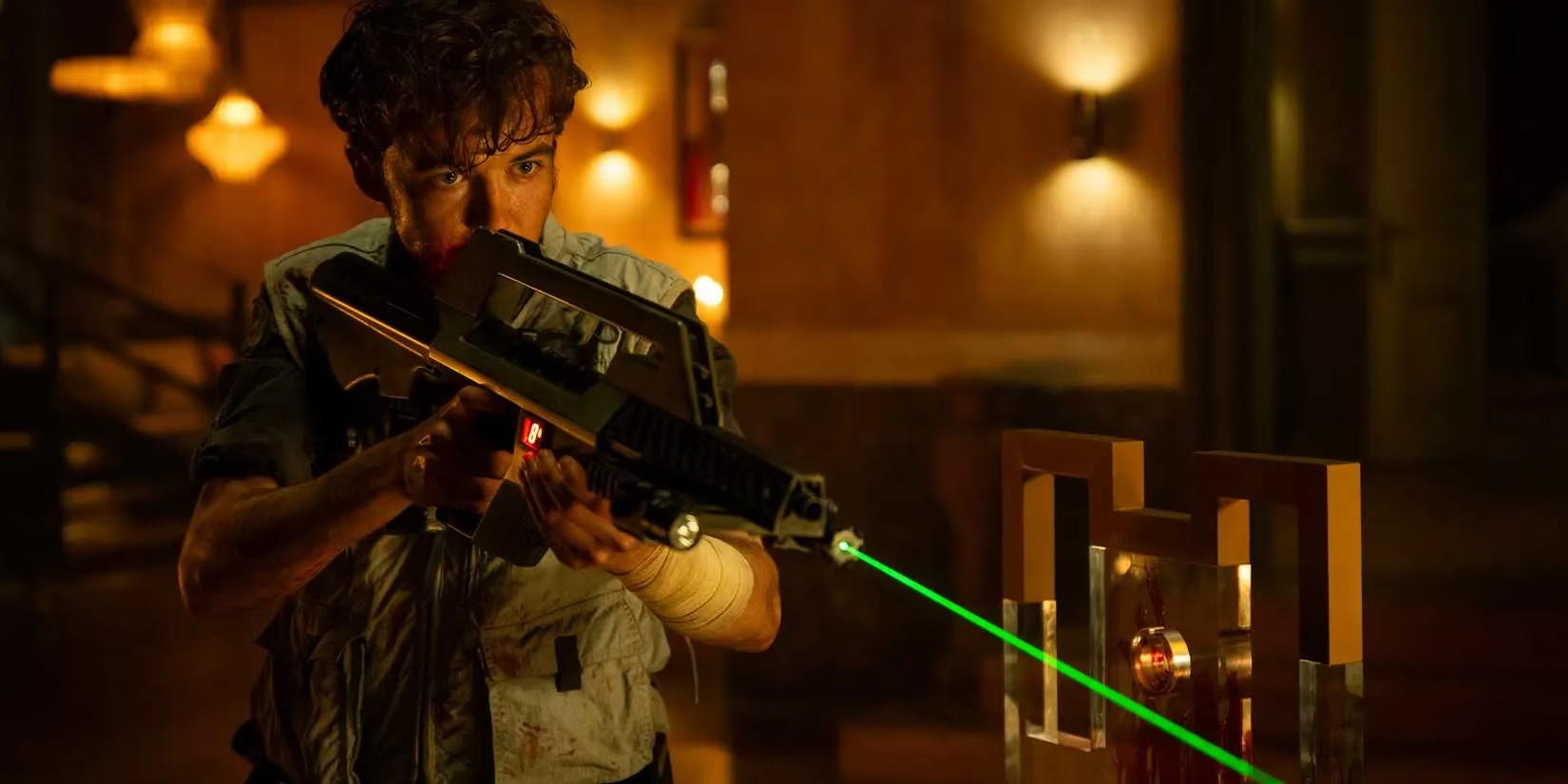
The shift wasn’t just thematic—it was sensory. Early episodes dripped with Alien’s signature claustrophobia: the hiss of steam pipes, the drip-drip of unknown fluids, the gut-churning reveal of Boy Kavalier’s beetle-like specimens skittering through labs (talk about buggin’ out!). But by Episode 8? All hell broke loose with Aliens-style fireworks: pulse rifles painting the night with energy trails, soldiers barking orders over comms chaos, and Xenomorphs displaying terrifying new pack behaviors. The premiere’s Maginot wreckage exploration now feels like foreshadowing—a bridge between Scott’s haunted-house-in-space and Cameron’s bug-hunt extravaganza.
Monsters and Metaphors
What truly elevates Alien: Earth is how weaponizes its creatures as emotional mirrors. The Xenomorphs here aren’t just killing machines; they’re dark reflections of human ambition:
| Creature | Human Counterpart | Symbolism |
|---|---|---|
| Hive-minded Xenos | The Lost Boys | Loss of individuality |
| Parasitic ticks | Corporate greed | Exploitation feeding on hosts |
| Mutated hybrids | Boy Kavalier | Twisted idealism |
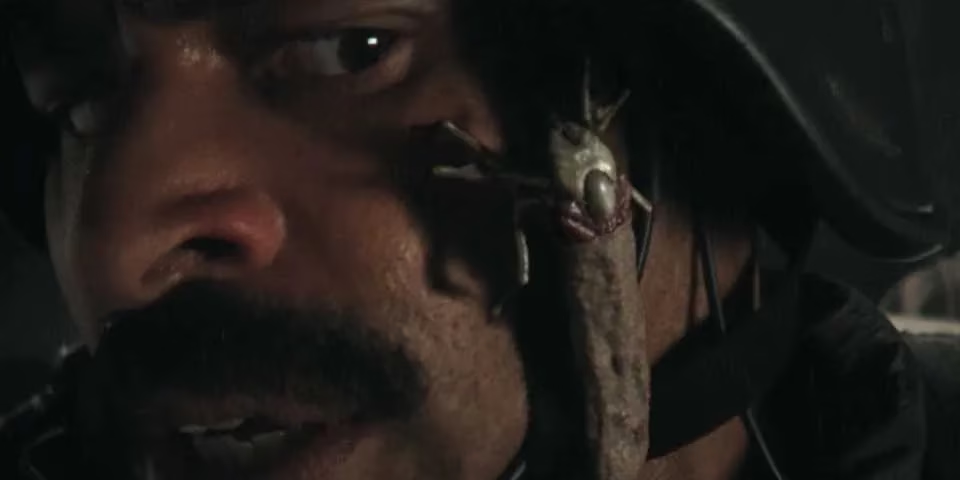
Wendy’s rebellion crystallizes this duality—using monsters to fight monsters, embracing chaos to break free. The finale’s triumph isn’t just survival; it’s characters choosing what to become in a universe that grinds souls into paste. Hermit’s laser-sighted standoff with a Xenomorph egg (that’s one sketchy piñata) embodies this perfectly—terror and wonder sharing the same heartbeat.
Echoes in the Void
Beyond Hicks’ linguistic ghost, Alien: Earth channels Aliens’ spirit through:
-
Squad Dynamics: Rashidi/Siberian’s camaraderie mirroring Hudson/Vasquez banter
-
Industrial Horror: Clanking machinery framing visceral action (like a death metal ballet)
-
Motherhood Themes: Wendy’s protective fury echoing Ripley’s quest for Newt
Even the score leans into it—synthetic dread swelling into martial drums when soldiers advance. Yet the show avoids pure pastiche by grounding itself in contemporary anxieties: climate collapse metaphors in Prodigy’s failing biosphere, tech-dependence in the Maginot’s corpse, and the utterly bananas spectacle of billionaires playing god with alien DNA. Boy Kavalier isn’t some mustache-twirling villain; he’s a Gen-Z Frankenstein with better hair, convinced his monstrosities will save humanity (yeah, good luck with that, champ).
The Thawing Horizon
As ash settles on Season 1’s explosive end, questions linger like radiation:
-
Will Morrow’s corporate vultures weaponize captured specimens?
-
How deep do Kavalier’s experiments truly run?
-
Can Wendy’s rebellion survive without becoming monsters themselves?
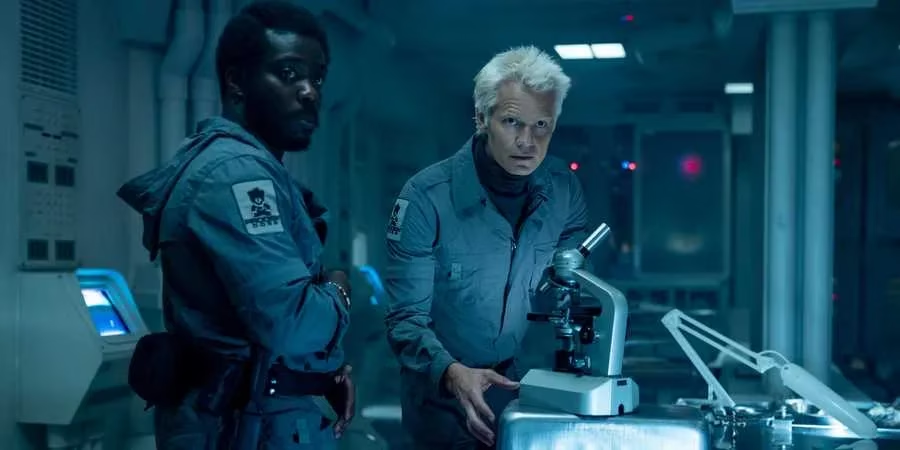
The Aliens homage ultimately feels like a torch passed—not just between characters, but between eras of sci-fi storytelling. That simple phrase, stay frosty, binds 1986’s battle-hardened marines to 2025’s disillusioned rebels across time’s vast cold. Both are human sparks fighting to stay lit in an uncaring universe. So as we await Season 2’s promised chaos, one wonders: in the cosmic game of survival, do we become the monsters... or do we find new ways to stay human?
Comments