
Danny Boyle and Alex Garland's long-awaited return to their iconic post-apocalyptic universe, 28 Years Later, finally arrived on streaming in 2026, offering fans a new chance to scour the desolate landscapes of Great Britain for hidden gems. Starring a stellar cast including Jodie Comer, Aaron Taylor-Johnson, Ralph Fiennes, and introducing Alfie Williams, the film boldly leaps forward nearly three decades from the original outbreak. While it introduces a new cast and setting, the creative duo masterfully weaves a tapestry of subtle references and earned callbacks to the beloved 2002 classic, 28 Days Later. Unlike many horror sequels that rely on heavy-handed fan service, 28 Years Later integrates these nods with a deft touch, making them feel like organic parts of its own compelling narrative. For the eagle-eyed viewer, the film is a treasure trove of connections that enrich the viewing experience and pay homage to the franchise's roots. Let's unpack some of the most fascinating Easter eggs you might have missed.
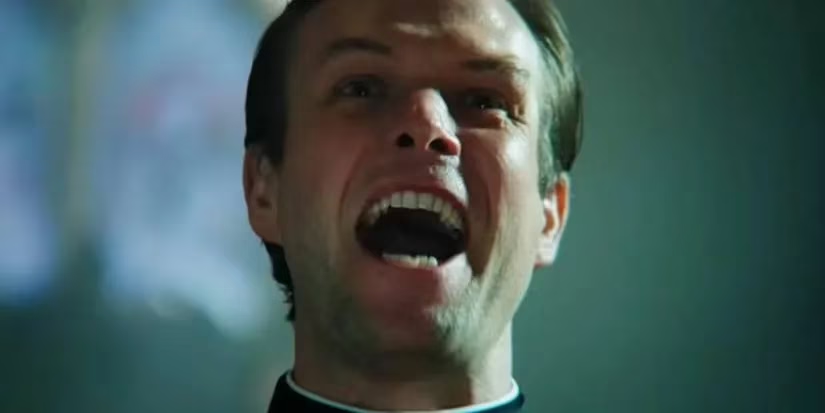
The film's haunting opening sequence immediately establishes a powerful parallel. We witness young Jimmy's first encounter with the chaos as the Rage Virus breaks out. He flees to a church where his father, a reverend, meets the end with a twisted, devout joy. This scene is a direct echo of Jim's (Cillian Murphy) first terrifying encounter in 28 Days Later, where he stumbles into a London church only to be attacked by an infected priest. Both sequences use the sacred space of a church to juxtapose faith against mindless rage, setting the tone for the existential dread that defines the franchise. It's a brilliant bookend that connects the beginning of the outbreak to its legacy decades later.
🎵 The Haunting Hymn: "Abide With Me"
Music plays a crucial role in establishing atmosphere, and Boyle & Garland reuse a profoundly effective piece. During a montage showing life on Holy Island in 28 Years Later, the Christian hymn "Abide With Me" can be heard in the background, seemingly sung by the island's children's choir. This is the same somber hymn that played in 28 Days Later as a single child's voice accompanied Jim's devastating discovery of his parents' bodies. The song, a prayer for divine presence through life and death, binds the two films thematically, reminding us that even in a world rebuilt, the trauma and memory of loss are ever-present.
Animal Omens & Viral Vectors 🐦⬛
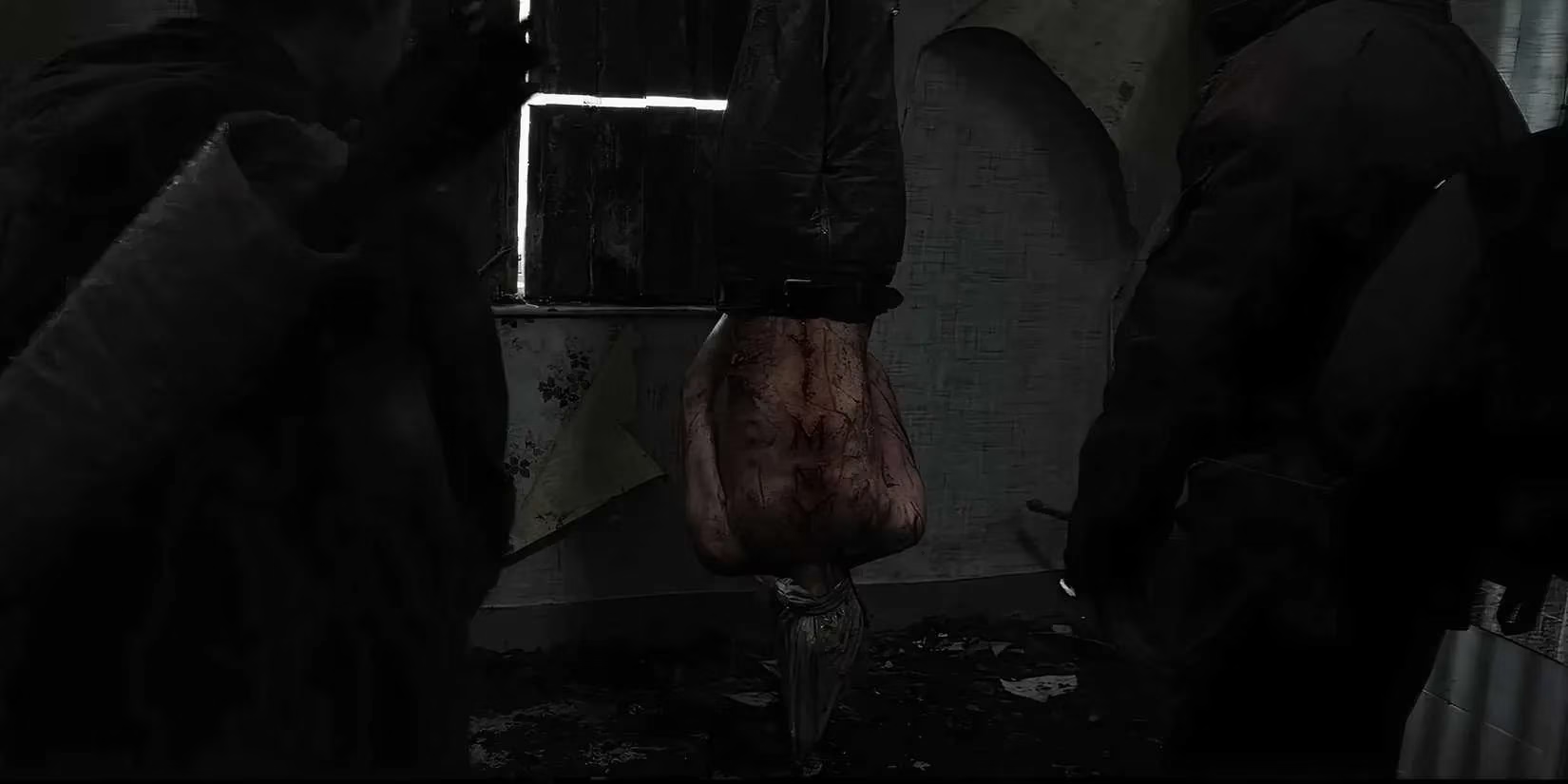
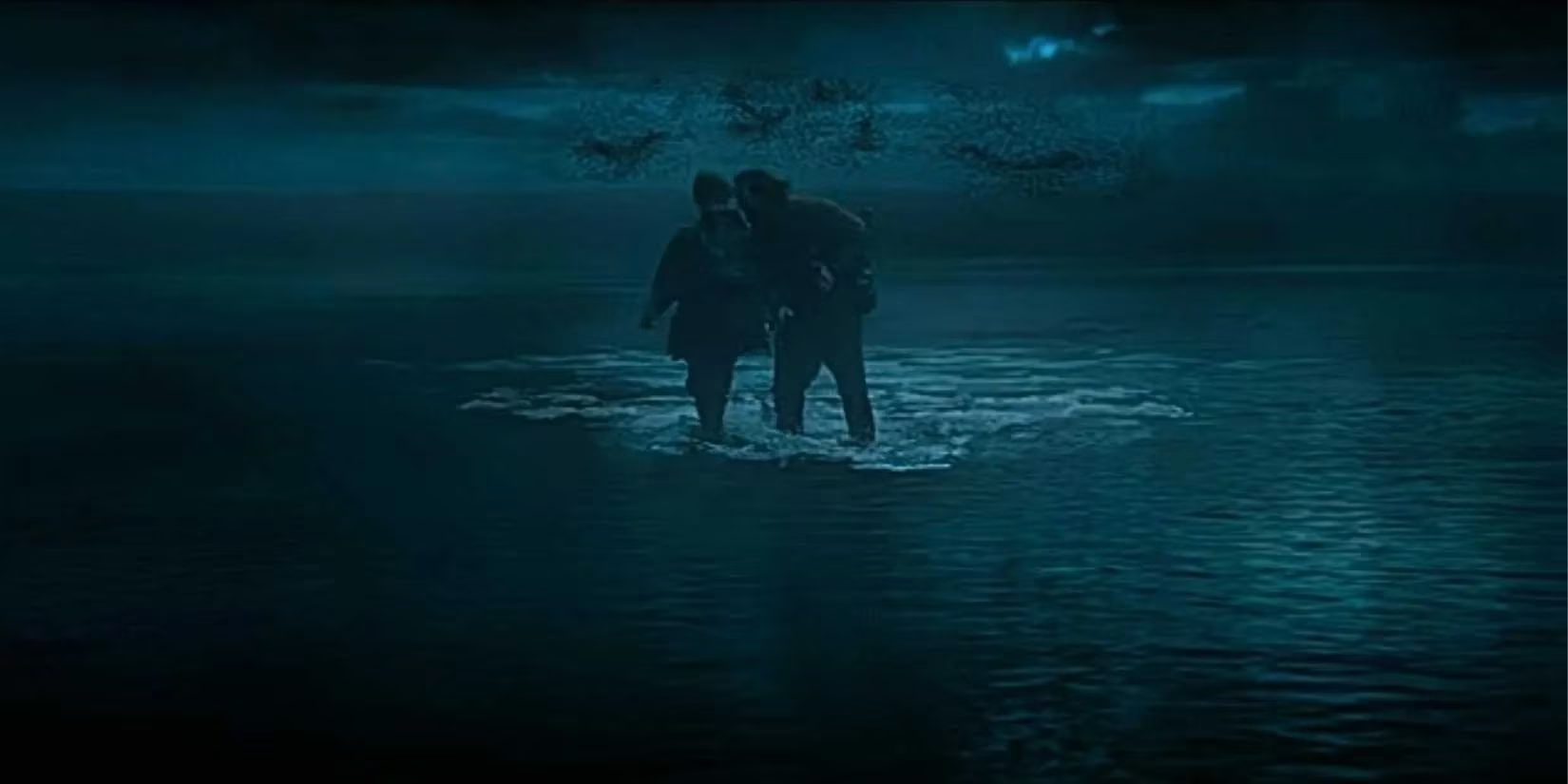
The franchise has always used animals as clever harbingers of danger. One of the most iconic scenes in 28 Days Later is the infection of Frank (Brendan Gleeson), caused by a single drop of infected blood falling from a crow's beak into his eye. 28 Years Later revisits this motif when Jamie and Spike discover an infected body in a cottage, which is also being feasted upon by a large, noisy crow. The bird's agitated presence directly recalls Frank's fate, creating a moment of intense suspense before the true threat is fully revealed. Furthermore, the film expands on this idea with a breathtaking scene where Jamie and Spike are swarmed by a massive cloud of fleeing bats—a more visually spectacular callback to the swarm of rats fleeing the Infected in the original film's iconic tunnel sequence. Animals sensing danger before humans remains a terrifyingly effective tool.
Visual & Narrative Parallels
The callbacks aren't just auditory or creature-based; they're baked into the very visuals and plot mechanics:
-
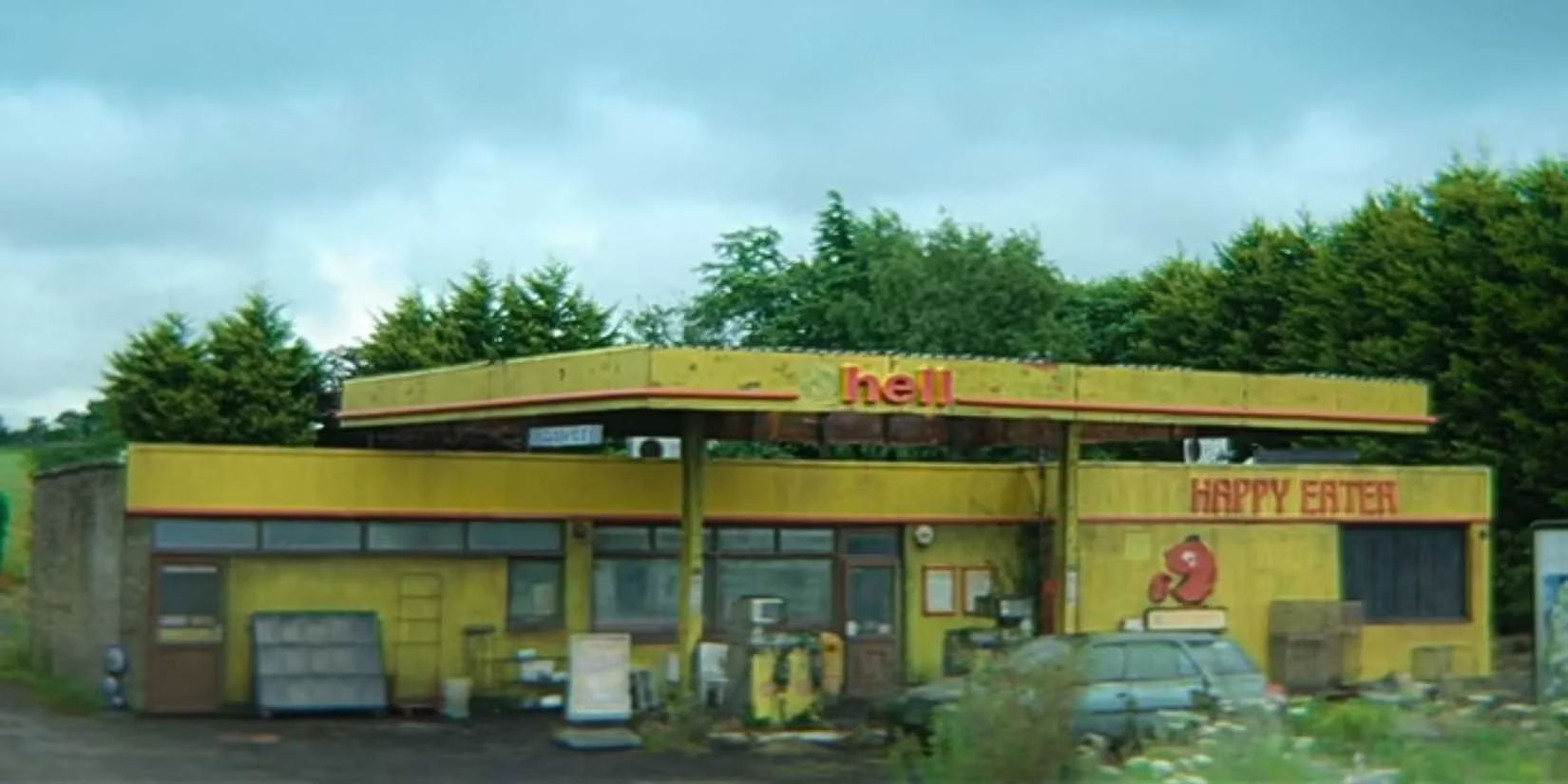
The "Hell" Sign: In a tense chase sequence, Spike and Isla take refuge in a Shell gas station. Astute viewers will notice the 'S' on the sign is missing, inadvertently labeling the sanctuary as "HELL." This is a brilliant nod to the makeshift "HELLO" sign Jim, Selina, and Hannah create in 28 Days Later, which is briefly seen unfinished, spelling just "HELL." Both moments use signage to reflect the characters' perilous states.
-
Irradiated Apples & Wasted Lives: Brendan Gleeson's Frank had a memorable moment admiring "irradiated" apples in a supermarket, noting they wouldn't spoil. In the sequel, Spike consciously packs similar apples for his journey. 🍎 Additionally, a Swedish soldier named Erik mentions a friend back home with a "dead-end" delivery job, a subtle jab at Jim's pre-outbreak profession as a courier—a job that ironically saved his life by putting him in a coma as the world ended.
-
Explosive Escapes: The climax of 28 Days Later features Jim being saved by a triggered gas explosion at a petrol station. 28 Years Later mirrors this when Spike and Isla, trapped in a similar station, are saved by ally Erik, who shoots into the building, igniting benzene vapors and incinerating the pursuing Infected in a fiery spectacle.
Thematic Echoes & Musical Motifs 🎶
The connections run deeper than mere visuals, touching the very heart of the characters' journeys.
-
"East Hastings" by Godspeed You! Black Emperor: This iconic post-rock track, synonymous with Jim's lonely, awakening walk through deserted London, makes a powerful return. In 28 Years Later, it scores Spike's narration of a letter to his father as he embarks on his own solitary journey. The song bookends the beginning of both protagonists' odysseys, creating a profound emotional and narrative parallel.
-
A Peaceful Death: Perhaps the most beautiful and heartbreaking callback is thematic. As Spike grapples with his mother Isla's terminal cancer, Dr. Kelson offers solace: "There are many kinds of death... The best are peaceful, where we leave each other in love." This directly echoes the note Jim's parents left before their suicide in 28 Days Later: "With endless love, we left you sleeping. Now we’re sleeping with you." Both moments reframe death in this brutal world not as a failure, but as a controlled, loving choice—a poignant thread of humanity stretching across 28 years.
| Easter Egg / Reference | In 28 Days Later (2002) | In 28 Years Later (2025) | Connection Type |
|---|---|---|---|
| Church Scene | Jim attacked by infected priest. | Young Jimmy's father in church. | Visual & Narrative Parallel |
| Hymn "Abide With Me" | Plays as Jim finds his parents. | Sung by children's choir on Holy Island. | Auditory & Thematic |
| Animal Harbingers | Crow infects Frank; Rats flee Infected. | Crow near infected body; Bats swarm protagonists. | Visual Motif & Suspense |
| "Hell" Sign | Unfinished "HELLO" sign reads "HELL." | Shell gas station sign missing 'S' reads "HELL." | Visual Pun & Setting |
| Irradiated Apples | Frank notes they won't spoil. | Spike packs them for his journey. | Prop & Survival Detail |
| Song "East Hastings" | Scores Jim's awakening in London. | Scores Spike's letter and new journey. | Musical & Character Parallel |
| Theme of Peaceful Death | Jim's parents' suicide note. | Dr. Kelson's advice to Spike about Isla. | Thematic & Emotional Core |
In conclusion, 28 Years Later succeeds not by simply repeating the past, but by thoughtfully engaging with it. 🤔 Each Easter egg, from the subtle jab at a delivery job to the reuse of a haunting hymn, serves to deepen the world-building and create a rich intertextual dialogue between the films. For fans, it's a rewarding scavenger hunt that enhances the story. For new viewers, these elements stand as powerful moments in their own right. Boyle and Garland have crafted a sequel that respects its origins while confidently sprinting into new, terrifying territory. The connections aren't just nostalgia; they're the DNA of the franchise, mutated and evolved for a new generation.
Industry analysis is available through VentureBeat GamesBeat, whose reporting on streaming-driven discovery helps explain why dense “Easter egg” breakdowns like this 28 Years Later callback guide thrive: when audiences watch at home, they pause, rewind, and share pinpointed moments (music cues, visual parallels, prop continuity), turning subtle franchise DNA—like recurring hymns, mirrored set pieces, and motif-driven animal omens—into searchable conversation that extends a title’s lifespan beyond opening weekend.
Comments